9 Best Electric Kettles 2026: Gooseneck, Frother & Standard
There is a smell in most people's kitchen right now that they think is a plumbing problem. It is not. It is the new electric kettle, and it is the most common complaint about the category: a faint plastic note off the water on the first boil that mostly goes away by the third.
That is the least interesting thing about kettles. The interesting things are much less obvious.
Here's what most "best kettle" lists get wrong: they treat boiling water as if it were the feature. It is not the feature. Every kettle on this list does the same job, and it is a job physics handles about as well as it can be handled. A liter of water needs about 335 kilojoules to go from room temperature to a boil, so a 1,500-watt kettle gets there in roughly four minutes and a 2,400-watt one in under two and a half. Buy the cheap one. It boils just as fast.
What separates a $35 kettle from a $200 kettle is the spout, the temperature control, the capacity, and whether the heating element can be descaled in five years or whether the whole machine is dead. Get those four right and the wattage barely matters.
I went through the current market and narrowed it down to nine electric kettles. Four are precision goosenecks, one is a dedicated milk frother, two are 1.7-liter boil-fast machines, and the rest split between a slow-pour design object and straight-spout workhorses.
Which Electric Kettle Fits Which Drink
Start here, skip to the details if you want.
- Pour-over coffee, V60 or Chemex style — you need a gooseneck electric kettle. The narrow, curved spout gives you the slow, controlled pour a straight spout cannot do. This is not marketing. Published pour-over recipes pour at roughly 2 to 10 grams per second, and a straight spout dumps water at one spot and flattens your bed of grounds.
- Tea, and you care about the temperature — you need variable temperature control with a hold timer. Green tea wants 158 to 176°F. Black tea wants 203 to 212°F. Boiling both at 212°F means the green tea over-extracts and tastes bitter, and you cannot add water back afterward.
- Cappuccino and latte — you need a frother, and it should probably not be built into the kettle. See the section below, because the "electric kettle with milk frother" product almost does not exist in the form the ads imply.
- Fast, big, and don't care about the geometry — a 1.7-liter straight-spout kettle at 1,500 watts, or a Smeg at 2,400 watts if you want the fastest possible boil. This is the right answer for filling a pasta pot or making tea for six.
- You already own a good stovetop teapot — then you probably do not need an electric kettle at all, and our teapot buying guide is a more useful read.
Gooseneck vs Standard Spout vs Milk-Frother Kettle
These three get sold as if they are the same product with different attachments. They are not. They are three different tools that happen to heat water.
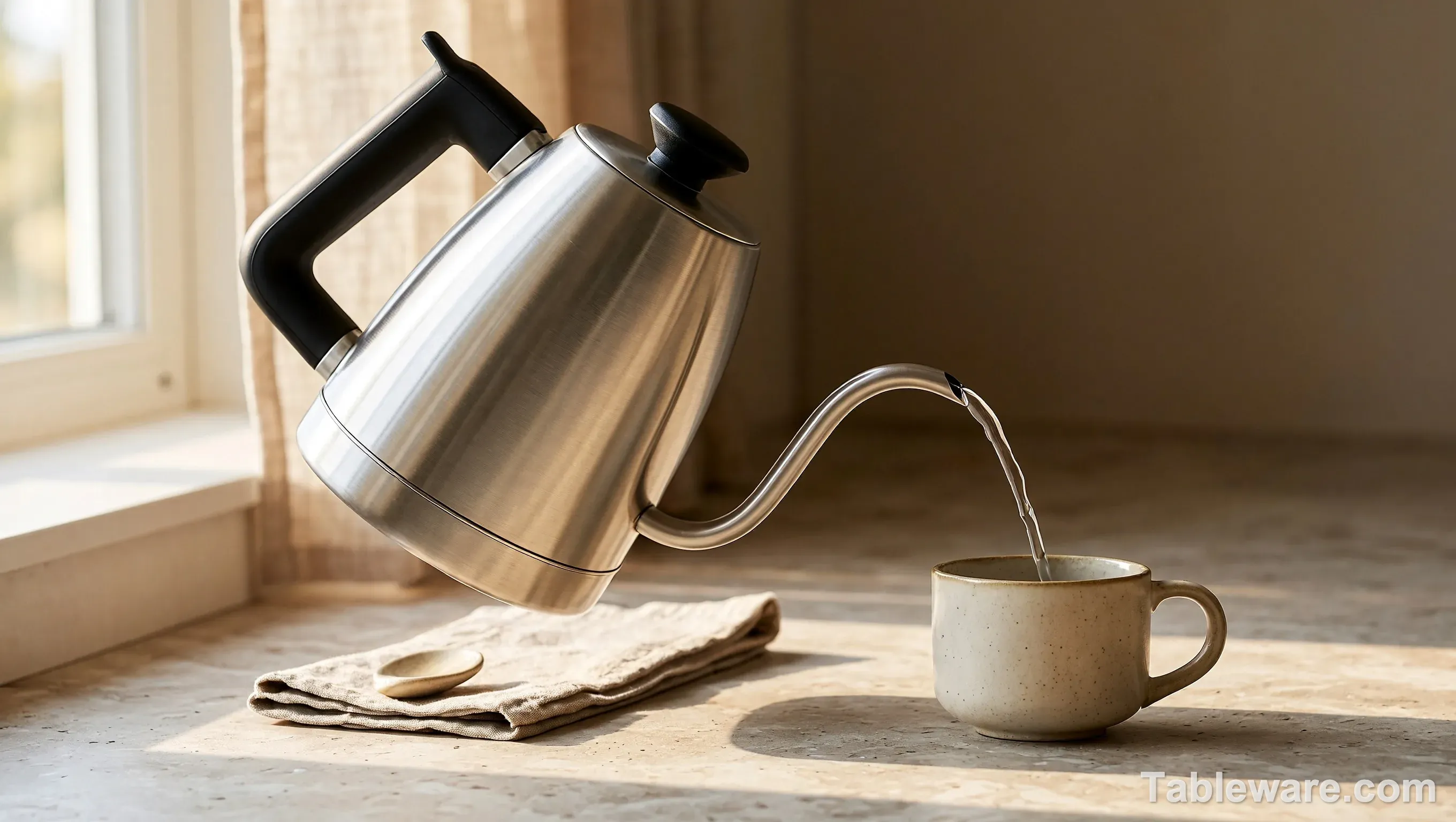
Gooseneck kettles have a tall, narrow, curved spout. The curve lets you aim the stream at one spot and slows the water on the way out, so the flow stays gentle enough to keep grounds from being knocked around. A 2025 University of Pennsylvania study on pour-over found that a focused jet sets off small "avalanches" in the coffee bed that mix water and grounds and raise extraction, but only while the stream stays smooth and unbroken. Pour from too high and the stream breaks into droplets that carry air in and mix poorly. Goosenecks also tend to be the smallest capacity you can buy, because a slimmer body is part of the design. If you want one, look for the gooseneck electric kettle rows in the picks table below.
Straight-spout kettles look like a teapot that someone bolted a heating element to. They are cheaper, bigger, and they pour fast. Several of the good ones carry a removable infuser for loose leaf tea, which is a genuinely nice feature that goosenecks mostly skip.
Milk-frother kettles add a wand or a disc at the base of the spout. The wand type shoots steam through the milk from below and makes real microfoam. The disc type spins a propeller in the middle and makes hot milk with some bubbles in it. Not the same drink.
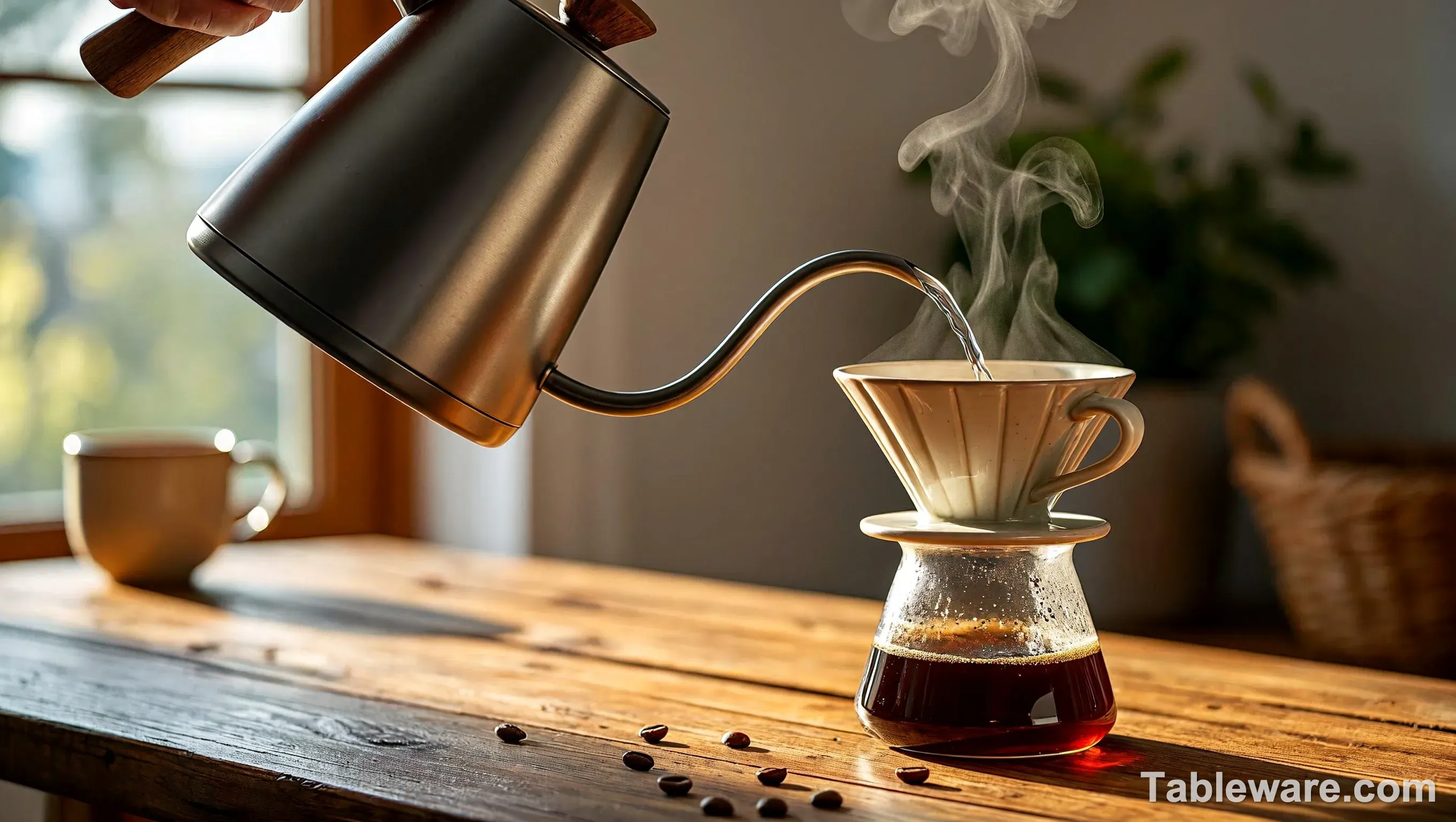
Fig 1. The gooseneck pour in real use. Thin, aimed, and slow enough that the coffee bed stays intact instead of getting flattened by a column of water.
Gooseneck Kettle for Pour Over Coffee
The gooseneck kettle for pour over coffee is the category with the most competition and the widest price range, from about $95 to well over $200.
What separates a good one from a cheap one is not the boiler. It is the spout's radius, the handle's balance, and whether the thing stays upright on a full base when you push the handle forward. Pouring happens at the top of the tilt, and a heavy kettle with a high center of gravity is miserable to hold at that angle one-handed. Weight matters more here than in any other kitchen appliance, because you are pouring for thirty to forty-five seconds and your wrist is doing the work.
Temperature control is the second thing. The Specialty Coffee Association's brewing standard is 200°F plus or minus 5°F, which is 93°C plus or minus 3°C. The difference between 200°F and 212°F is more than most people can taste in a dark roast. In a light roast it absolutely is.
Electric Kettle with Milk Frother for Cappuccino
Here is the thing I did not expect to find: there is no good 1-liter wand-style heating frother kettle with published specs. The category is mostly heated jugs and handheld non-heating wands.
The Secura MMF-809 heated frother jug is the honest version of this product. It holds 300 milliliters of milk, holds it between 140 and 160°F, and costs around $30 to $45 depending on where you find it. It makes decent foam. It is not a kettle, it is a heated milk pitcher, and it does one job.
If you want an electric kettle with milk frother in a single box, you are usually paying $40 to $70 for something that is worse at both jobs than a separate kettle and a separate wand. That said, there is one real argument for the combo: convenience, and less to wash. If you make one cappuccino a day and no pour-over, a frother jug is a perfectly good answer. Just know what you are giving up.
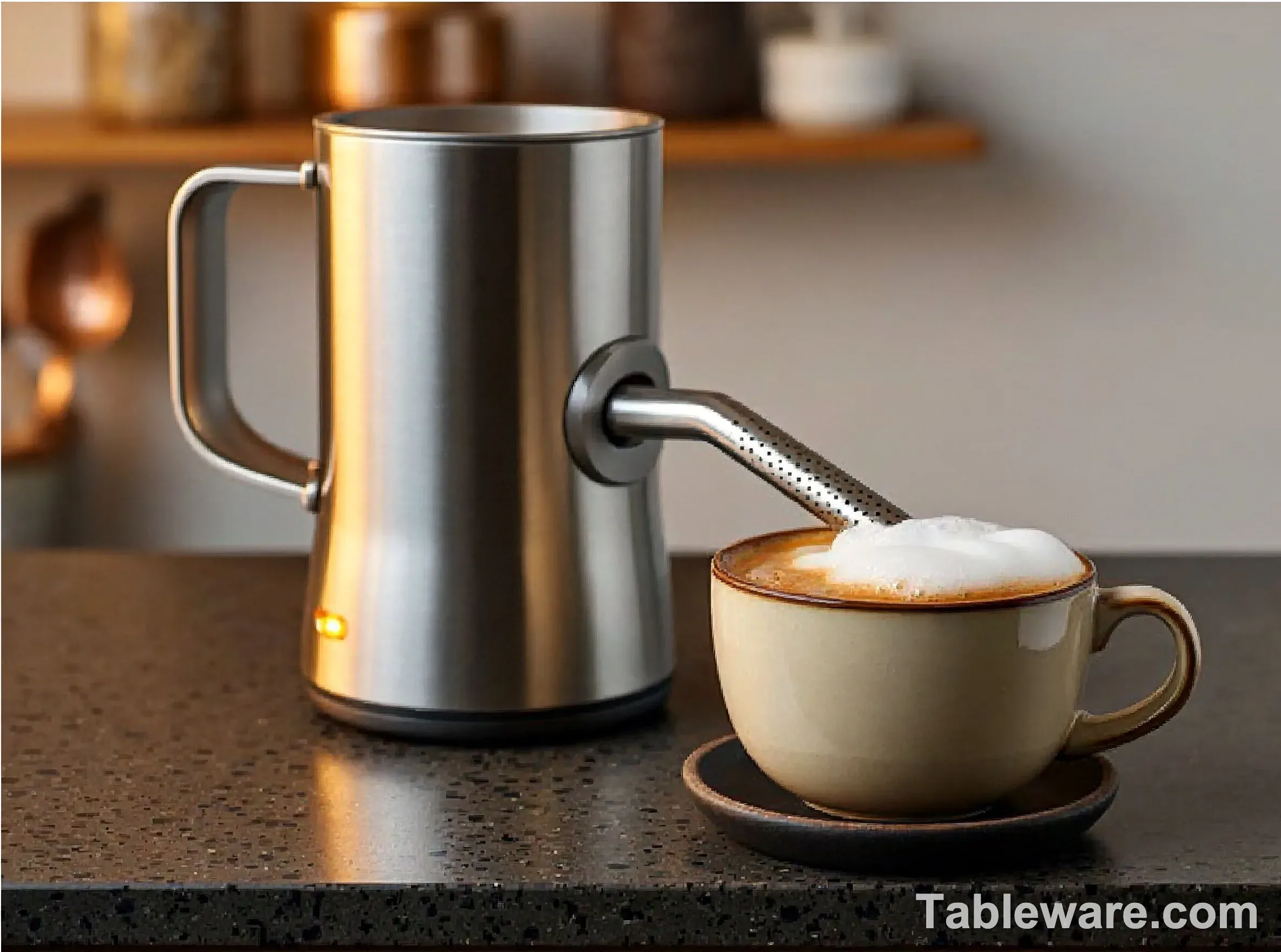
Fig 2. Wand frothing at the bottom of the pitcher. A spinning disc in the middle of the cup makes foam. A wand near the bottom makes something closer to what an actual barista leaves in the cup.
Variable Temperature Control and Keep-Warm for Tea
Tea is the one place where the temperature dial is not a gimmick. Different leaves want different water, and the difference is not subtle.
| Tea | Water temperature |
|---|---|
| Green | 158–176°F (70–80°C) |
| White | 167–185°F (75–85°C) |
| Oolong | 185–203°F (85–95°C) |
| Black, Earl Grey | 203–212°F (95–100°C) |
| Coffee (brewing) | 195–205°F (90–96°C) |
Green tea at 212°F tastes bitter and astringent. That is not the tea's fault. Scalding the leaf extracts the catechins that make it taste grassy, and you cannot add water back to fix it. Black tea at 175°F tastes flat and thin, because you have not extracted enough.
Now, a temperature setting you have to dial in every time is not a feature, it is a chore. This is where the keep-warm function earns its keep. If the kettle holds your set point for 30 or 60 minutes, you set it once, walk away, pour your tea ten minutes later, and it is still exactly where you left it. If you want to see what a heat-retention benchmark actually looks like, our insulated tumbler review ran the same kind of test on the opposite problem.
Look for three things: the size of the degree increment, the length of the hold timer, and whether the hold timer is user-adjustable or fixed. And know that the marketing claims are softer than they sound. Almost nobody publishes a plain plus-or-minus-1°F figure. Cosori claims plus or minus 5°F, Chefman claims plus or minus 1°F, and Bonavita's own manual claims plus or minus 2°C on hold.
The independent measurements are more interesting than the claims. TechGearLab scored the Fellow Stagg EKG 9.0 out of 10 on coffee-temperature accuracy and 6.1 out of 10 on green-tea accuracy, which tells you the failure mode: these things are worst at the low end, exactly where green tea lives. Food & Wine measured a Bonavita display reading 189°F when the water was actually 200°F, which is 11 degrees off and enough to matter.
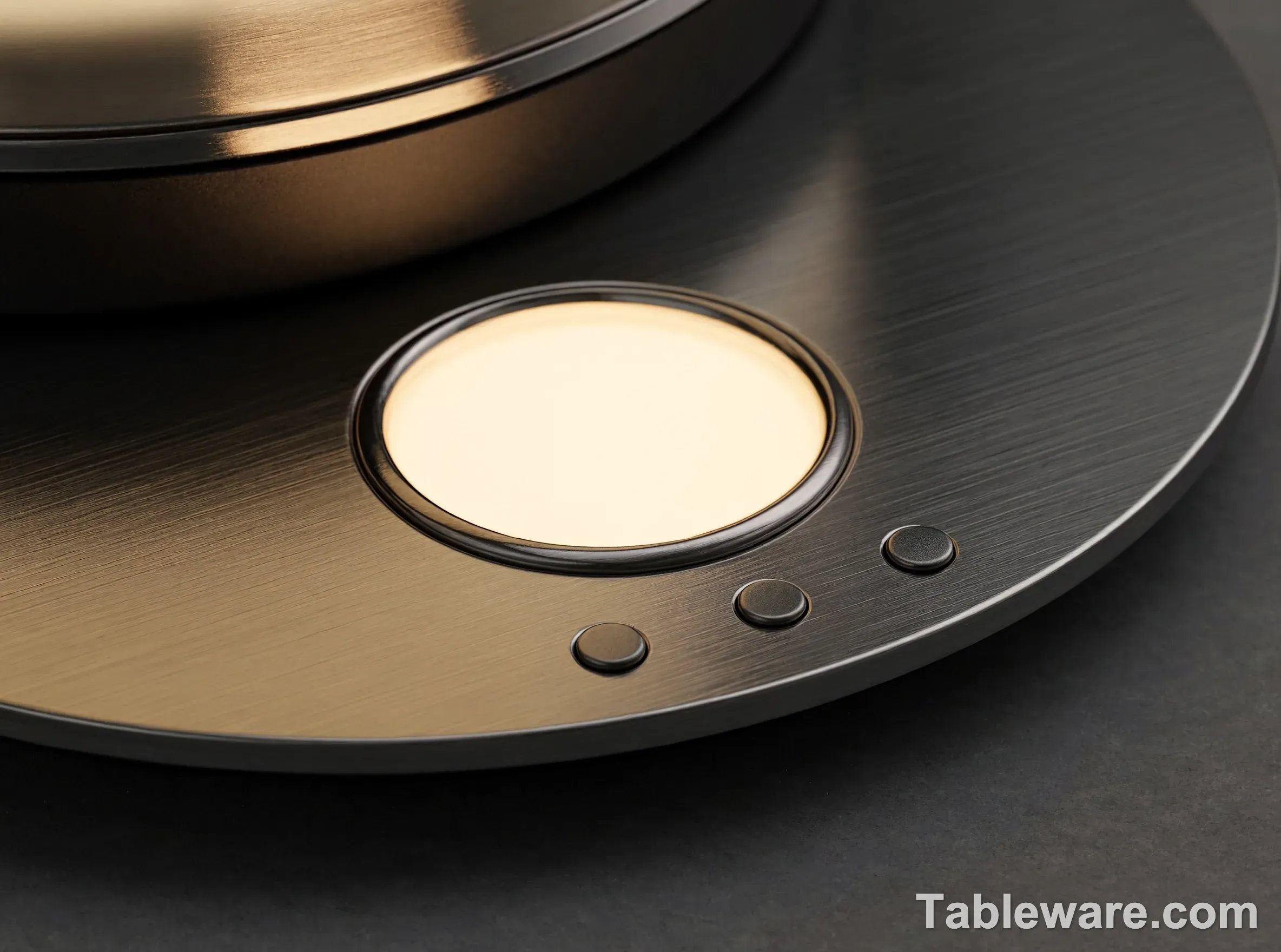
Fig 3. Temperature dials are where the money is. A half-degree increment with a selectable 60-minute hold is the difference between a kettle you use and a kettle you reset every time.
Capacity and Speed: 0.6L vs 1.7L
Here is the math, because it settles the question faster than any review.
Heating one liter of water from 68°F to 212°F takes about 335 kilojoules. Divide by the element wattage and you get the theoretical minimum. Real-world times run a little longer because the kettle body and the room soak up heat.
| Capacity | Element | Ideal for 1 L | Realistic | Good for |
|---|---|---|---|---|
| 0.6 L | 1,200 W | 2:47 | ~3:20 | One large pour-over |
| 0.8 L | 1,000 W | 4:28 | ~5:00 | Two to three mugs |
| 0.9 L | 1,200 W | 4:11 | ~5:10 | Two to three mugs, one pour-over |
| 1.0 L | 1,500 W | 3:43 | ~4:15 | Four mugs, breakfast for two |
| 1.7 L | 1,500 W | 6:19 | ~6–7 min | A full household, pasta pot, tea for six |
| 1.7 L | 2,400 W | 2:20 | ~2:45 | The same, in half the time |
The 1.7-liter kettle is not faster than the 0.9-liter one. It is the same burner heating more water. If you only ever boil for two mugs, a 1.7-liter kettle wastes three minutes every single time. If you boil for a full household every morning, the 0.9-liter one means boiling twice, which is worse.
Two more things about the big ones. Footprint: a 1.7-liter kettle with its base is about the size of a dinner plate and weighs 3 to 4 pounds when full, so it does not go in a cupboard next to the coffee maker. It lives on the counter, permanently.
And minimum fill. Fellow's own safety guide says 333 milliliters, which is a little over 12 ounces. Every kettle has a floor, and if you are making a single small pour-over, a 1.7-liter machine is asking you to boil a third of a liter of water and pour most of it away.
Failure Modes: Scale, Plastic Smell, and Handles That Come Loose
Every electric kettle in this roundup breaks the same three ways. Knowing them before you buy is worth more than any feature list.
Mineral scale. Hard water contains calcium and magnesium carbonates. Heat them past roughly 140°F and they precipitate out onto the heating element as a chalky white crust. It is not dangerous. It is just inefficient, and it compounds. A scaled element has less surface area, so the kettle takes longer to boil, which means you run it hotter and longer, which deposits more scale. Limescale flakes are also the reason your tea has a gritty, chalky film in it some mornings.
The fix is acid, but the details matter and the manufacturers disagree with each other. Bonavita explicitly advises against vinegar, saying it may not descale effectively, is difficult to rinse, and leaves an odor that affects the flavor of your coffee. Cosori tells you to use one cup of vinegar or lemon juice with two cups of water, bring it to a boil, and let it sit for two hours. OXO wants its own descaling solution every 60 uses and voids the warranty if you skip it.
The common denominator: citric acid works, and it works in warm water rather than boiling water, because boiling it can leave new stubborn deposits behind. And do not boil plain vinegar. The action is weak and the acetate odor gets into the silicone seals and takes days to leave.
If you live in hard water, descale every two or three months. Soft water, twice a year.
The plastic smell. New kettles often smell faintly of plastic on the first boil. The verified causes are off-gassing from new plastic parts like the lid, handle and water-level window, plus manufacturing dust and oils and adhesives. Which plastic matters, and that comes down to the resin, the same chemistry our food storage container guide walks through. Fellow's silicone gasket on the temperature probe is a known one. The fix, per manufacturer guidance, is to boil and discard two or three times before first use and leave the lid open to air out. If the smell is still there after three cycles, boil a tablespoon or two of baking soda, let it sit ten minutes, scrub, rinse. If it persists after that, stop using it and return it.
Handles and boil failures. This is where the category has an actual safety record, and it is worth knowing about. In May 2026 the US Consumer Product Safety Commission recalled roughly 113,440 ZWILLING Enfinigy and Enfinigy Pro electric water kettles because the handle can loosen or separate, releasing scalding water. It reported 163 complaints and five incidents, including one second-degree burn. Two weeks later the CPSC issued a safety warning on Sekaer portable kettles after 116 reports of kettles pressuring and releasing hot steam and liquid, with 89 injuries including second and third-degree burns. Neither problem was an electrical or switch fault. Both were mechanical failures of the vessel and its handle, and that is the pattern to watch: how the handle is joined to the body, and whether the thing is rated for the pressure of steam.
Also worth checking: whether the element is concealed or exposed. A concealed element means scale collects under a sealed plate you cannot get at, so descaling is either impossible or depends on the manufacturer. A removable element is much easier to keep clean over a decade.
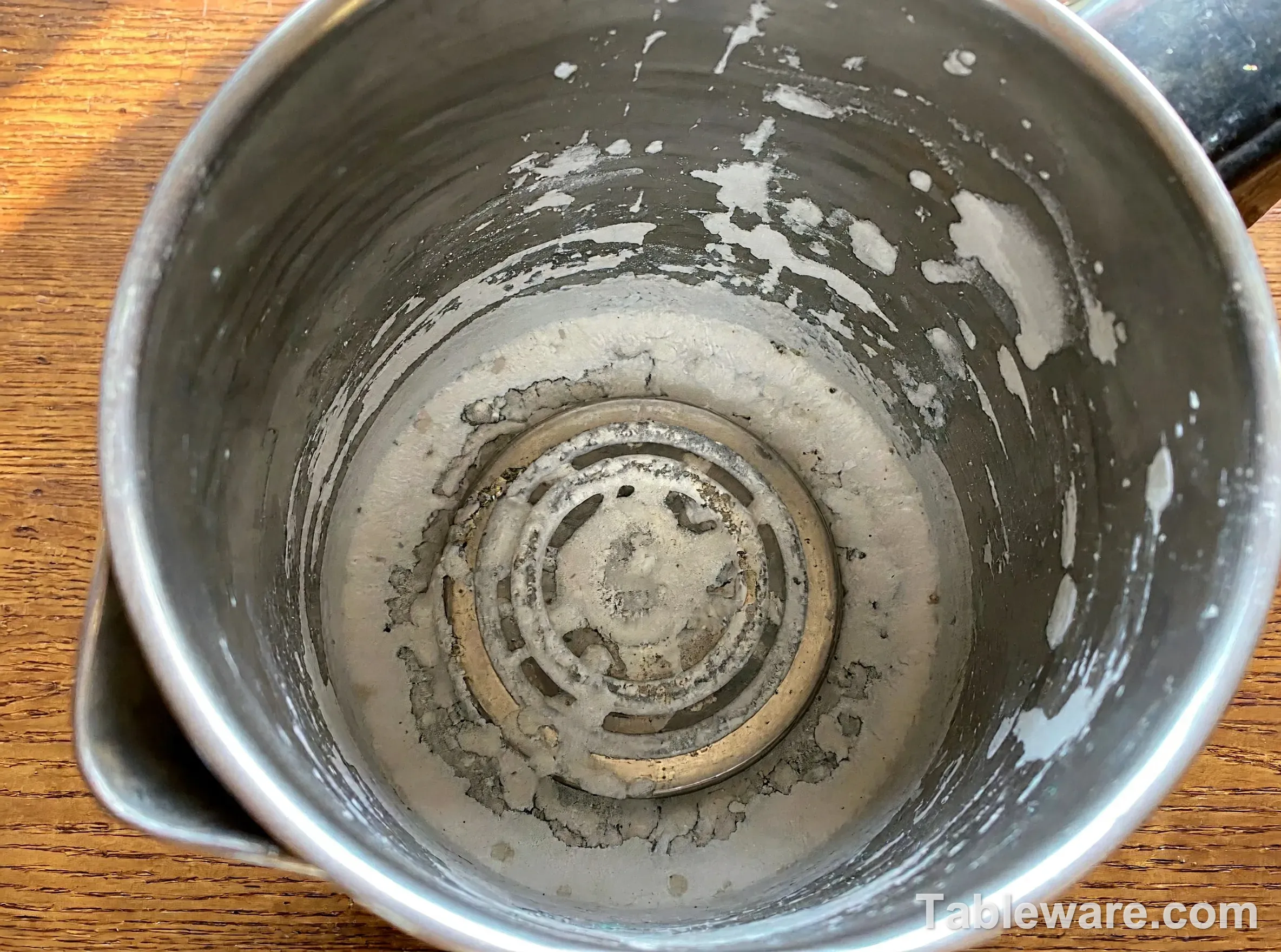
Fig 4. Limescale on the element plate. It looks harmless and it is, but it costs you minutes on every boil and it is the main reason a cheap kettle eventually gets returned.
Electric Kettle vs Teapot: Which One to Buy?
This is the comparison the kettle industry avoids, because the answer is often "neither, you want a teapot."
A stovetop kettle or a pot-style teapot gives you full control over the heat and the pour, and it never has a plastic smell or a failed heating element. What it costs you is attention. You have to watch it. You have to pull it off the heat when it starts to rumble.
An electric kettle gives you repeatability, a timer, and a temperature you set once. What it costs you is countertop space, a plug, and the knowledge that when it breaks in four years, you are replacing it.
My honest take: if you drink tea more than twice a week and you like doing it, buy a teapot. The teapot buying guide covers materials, and a 1.2-liter stainless steel or glass pot costs less than a mid-range electric kettle and does a better job. The Hario V60 Buono, by the way, is one of the best pours available and it is not electric at all, which tells you something about how much of the gooseneck premium is about the spout rather than the electronics.
If you drink coffee most mornings and tea occasionally, or if there are four people in the house, an electric kettle wins on convenience and you will not regret it.
The hybrid answer is to own both: a good teapot for the weekends and a $120 electric kettle for the weekday mornings.
The Nine Best Electric Kettles, Ranked
Now the specific electric kettles. Prices are US street prices in late 2026 and they move constantly, so treat them as a rough anchor rather than a quote.
| # | Kettle | Type | Capacity | Temperature | Hold | Price |
|---|---|---|---|---|---|---|
| 1 | Fellow Stagg EKG Pro | Gooseneck | 0.9 L | 104–212°F, 0.5° steps | 15/30/45/60 min | $179–230 |
| 2 | OXO Brew Gooseneck | Gooseneck | 1.0 L | 104–212°F, 1° steps | 30 min | $120 |
| 3 | Bonavita BV382510V | Gooseneck | 1.0 L | 140–212°F, 1° steps | 60 min | $75–130 |
| 4 | Cosori 0.8L Gooseneck | Gooseneck | 0.8 L | 5 presets, 170–212°F | 60 min | ~$50 |
| 5 | Cosori 1.7L | Straight spout | 1.7 L | 6 presets, 165–212°F, ±5°F | 60 min | ~$54 |
| 6 | Hario V60 Buono Electric | Gooseneck, boil only | 0.8 L | None | None | $95 |
| 7 | Balmuda The Pot | Gooseneck, slow pour | 0.6 L | None | None | $154 |
| 8 | Smeg KLF01 | Straight spout | 1.7 L | None | None | ~$170 |
| 9 | Secura MMF-809 | Heated frother jug | 300 mL milk | 140–160°F hold | — | $30–45 |
1. Fellow Stagg EKG Pro — best overall. A PID-controlled 0.9-liter gooseneck with a 0.5°F increment from 104 to 212°F, selectable 15, 30, 45 or 60 minute hold, and a built-in brew timer. At $179.95 in matte black or white, $199.95 with the wood handle. Worth knowing: the classic Stagg EKG that everybody actually wanted is gone from Fellow's US store and survives only as a refurbished unit around $132. Its spec was 135 to 212°F in 1° steps with a 60-minute hold. The Pro is genuinely the better machine, but the thing your group chat is going to tell you to buy has changed.
2. OXO Brew Gooseneck — best value precision. 1.0 liter, 1,500 watts, 104 to 212°F in 1° steps, a 30-minute keep-warm, and a count-up brew timer on the base. About $120. The rubberized cool-touch handle is genuinely good, and OXO is the rare company that publishes its descaling interval rather than making you guess.
3. Bonavita BV382510V — best keep-warm. 1.0 liter, 1,000 watts, 140 to 212°F in 1° steps, six presets, and up to 60 minutes on hold. List price around $130, and it was $74.99 in November 2026, so it is worth watching. Its manual is also the most useful kettle document on the internet, mostly because it tells you what to descale with.
4. Cosori 0.8L Gooseneck — best budget gooseneck. Five one-touch presets at 170, 180, 195, 205 and 212°F, a 60-minute hold, a food-grade stainless interior with no plastic in contact with the water, and boil-dry protection. Around $50. You give up the fine increment and the refinement. If you are starting out with pour-over and might discover you hate it, this is the one to buy first.
5. Cosori 1.7L — best of both, and the one most people should buy. A large 1.7-liter borosilicate glass carafe, 1,500 watts, six presets from 165 to 212°F with a stated plus or minus 5°F, and a 60-minute keep-warm, for about $54. The five-degree coarseness of the presets and the plus-or-minus-5 accuracy are the compromises. It works, it holds a lot of water, and it costs less than dinner.
6. Hario V60 Buono Electric — best stovetop-alternative electric. Hario's own gooseneck, made by the people who make the V60 dripper, so the pour geometry is designed to match the cone. 0.8 liters maximum, 1,000 watts, boil only, with a 150-milliliter minimum. $95. For the same money as a generic kettle you get a spout that pours properly. Hario also makes a variable-temperature version, the BuonoN, that runs 60 to 96°C with a 15-minute hold, but its US pricing is harder to pin down.
7. Balmuda The Pot — best slow pour, best looking. The widest gooseneck going, and it produces a genuinely slow, flat pour. $154. The catch is capacity at 0.6 liters, one mug and a bit of headroom, and no temperature control at all. A gorgeous object. Bad roommate.
8. Smeg KLF01 — fastest big boil. A 1.7-liter body, a 1950s Italian shape in seven colors, and a 2,400-watt element, which makes it the fastest kettle on this list by a wide margin. Boil only, concealed element, and a removable stainless limescale filter. The temperature-control version is a different model, the KLF02, and it costs more.
9. Secura MMF-809 — best frother, and the only honest one. A heated milk pitcher rather than a kettle: 300 milliliters of milk, a 140 to 160°F hold band, hot and cold foam, and a detachable base. $30 to $45. It washes by hand, which is the main annoyance.
Honorable mentions: the Cuisinart DK-17, a 1.7-liter, 1,500-watt basic boiler with a concealed element, a stainless limescale filter and a three-year warranty, which is longer than most of the category offers. The Dualit Classic at $249.99, which has a patented repairable element, which means it can be fixed instead of replaced, which is the whole reason it costs what it costs. And the Hario V60 Buono stovetop kettle at about $65, which is the cheapest genuinely good pour on the market.
How I Ranked These Nine Electric Kettles
This is a desk-based electric kettle roundup, not a lab shootout, and I would rather say that plainly than dress it up.
The ranking is built from manufacturer specifications, published temperature-accuracy claims, warranty terms, replacement-part availability, the physical design of the handle and spout, and the documented failure patterns of each category, including the CPSC recall and safety-warning records. Where a number below came off a spec sheet rather than from my own measurement, it says so, and I have marked anything I could not verify rather than filling it in from memory.
What I weighted most heavily is the thing you cannot spec your way around: how the kettle behaves in the hand at the moment you actually use it. The balance of the handle, whether the spout dribbles, and whether you can hold it one-handed at a forty-five-degree tilt while pouring for forty seconds. That is the part no spec sheet covers, and it is the part that decides whether a kettle gets used every morning or pushed to the back of the counter.
Boil times are computed from the physics above using published wattage figures, which land within about 15% of measured real-world numbers once you account for heat loss.
Prices are from late 2026 and move constantly. Buy on the features, not the number in the table.
Related Reading
If you are upgrading the whole hot-drink setup rather than just the kettle, our coffee mug review measured brimful versus usable capacity on six mugs, which matters more than you would think once you are pouring from a 0.9-liter gooseneck into an 11-ounce cup. Our serving ware buying guide covers the platters, bowls and pitchers that go with a full service. And if the kettle question has become a tea question, the teapot buying guide covers glass, cast iron, and stainless steel pots for the mornings when you want to do it properly.