Teapot Buying Guide: How to Pick One That Does Not Leak
I bought a glass teapot in 2021. It was the picture on the box that got me — clear borosilicate body, bamboo infuser, wood-toned handle. Forty dollars. It looked like it belonged in a magazine spread.
Six months in, the spout started weeping. Not a drip — a slow bead that ran down the side of the pot and pooled on the counter with every pour. By month eight the plastic handle had gone cloudy and brittle, and there was a hairline crack through the spout joint I could feel with my thumbnail. It never actually broke. It just got slowly, quietly unusable.
That was the first real thing I learned about teapots: the marketing photo is never the product, and the failure never happens where the product page warned you it might.
So here's how to pick one. Not a top-10 list with affiliate links. Just the specs that decide whether a teapot works in your kitchen, what each material is genuinely good for, and the two failure points that ruin more pots than anything else.
If you want the short version: a 4-cup (32 oz) borosilicate glass teapot with a removable 1/2-cup infuser, $25–45. Everything past that is a specific-case answer.
What "teapot" actually means
Type "teapot" into a US search box and you get one thing: a lidded pouring vessel with a handle and a spout, sized for 2 to 8 cups. That's the whole category.
If you've been on tea forums or watched gongfu tea videos, you've seen the word used for three completely different objects:
- Kyusu — Japanese, side handle, 200–400 ml, fine mesh built into the spout. Built for brewing one or two cups fast.
- Gaiwan — Chinese, a lidded bowl with no handle at all, 100–200 ml. You drink straight out of the lid.
- Çaydanlık — Turkish, two stacked kettles, bottom one for boiling, top one for the tea. Rarely leaves Turkish kitchens.
None of those are what shows up when you search "teapot" on Amazon. I'm naming them once because they'll show up in the reviews you read while shopping, and then I'm dropping them. Everything below is about the Western lidded pot.
Sizing is simpler than the packaging makes it. One US cup is 8 oz:
- 2-cup teapot = 16 oz (about 450 ml)
- 4-cup teapot = 32 oz (about 950 ml)
- 6-cup teapot = 48 oz (about 1.4 L)
- 8-cup teapot = 64 oz (about 1.9 L)
Four cups is the default for a reason. 950 ml is two mugs plus one for refilling, and it clears a standard cabinet shelf. Beware the 12-cup "family size" pots — 3 liters, taller than they are wide, and they will meet the underside of your upper cabinet every time you lift them.
Material decides everything
A teapot is a heat vessel. It holds 200°F water for 4 to 8 minutes, gets poured onto a surface, and gets washed. That job sounds simple, and each material solves it differently — badly in some ways.
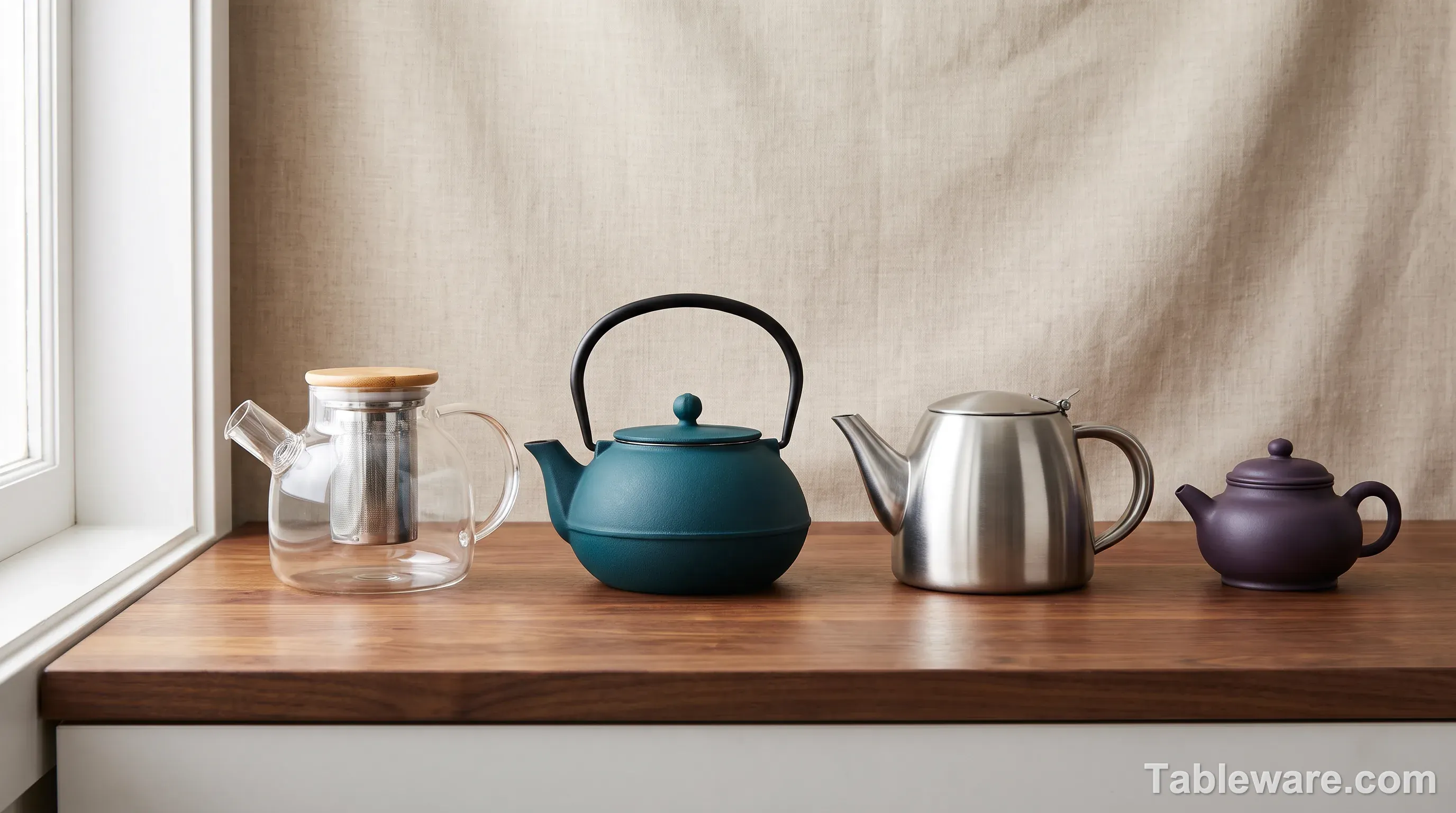
Glass teapot: watch the handle and the thermal shock
The glass teapot is the most popular style under $50, and the most fragile. Two things will kill it.
Thermal shock is the first. Boiling water into a room-temperature glass pot, or a hot pot into cold water, makes the glass expand unevenly and crack. Cheap "heat-resistant glass" teapots are frequently soda-lime glass, not borosilicate — and soda-lime handles boiling water much worse. Look for the word borosilicate or a stated rating of 150°C / 302°F. If the listing just says "heat resistant glass," assume it is not.
The handle is the second. Almost every affordable glass teapot uses a plastic or silicone handle bonded to the body with an adhesive bracket. Put that pot in the dishwasher and the adhesive gives up in six months, the plastic handle turns yellow, and the whole handle assembly can snap off. This is exactly what happened to mine. Buy the pot, but buy it on the understanding that it is a hand-wash item with a finite life.
What glass is genuinely good at: you can watch the leaf open. That matters more than people admit, especially for oolong and for the first year of drinking loose leaf. Our guide to glass types covers the borosilicate versus soda-lime difference in more depth.
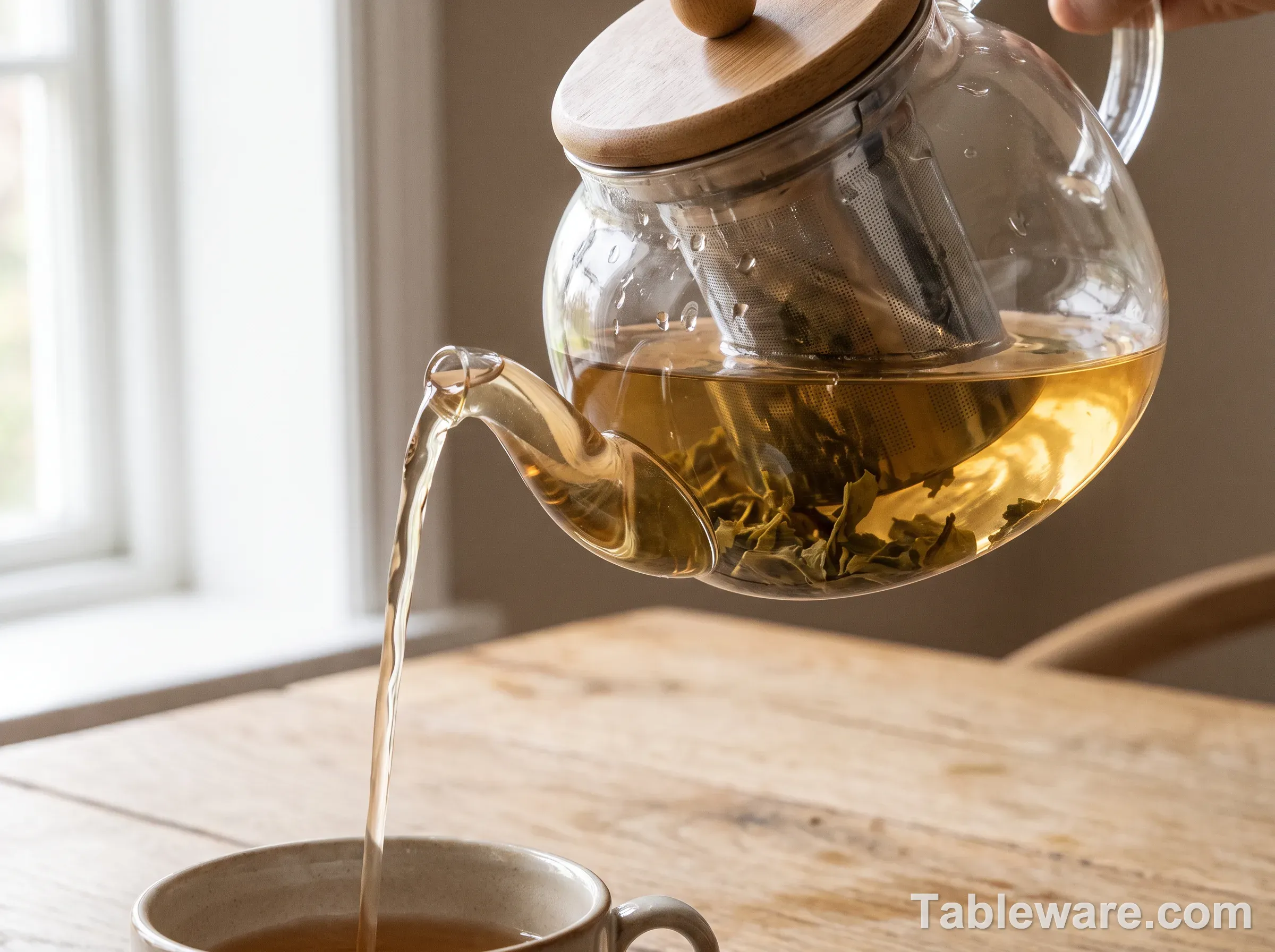
Fig 1. A glass teapot mid-pour. Watching the leaf open is the whole reason to buy one — the infuser basket keeps the leaf suspended so it can breathe.
Cast iron teapot: holds heat, burns your hand
A cast iron teapot is heavy. A 4-cup one runs 3 to 4 pounds. That weight is the entire point: cast iron holds heat roughly 3 to 4 times longer than steel, which means your tea keeps steeping while you pour the second cup.
That cuts both ways. A 4-cup cast iron teapot holds enough heat that a 2-minute steep becomes a 5-minute one by the time you finish pouring — and 5 minutes in a hot pot is bitter. Cast iron is a strong argument for pressing the leaves into a basket rather than loose-steeping them.
Enameled versus bare matters a lot. Enameled cast iron (Le Creuset, Staub, and the Japanese tetsubin teapots at 0.8 L) comes in colors, needs no seasoning, and can hold anything. Bare cast iron needs seasoning, will rust if you leave it wet, and costs less. If you drop enameled cast iron and chip it, the exposed iron underneath will start rusting within a few months. Our enamel versus ceramic comparison covers the enamel-versus-ceramic durability picture, and our Le Creuset vs Staub vs Lodge cast iron test hits the same enamel chip problem on cookware.
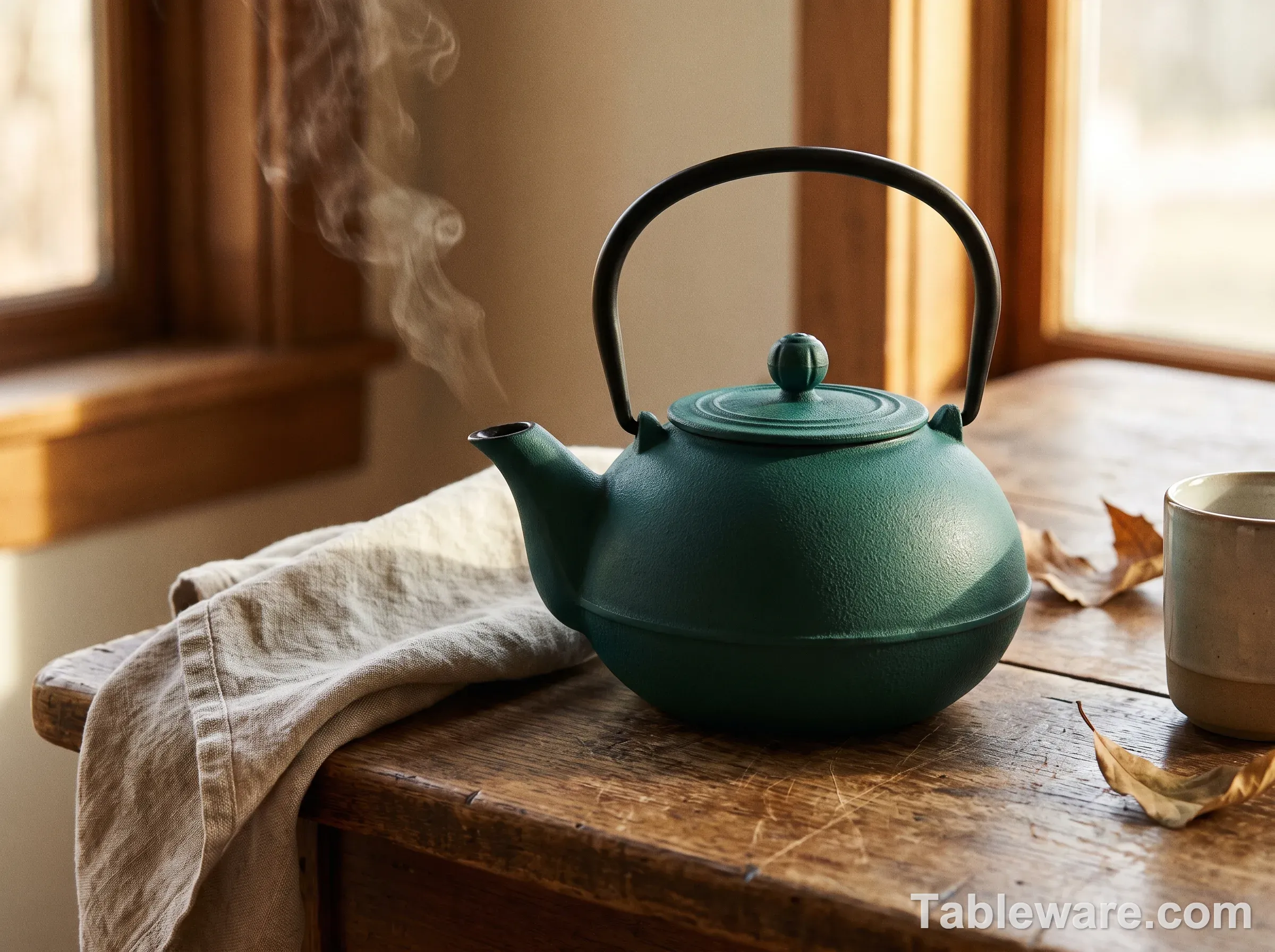
Fig 2. Enameled cast iron holds heat well enough to keep steeping tea while you pour the second cup — which is the feature and the warning in one object.
Stainless steel teapot and other metal teapots
This is the value category. A plain single-wall stainless steel teapot is $20–35, weighs about 2 pounds, has no seams to fail, and will outlast everything else on this list if you're not fussy.
Stainless grades work the same way they do in flatware: 18/10 (18% chromium, 10% nickel) is the better grade, 18/8 is fine too, and plain 430 ferritic steel is what you'd find in the cheapest pots. It won't rust, it stains less than cast iron, and it takes a punishing dishwasher cycle without complaint.
The one problem with a metal teapot is the spout. Because the body is opaque and the interior is smooth, a drippy spout is more noticeable on steel than on glass, and it shows tea stains faster. That's where the "dripless" spout design comes from, and it's worth paying a few dollars more for.
Double-wall vacuum-insulated stainless is a different product entirely. A 0.8 L insulated pot from Zojirushi holds water above 80°C for hours and stays cool enough to touch. It's the pick if you brew one large pot and drink it slowly over a morning. It's also heavy, and it's a kettle more than a teapot — there's no place for a strainer.
Aluminum, no. It warps, it heats unevenly, and it will take on a metallic taste in a way that makes your tea taste like a foil packet.
Porcelain teapot, bone china, and Yixing clay
Porcelain is the traditional choice and it's good. Non-porous, it doesn't hold flavors, and it takes a scalding pour without complaint. Vitrelle, Corelle, Lenox, and Noritake all make teaware here. The downside is that porcelain is brittle in exactly the way that matters: it chips, and a chip on a rim or spout is permanent.
Bone china is thinner and lighter — typically 30% bone ash — and it transmits heat straight through to your hand. Great for drinking, uncomfortable to grip when the pot is full. Our bone china guide has the thickness and translucency detail.
Yixing clay is the outlier and it needs its own rules. A real Yixing teapot, or zisha, is unglazed and slightly porous on purpose. The clay absorbs the flavor of whatever you brew, and over months and years a pot used only for one oolong develops a seasoning of its own. This is the feature. It also means no soap, ever, and never the dishwasher — soap strips the seasoning and detergent leaves a permanent taste in the clay. Just boiling water and air drying.
The Yixing market is also full of fakes. Authentic Yixing comes from Yixing in Jiangsu province, uses local purple clay, and a decent hand-made pot runs $300 to $2,000+. Factory pots from the same region run $40 to $120 and are honestly fine for starting out. If someone is trying to sell you a $90 "hand-made Yixing teapot," assume it is a factory pot. It is still a good teapot. It is just not an investment. Reading the base marks helps, though — how to read pottery marks covers the seal and chop stamp system.
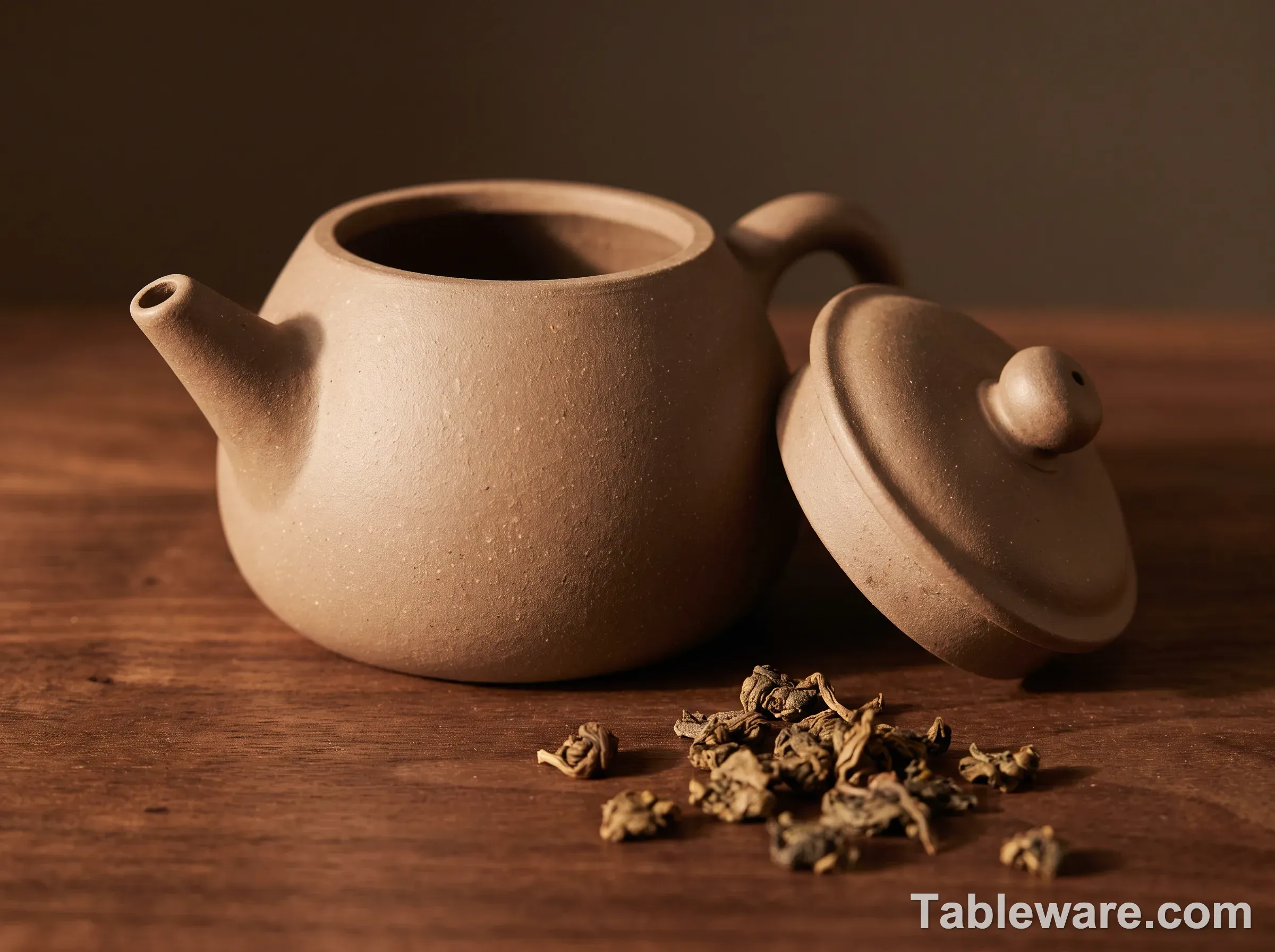
Fig 3. A Yixing zisha teapot. The porous, unglazed clay is supposed to absorb the flavor of a single tea over time — which is exactly why soap ruins it.
English stoneware is a fourth path worth naming. The "Brown Betty" teapot, made in Rockingham since the 1740s, is a thick stoneware pot that holds heat like cast iron without the weight, at a third of the price. Good for English Breakfast, cheap, nearly unbreakable. Our stoneware guide covers the body and glaze details.
Size, spout, and handle: the three specs people skip
Size I covered above. One thing people get wrong: bigger is not more convenient. A teapot's job is to be poured out before the leaves over-steep. A 6-cup pot holding 5 cups of tea means the first cup sits in the pot for 10 minutes while you work through the rest. Buy for the number of people who drink at once, not for the number of refills.
Spout comes in three shapes. A standard curved spout pours fast and is fine for a full pot. A gooseneck spout pours slow and precise — you can actually aim at a thin stream, which matters for pour-over and for weak tea where over-pouring ruins the cup. A built-in strainer spout has a fine mesh at the base of the spout and catches the leaf as it pours. If you drink loose leaf, that third one is the one you want, and it's also the one most likely to drip, because the mesh edge catches a bead of liquid every time the pour stops.
Handle is where the ergonomics live. The rule of thumb is three fingers: if you can't get three fingers between the handle and the body, your hand is going to touch hot metal or hot glass. Top handles need vertical clearance — measure the gap between your countertop and your cabinet before you buy a big pot. And check what the handle is made of. On a cast iron teapot, a bare metal handle is a burn waiting to happen; you need a grip, a silicone sleeve, or a cloth.
Weight is worth one more line. Glass pots come in around 300–400 g. A full stainless teapot is 2 pounds. A cast iron teapot is 3 to 4. That weight is why a top-handled cast iron pot needs two hands and a deliberate pour.
Infusers, strainers, and removable baskets
Four designs, and the wrong one will frustrate you for a year.
A basket infuser sits on the rim or drops inside. It's the most common and the most forgiving. The thing to check is basket volume: a 1/4-cup basket inside a 4-cup teapot is far too small. The leaf needs room to open, or it steeps unevenly and you get a thin, astringent cup. For a 4-cup pot, look for a 1/2 to 3/4 cup basket.
A spout strainer is mesh built into the spout itself. Nothing to remove, nothing to wash separately, but you can't pull the leaf out to check it or to do a second steep. Fine for green tea, limiting for anything else.
A press plunger — a mesh cylinder on a rod you push down — is the best option for fine leaf, because you control the press and can squeeze the leaf dry. It's the one I'd pick if you drink loose black tea or rooibos, where the fines are the whole problem.
A removable stainless basket with a fine mesh (40 to 60 mesh) is the most flexible option and the most common failure point in cheap pots, because the mesh frame is usually welded to a plastic handle with a small dab of glue. If you see a plastic handle on a removable basket, assume it comes apart eventually.
One material note: silicone infuser handles deform permanently above 200°C. It's still fine for boiling water, but if your pot is a whistling kettle and you dunk the infuser in, the handle goes flat and stays flat.
Leaks, drips, and the lid fit
This is where the title promise gets paid off, so let's be specific about which failures come from where.
A dripping spout is a spout problem, not a lid problem. Almost everyone blames the lid. The cause is the angle the spout is cut at: a straight-cut spout holds a bead of liquid on the lower lip and releases it a second after you stop pouring. A drippy spout costs you a wet counter and a re-steep. Two fixes: a metal drip catcher (a clip-on ring, $5) or a pot with a mesh spout base, which is the same design as a strainer spout and breaks the surface tension that forms the bead.
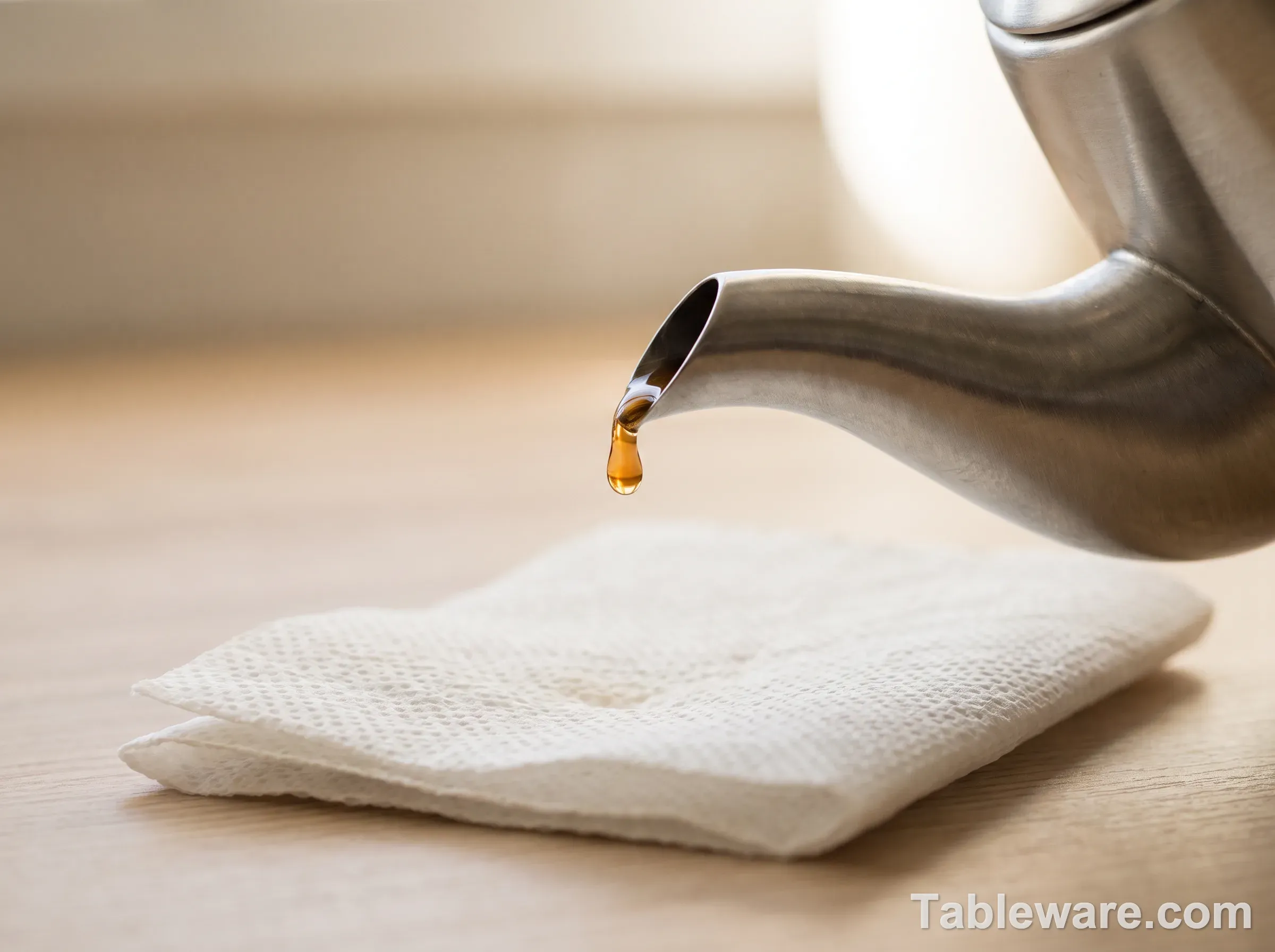
Fig 4. The 30-second in-store test. Pour onto a paper towel — a wet ring means you have a drippy spout and the bead will land on your counter every single time.
Test it in the store in thirty seconds. Fill the pot to the top, pour onto a folded paper towel, and look. A dark wet ring means it's going to drip. This is the single most useful thing you can do before you buy, and it takes half a minute.
The lid fit is the second failure point. A lid with no vent hole will be pushed up by expanding steam and either pop off or rattle. A lid knob that wiggles loose means the threads are stripped, and the lid will end up in a sink. A good lid has a vent hole, a solid knob, and a hinge or a tight seat. Twist the lid on in the store — if it rotates freely in the body, the silicone seal is already gone.
A leak at the spout-body joint is a manufacturing defect. On glass it's a weak seam and there's no fix. On metal it's a bad weld or braze. If a metal teapot leaks at the joint, and the leak is only around the lid, a replacement silicone gasket — $3 to $6, and it fits about 80% of metal teapots — solves it. If it leaks at the spout joint, return it.
And the one that isn't your fault: a pot that leaked once after you poured boiling water into a cold pot is a thermal-shock crack. The glass didn't fail because it was bad. It failed because you shocked it. Our crazing and cracking guide covers how to tell a stress crack from a manufacturing defect.
Care: descaling, seasoning, and the dishwasher
Here's what I do, and what I'd tell you to do.
Glass and porcelain: hand wash, always, and I mean hand wash — warm water, a soft sponge, dish soap. The reason is almost never the glass. It's the handle adhesive, the glued infuser, and the plastic. Even a top-rack cycle runs water at 140°F directly over a plastic bracket, and 60 cycles is enough to let go of the bond. If you own a glass teapot with a metal handle and a removable steel basket, that pot is a hand-wash item, full stop.
Descaling: hard water puts a chalky film on the inside of any pot, and it comes back every few months. Citric acid (a spoonful in a full pot of water, boil, let it sit 30 minutes, rinse three times) is the better option over white vinegar, which smells like a salad for the next two steeps. If you want to know whether you need it, a TDS pen under 150 ppm and you can ignore this section.
Tea tannin stain on stainless: ten minutes of a baking soda paste and a soft sponge will take it off. For a bad build-up, four hours of warm water and baking soda, then the paste. Never use a metal scouring pad on a teapot — it scratches the interior, and the scratches hold more stain than the original finish did.
Bare cast iron: dry it on the stove immediately, and never use soap. Soap strips the seasoning. If it needs reseasoning, 300°F in the oven, a very thin coat of oil, one hour, and repeat three or four times.
Yixing: boiling water only. No soap, no detergent, no dishwasher, ever. Our guide to dinnerware care mistakes covers the same principle for the rest of the table.
The best teapot for loose leaf, and 5 other quick picks
Best overall for most people: a 4-cup (32 oz) borosilicate glass teapot with a removable 1/2-cup infuser and a silicone handle, $25–45. Buy the one that says borosilicate. If the listing doesn't say it, assume soda-lime and skip the pot.
Best for black tea and anyone who wants heat retention: a 4-cup enameled cast iron teapot, $45–70. The heat is a feature if you press your leaf into a basket. It's a liability if you leave the leaf loose in the pot.
Best for green tea and for watching a leaf open: a glass teapot, because you need to see the leaf and you need short steeps. A 6-cup glass pot over a 2-cup pour is the classic mistake here.
The best teapot for loose leaf, and the only correct answer for a serious tea drinker: a Yixing pot dedicated to one tea, $80 and up. Buy it once, use it for one variety, and never put soap near it.
Best on a budget: a 32 oz stainless teapot with a removable infuser, $20–30. It will not be pretty. It will still be pouring in ten years.
The one to avoid: a 6-cup soda-lime glass teapot with a plastic handle, a glued-in steel infuser, and a "heat resistant" claim, priced under $18. It fails on all three axes — thermal shock, adhesive, and material — and it fails them in the first year.
What I'd actually buy
If someone asked me to pick one and shut up, it's a 4-cup borosilicate glass teapot with a bamboo-handled infuser, a vented lid, and a strainer built into the spout. Around $35, from a company that names the glass on the box.
It fails differently than cast iron or ceramic: it can break, and the handle can go brittle, and I will eventually replace it. But it does everything — it shows me the leaf, it pours clean, it's easy to clean, and it costs less than one dinner out.
The expensive pots aren't wrong. They're for people who've already decided what they want to brew and want the pot to do one thing perfectly. That's a fine reason to spend $400. It's a bad reason to spend $400 on your first teapot.
Buy the boring one. Learn what you like. Then buy the specific one.
Editorial note: prices quoted are typical US retail as of October 2026 and move constantly. If you're buying handmade or Yixing pots online, here's what to check before you order — the return window matters more than the photos.