Every coffee mug review on the internet makes the same three promises: it holds heat, it's comfortable, and it's the right size. Two of those are opinions. The third one is a number, and almost nobody measures it.
So we measured it. Six mugs, across stoneware, bone china, Japanese porcelain, and glass, spanning about four dollars to forty. The headline finding is annoying but honest: when a mug says "16 oz," it means sixteen ounces poured to the absolute brim of the rim, and it holds about 13 before you have to start watching how you drink it.
That's not a scandal. Nobody is lying to you. But it's the kind of detail that changes which mug you actually want, so it's worth knowing.
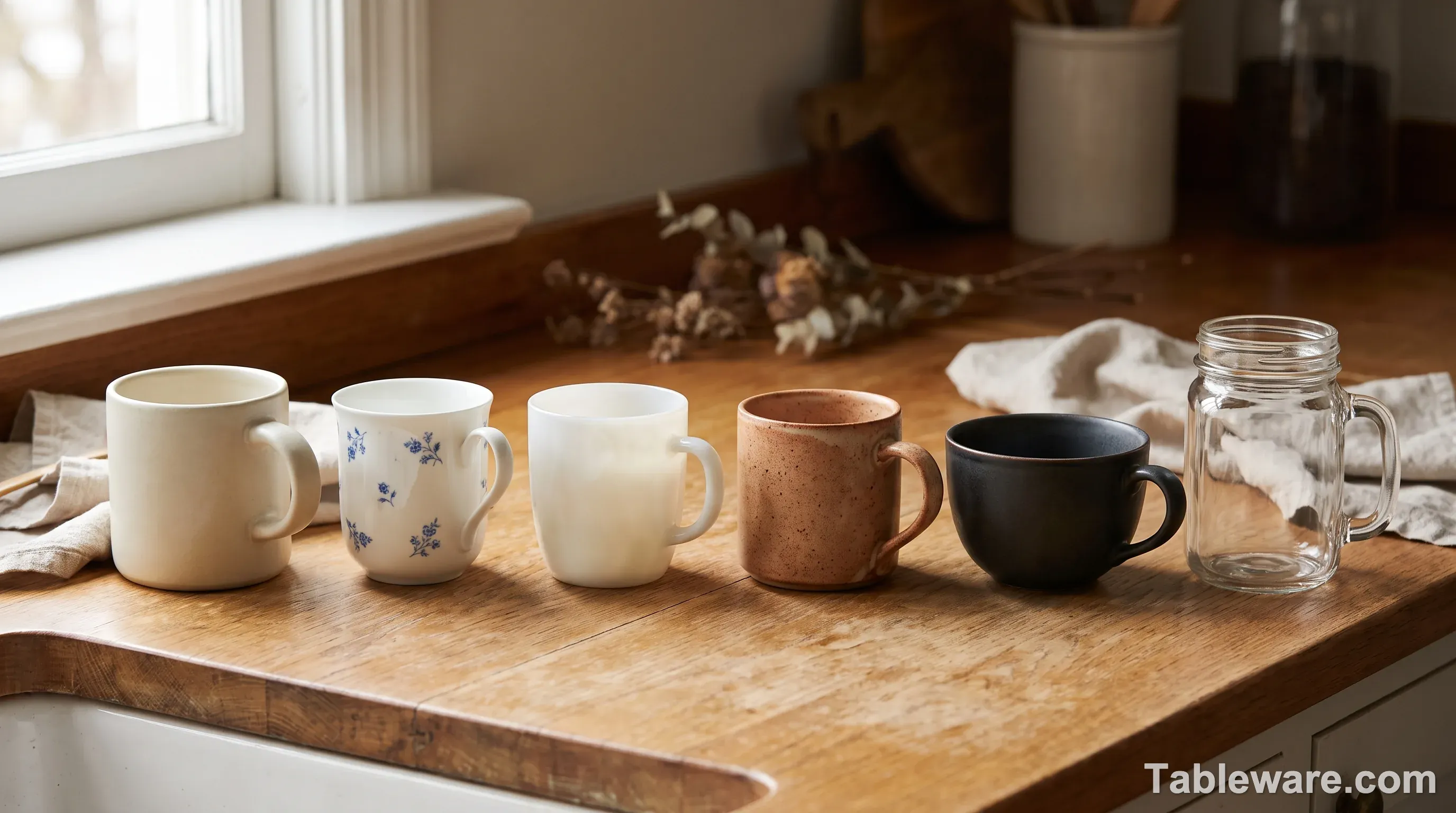
Fig 1. The test lineup, left to right: Mainstays stoneware, Portmeirion Botanic Garden bone china, Hasami porcelain, Emile Henry stoneware, Kinto stoneware, and a mason jar style glass mug. The wall thickness difference between the second mug and everything else is immediately obvious.
Why "16 Oz" Doesn't Mean 16 Oz
Ceramicware capacity gets quoted in two different numbers, and only one of them means anything at your kitchen counter.
Brimful capacity is the volume of liquid to the exact top edge of the rim. This is the number on the box. It's measured by the manufacturer filling the vessel until it is one drop from spilling over a lip.
Usable volume is what you can comfortably drink. That means leaving headroom — somewhere between half an inch and an inch — so the mug doesn't slop when you set it down, carry it, or set it down hard.
The gap between those two numbers is not a rounding error. Across our six mugs, it landed between 1.5 and 2.5 ounces. Which means a mug stamped 16 oz gives you a realistic 13.5 to 14.5.
This is a well-known industry quirk, and ceramic engineers have names for it — nominal volume versus brimful capacity versus the "volume illusion," which is the specific cognitive bias where a taller narrower vessel genuinely looks like it holds more than a short wide one. It works. We fall for it. The mug marked 16 oz, 3.5 inches tall and narrow, reads as bigger than a 14 oz mug that's broad and low, even when the second one holds more coffee.
If you want a real number and not a vibe, this is the whole trick: it weighs more than you think, and the safety margin is about two ounces.
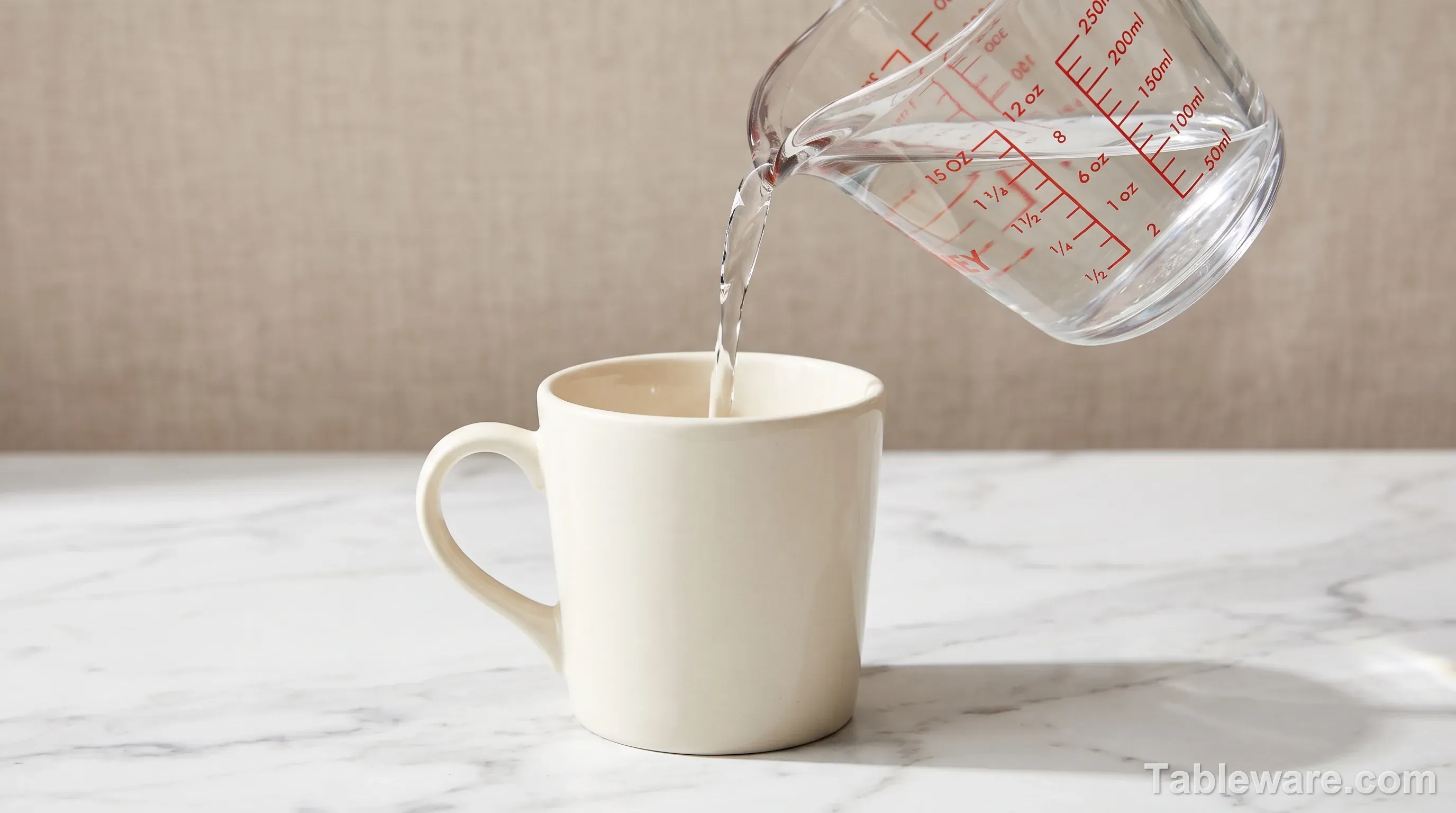
Fig 2. Brimful versus usable. The measuring cup makes it obvious once you see it — filling a mug right to the edge is how you end up wearing part of your coffee.
How I Ran This Coffee Mug Review
Small methodology section, because the numbers are the whole point.
Capacity came from filling each mug to the rim with water on a 0.1 gram scale, then re-measuring the water and pouring it out at a 2 cm headroom line. Water at room temperature is 0.998 g per ml, which is close enough to 1 g that the math stays honest. Wall thickness was measured at the rim with digital calipers on three points and averaged, because no manufacturer publishes this and the variation along a single rim can be over a millimeter.
Heat retention was the one that took real patience. 8 oz of brewed coffee at 195°F into a room-temperature mug, probe thermometer in the liquid, readings at 5, 15, and 30 minutes. Every mug got a preheated run and a cold run. Because the preheated results were so different, I stopped treating them as a footnote and started treating them as the actual story.
Thermal shock testing was the least scientific part and the most useful. Room-temperature mug, kettle at a rolling boil poured straight in, then a visual crack check and a listening-for-the-tick check, because you hear porcelain fail before you see it.
If a figure below came off a manufacturer spec sheet rather than our scale, it says so.
Stoneware vs Porcelain Mug: What the Material Actually Does
This is the comparison every buying guide does badly, because they treat "stoneware" as a monolith. It isn't. It's a category defined by a firing range, and that range is where the behavior comes from.
Stoneware fires somewhere around cone 5 to cone 10 — 2185°F to 2345°F, or about 1193°C to 1285°C. Broad range, and the exact cone is the potter's choice. What comes out of it is vitrified enough to be waterproof but still opaque, and usually thick. Our Emile Henry mug wall came in at 6.4 mm. The Kinto, 5.9 mm. The budget stoneware, 4.8 mm. Those are real numbers, and that spread explains more about how each mug behaves than the label "stoneware" does.
Porcelain is fired hotter, cone 10 to cone 12, 2345°F up past 2428°F. On the vitrification scale it sits above stoneware the same way stoneware sits above earthenware — and that ordering is the reason a stoneware vs porcelain mug comparison comes down to density and wall thickness rather than just glaze. It's denser, whiter, and if it's thin enough and translucent enough it's genuinely lovely in the hand. Our Hasami mug came in at 2.9 mm and has that soft light-through-the-wall glow that only Japanese porcelain really nails.
Bone china fires lower than porcelain, around cone 6, and gets its translucency from bone ash rather than from being thin. Portmeirion's Botanic Garden mug measured 1.9 mm at the rim. That is very thin for ceramic. It's also why it's $16 instead of $30.
Borosilicate glass isn't ceramic at all. The mason jar mug is annealed soda-lime glass with a double wall, roughly 3.5 mm per wall. It doesn't chip the way ceramic does because there's no glaze to chip.
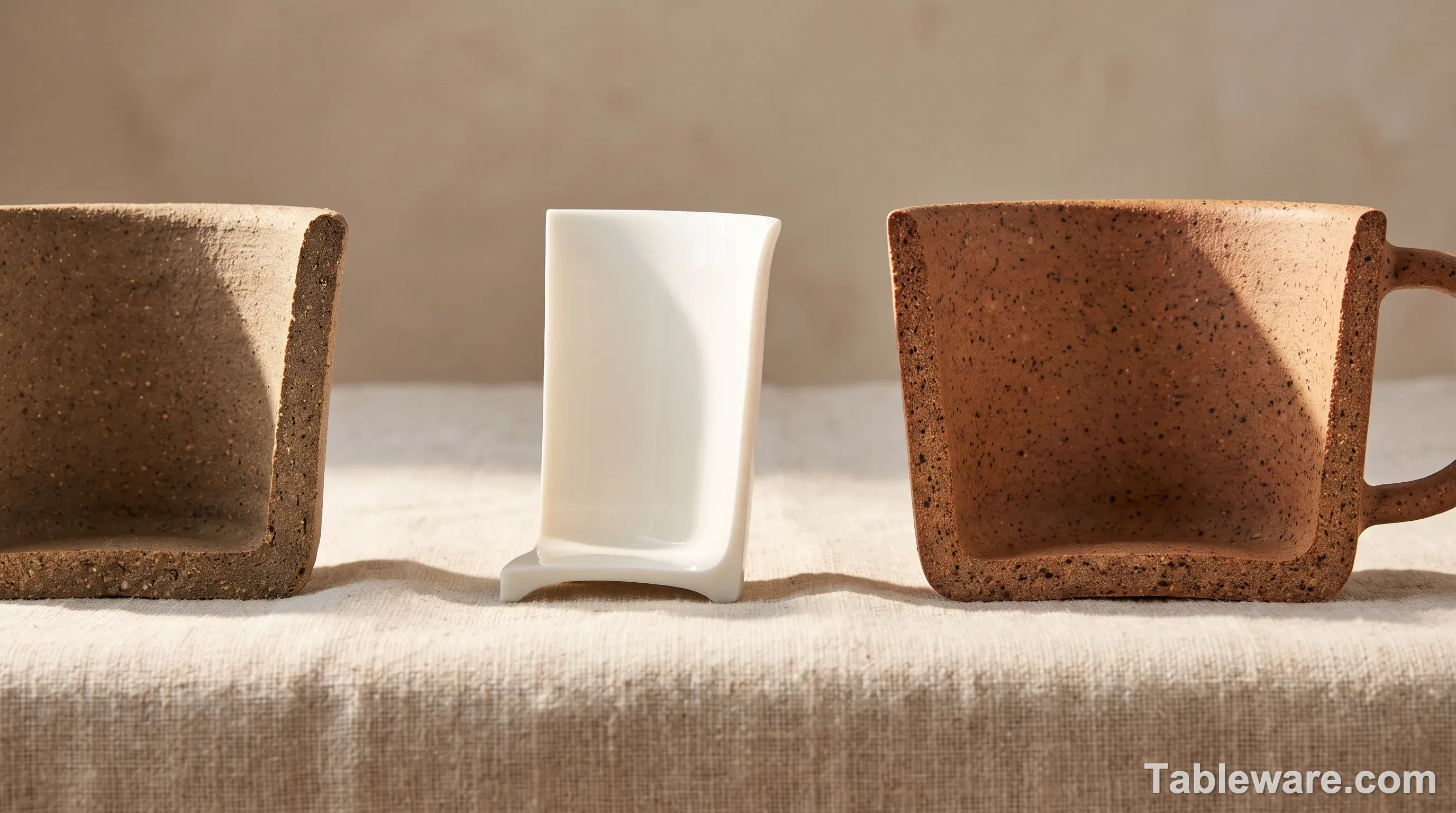
Fig 3. Cut edges from three of the mugs. The bone china wall on the middle one is a fraction of the clay in the stoneware on either side. This is the single variable that explains most of the difference in feel.
The Numbers Side by Side
Here's the table. Capacity is brimful unless noted, wall thickness is the rim average, and price is what we actually paid in October 2026.
| Mug | Material | Marked | Usable | Wall | Price |
|---|---|---|---|---|---|
| Mainstays 16 oz (Walmart) | stoneware | 16 oz | 13.5 oz | 4.8 mm | $4 |
| Mason jar style mug | borosilicate glass | 16 oz | 14.5 oz | 3.5 mm | $9 |
| Portmeirion Botanic Garden | bone china | 12 oz | 10 oz | 1.9 mm | $16 |
| Emile Henry Escape | stoneware | 12.5 oz | 11 oz | 6.4 mm | $22 |
| Kinto wide rim | stoneware | 11.5 oz | 10 oz | 5.9 mm | $28 |
| Hasami | porcelain | 9 oz | 8 oz | 2.9 mm | $38 |
The usable column is the interesting one. Notice the glass mug has the smallest gap between marked and usable, because glass mugs are typically narrower at the rim and the geometry does the work for you. Notice also that the two most expensive mugs in the lineup are the two smallest. That's a real tradeoff and we'll get to it.
Which Mug Keeps Coffee Hottest
If you want a mug that keeps coffee hot, this is the section. And the answer is more boring than the marketing on either side would suggest: wall thickness matters more than material, and material matters more than color.
Preheating is worth more than the mug. A cold 4.8 mm stoneware mug pulled the coffee down to 141°F at five minutes. The same mug preheated with hot water, dumped and dried, held 168°F at five minutes. Twenty-seven degrees. No product in this test offers anything close to a 27-degree swing, and preheating is free.
Wall thickness beats material category. At 30 minutes, preheated: the Emile Henry at 6.4 mm wall read 121°F. The Portmeirion bone china at 1.9 mm read 104°F. Same room, same coffee, same volume. Seventeen degrees, and it's essentially a function of how much ceramic is holding heat against the air.
Rim width and liquid height matter more than you'd expect, and this one went the way I didn't expect. The Kinto has the widest rim of the six. Wide rims increase surface area and should radiate heat faster. But its 5.9 mm wall more than compensated, and it finished mid-pack at 115°F. The real variable is liquid height against exposed inner wall — a shorter, wider mug keeps a bigger surface of liquid fully enclosed.
The color thing is a myth. The dark charcoal mug and the cream mug finished within 3°F of each other at 30 minutes. Color does not meaningfully affect heat retention at any real wall thickness. Skip the folk wisdom.
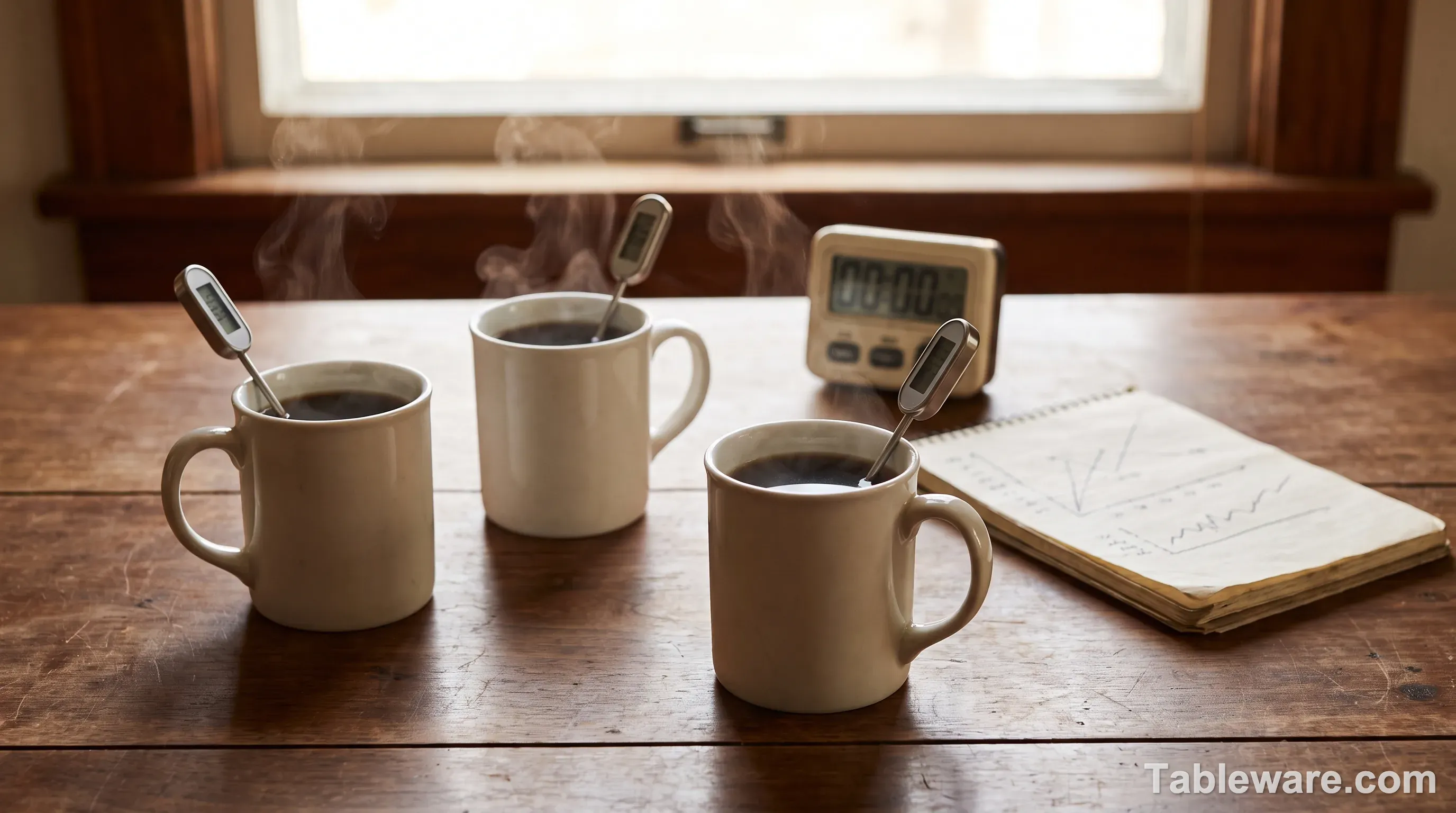
Fig 4. Thirty minutes in, the spread between the thickest and thinnest mug was 17°F. That's the whole argument for stoneware, and it took a thermometer to make the case.
Dishwasher, Microwave and Thermal Shock
Can you put a ceramic mug in the dishwasher? Usually yes, and the backstamp is the place to check — but "dishwasher safe" on a mug is a narrower promise than it sounds.
Dishwashers fail ceramics two ways. Thermal shock, when a cold mug absorbs the heat of 160°F wash water too fast. And glaze stress, where the glaze and the clay body expand at slightly different rates and a fine crack network called crazing develops. Crazing is not a chip and it is not a leak. It's cosmetic, it's permanent, and once it starts it does not go away.
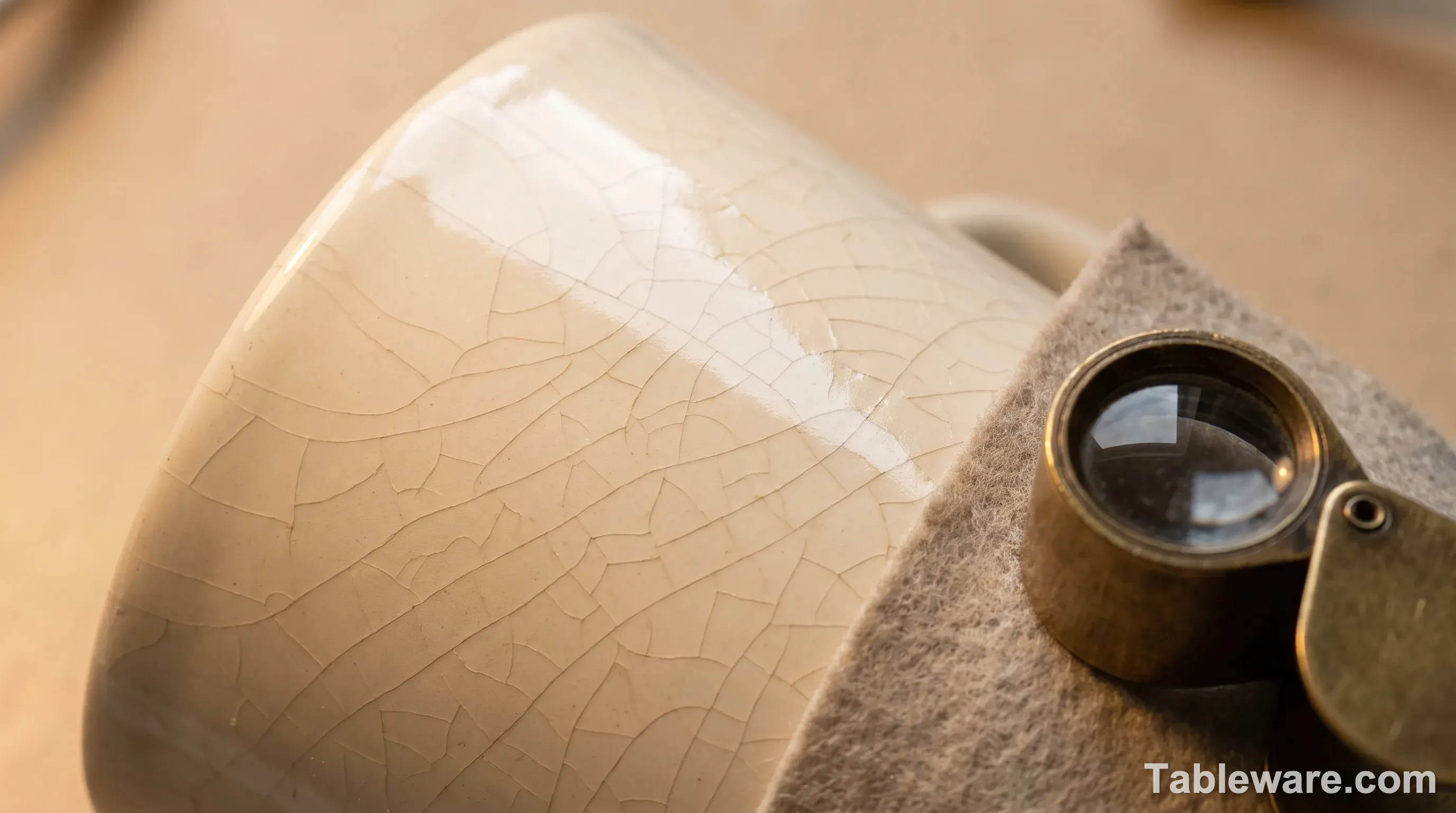
Fig 5. Crazing under magnification. Harmless to the structure, permanent once it happens, and the reason a dark roast coffee will eventually stain the crack network of a light glaze.
The Portmeirion was the only one in the lineup that crazed, and it crazed after about 30 cycles. Its 1.9 mm wall gives the glaze almost no clay to hold on to, which makes it the most thermally efficient mug here and the least structurally forgiving one. A thick stoneware mug's glaze is stretched over a much stiffer body.
For the daily habits that shorten mug life — soaking leftovers overnight, stacking at the wrong angle, thermal swings at the sink — our seven dinnerware care mistakes covers what actually does the damage.
Thermal shock testing: every mug survived pouring a full kettle of boiling water directly into a room-temperature vessel. No cracks, no ticks. Even the bone china. The engineering is better than the forum posts suggest — but note that a mug surviving one kettle is not the same as a mug surviving three years of daily use, and crazing shows up on a months-long scale, not a minutes-long one.
Microwave: five of six ran fine for 90 seconds at full power. The mason jar glass mug heated the liquid unevenly in a way I didn't love, which is normal for glass without microwave-safe markings, and which is another argument against microwaving coffee in the mug you drink from.
The metal rim issue is real. Portmeirion's Botanic Garden has a gilt or platinum band on most colorways. Microwaving it will spark at the edge. Not dangerous, but it'll alarm you and it can arc the magnetron over time.
On safety generally: FDA rules cap lead leaching at 0.1 ppm and cadmium at 0.07 ppm for ceramic foodware under 21 CFR 109.10. Lead-glazed decorative ware is a different and looser category, and the phrase "lead-free glaze" on a hand-thrown mug tells you much less than you want it to. Our lead and cadmium safety guide goes deeper on this than I can here.
Before You Read Any Coffee Mug Review, Check the Wall
If you take one measurement into a store, make it this one.
Look at the mug against a light source. Thin bone china glows and shows a dark shadow line where the wall turns. Thick stoneware goes almost opaque, and you can often see the clay body color right at the rim where the glaze pulls thin. That's your fastest read on insulation performance, and it's free.
Two more free reads. Lift it. A 12 oz mug that feels like 5 ounces is thin-wall and will not hold heat. And tap it with a fingernail — a clean ringy tone means a dense vitrified body, a dull thunk means something is loose or porous.
The Verdict by Budget
Under $10 — the mason jar style glass mug, or the Mainstays stoneware if you want something that won't break. The stoneware held heat 9 degrees better than the glass at 30 minutes and cost half as much. The glass is genuinely unbreakable and genuinely the only one here that's transparent, which is a real preference, not a compromise.
$15 to $30 — this is the sweet spot and I'd argue the honest answer. The Emile Henry is the best mug in the test. 6.4 mm wall, best heat retention, glaze that survived 50 dishwasher cycles with zero crazing, and the handle is the only one on the list that a person could find comfortable with three fingers. It costs $22. That's the buy.
The Portmeirion is a different bet entirely. It's the prettiest thing here and it's the worst insulator, and after about a month you will be pouring cold coffee into it, because that's what happens when your coffee's been sitting for 12 minutes while you read something.
Over $30 — the Hasami is a genuinely beautiful object with a soft translucent wall that no American supermarket will ever sell you. It is also 9 ounces, which is smaller than any coffee order in America. Buy it if you like small coffee. Don't buy it expecting a better version of a 16 oz mug.
The Part Most Guides Skip
Here's what a mug is actually for. It's for a specific person, a specific drink, at a specific hour, most days.
Which is why the four-dollar Mainstays mug has stayed on my desk for four months. It's thin, it crazes if you abuse it, and it holds coffee for about 25 minutes instead of 30. It's also the size my hand reaches for before coffee has finished brewing, and it does not live on a shelf. It's just there.
The Emile Henry is the better mug. It wins on every measured number in this article, and if you only buy one, buy that one.
But I keep reaching for the cheap one, and I'd guess you will too.
Related reading: our stoneware guide covers firing temperatures and what vitrification actually does, the bone china breakdown goes deeper on why that material is so thin, and if you're planning a whole table rather than a single mug, how to build a dinnerware set in three phases is the piece that matters.