Why Plastic Food Storage Containers Warp, Stain and Go Bad
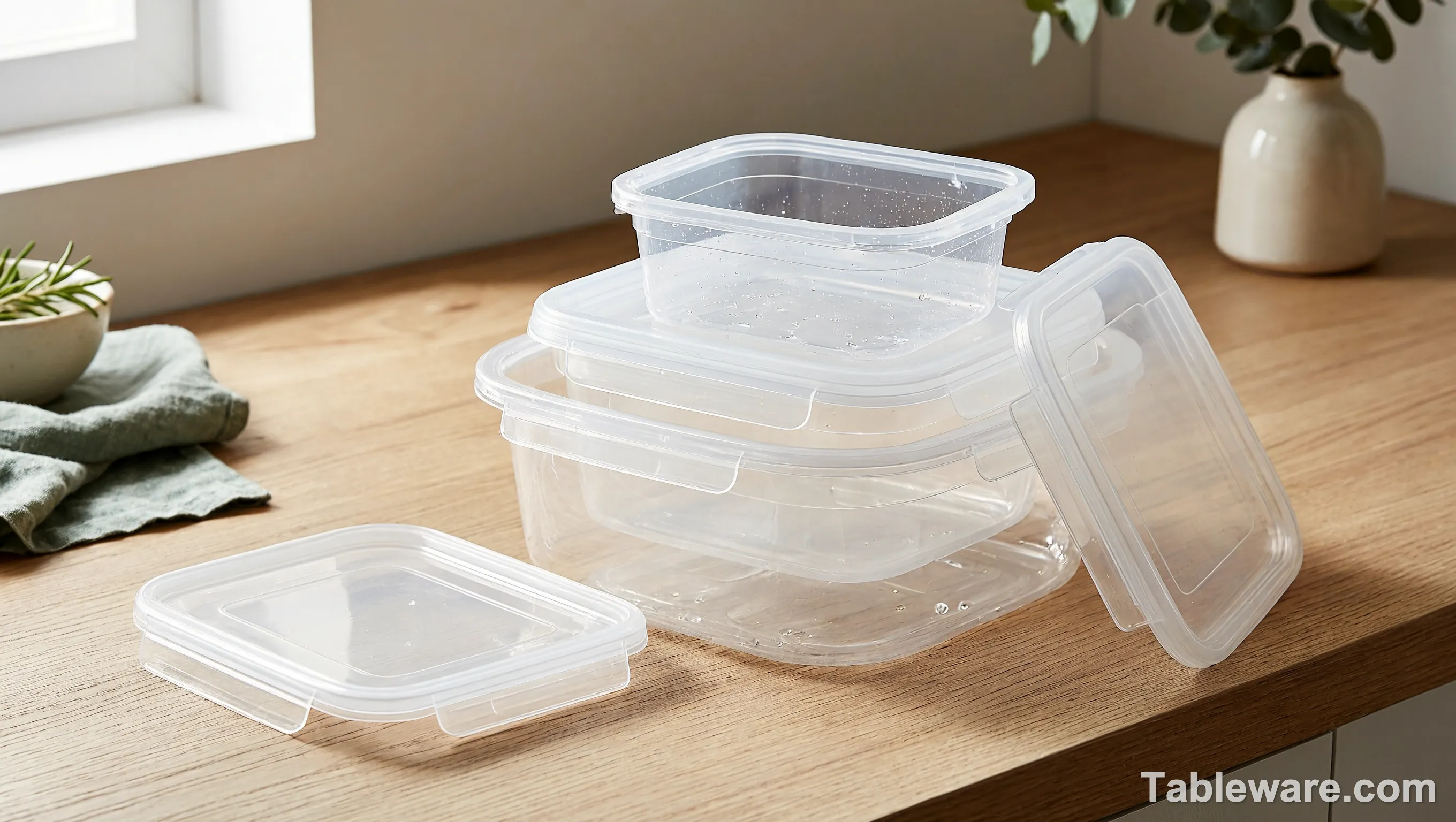
Fig 1. A good set looks like this: clear walls, lids that actually snap, and enough size variety that nothing is orphaned in the back of the cabinet. The differences that decide whether this set lasts ten years are invisible in a product photo.
Here's the thing nobody tells you about plastic food storage containers: the container is fine. It's almost always the lid that dies.
I ran out of matching lids last spring. Not because the boxes cracked or yellowed — because the lids warped. Two and a half years of dishwasher cycles turned every one of them into a gently curved disc that no longer seated flat. The containers were still perfect. Useless, though. A container without a lid is a bowl, and I had a drawer full of bowls I'd paid good money for.
Same story with the orange one. A jar of curry sauce went in a PP container on a Sunday, came out Monday looking fine, and by Wednesday had stained the whole interior a soft pumpkin color that no amount of scrubbing would shift.
Neither of these failures is a manufacturing defect. Both are predictable consequences of the material, and both are avoidable if you know what you're looking at. So this is a buying guide built backwards from the failures — six decisions that separate a set of food storage containers that lasts a decade from one that becomes a drawer of orphan lids by March.
Plastic Food Storage Containers: Read the Resin Code Before the Price Tag
Flip any plastic food storage container over. There's a small triangle with a number in it. That number is the resin identification code, and it's the single most useful thing printed on the whole object.
Seven codes exist. For containers, four of them matter.
#5 — Polypropylene (PP). This is the container standard and it's what you want. PP melts around 320°F (160°C) and has a usable service range of roughly -30°C to 140°C for food-grade grades. It takes a hard sear from the microwave without complaint, resists acids and oils, and doesn't need plasticizers to stay flexible — which means there's no phthalate class to worry about. When you see #5, you're looking at the same polymer that goes into yogurt tubs, takeout containers, and bucket handles.
#2 — HDPE. Slightly cheaper, softer, lower heat tolerance around 220°F (110°C). It's what juice and milk bottles are made of. Fine for a lid. Fine for a cold container. Not what you want if you're regularly reheating in it.
#1 — PET. The plastic of the drink bottle, with a heat ceiling around 70°C — 158°F, which is below the temperature of most leftovers. It also scratches faster than PP. You're not buying PET containers. You're just seeing the code on the bottom of a water bottle and wondering.
#7 — Other. Usually polycarbonate. This is the code that used to carry BPA, and it's the one worth understanding rather than avoiding.
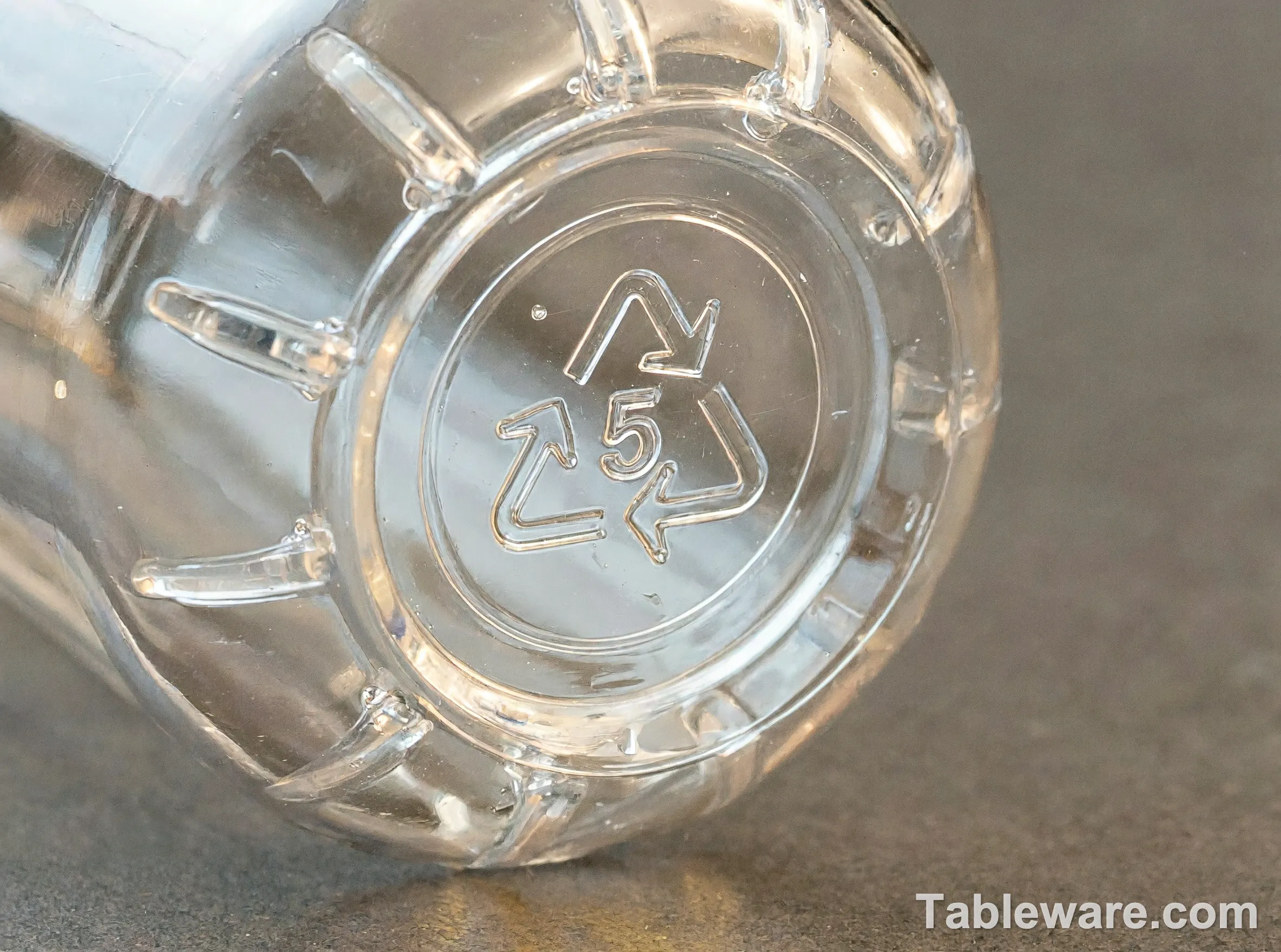
Fig 2. The resin code, molded into the base. A magnifying glass or your phone camera gets you a clear read on it — the digits are tiny and low-contrast, which is why people miss them.
One more thing about codes, and it's the detail that separates a useful container from a disposable: check the code on the lid as well as the body. They're frequently different polymers. A #5 body with a #2 or #4 lid is completely normal, and it's why the lid needs to come off before the microwave. A polyethylene lid over a polypropylene base is the industry-standard construction, and it's fine. It's just not fine microwaved on.
Food Storage Containers With Lids: The Lid Decides How Long the Container Lasts
This is the part I'd fix first in anybody's kitchen, and it's the reason food storage containers with lids fail faster than the containers themselves.
The economics are worth spelling out. A 50-piece set of plastic food storage containers might run $18. If the lids are the part that dies and the containers never do, you are not replacing a $18 set — you are replacing maybe 20 lids at a few dollars each, on top of a cabinet that already works. Most people don't notice that math because they never look at the lids on their own.
Polypropylene has a heat deflection temperature around 230°F (110°C) — the point where the material stops holding its shape under load. A dishwasher's heating element runs considerably hotter than that, often 140°F to 160°F at the surface during the dry cycle, and the water condensing off a hot element adds heat exactly where the container is sitting.
A lid is the weak point for a mechanical reason: a lid's cross-section is roughly 1 to 2mm thick, while a container base might be 3mm or more. Thin sections heat through faster and lose stiffness first. That's why lids bow and container bodies don't, even when both go through the identical cycle.
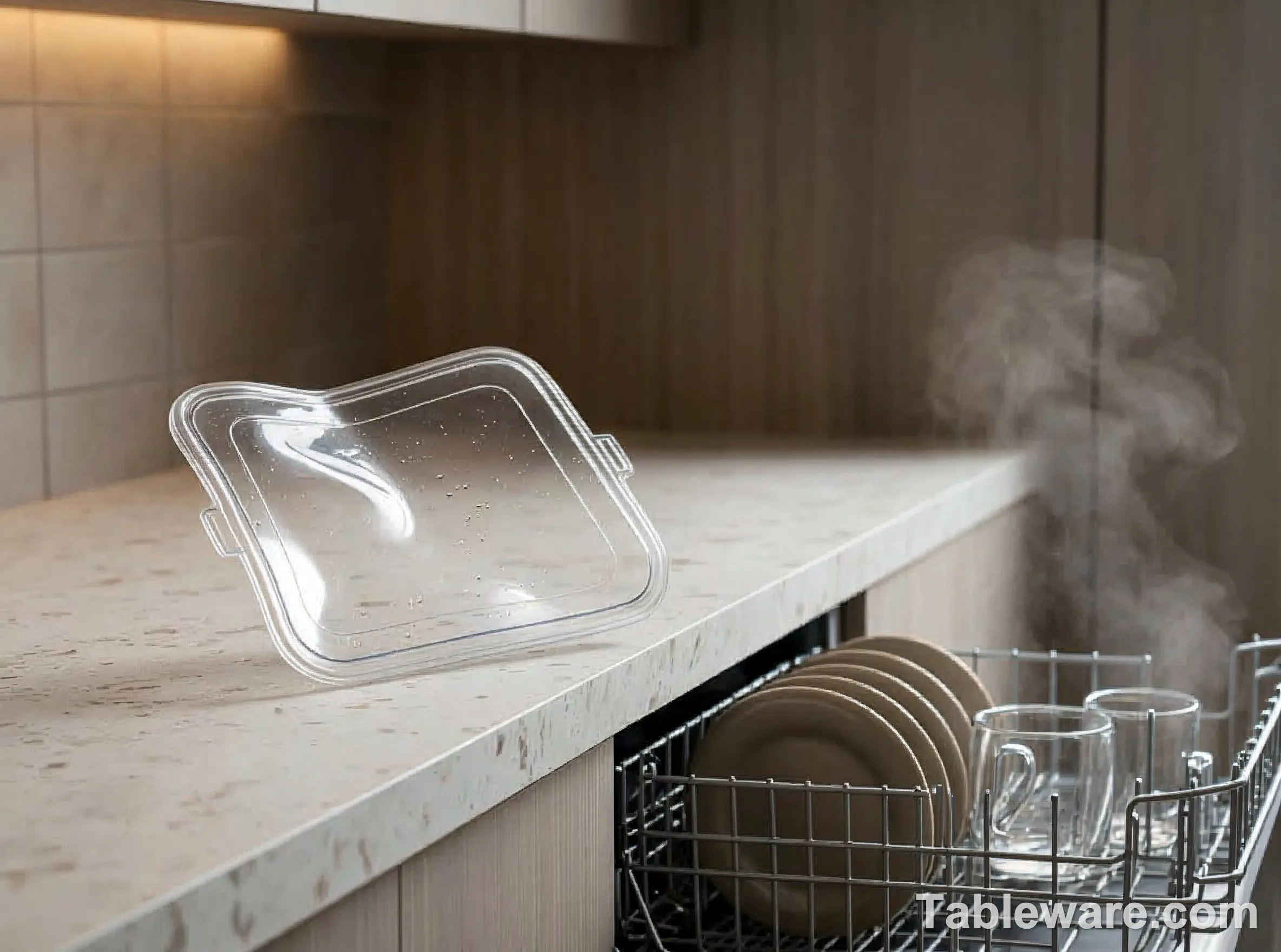
Fig 3. Heat does this. The lid's cross-section is thinner than the container base, so it heats through faster and loses its flatness first. Once it curves, the seal is gone.
Three more causes of lid failure that have nothing to do with the dishwasher:
Stacking weight. A lid stored under a stack of nine other containers is being held in compression for months. Polypropylene creeps under sustained load. This is why "store lids loosely, don't snap them shut" is advice worth following.
Prying with a fingernail. Every time you lever a lid off at one corner, you stretch the snap ridge a little. Do it a thousand times and the fit goes from firm to loose.
Microwaving with the lid on. Steam pressure pops the seal and the heat warps the plastic. Vent it or take it off entirely.
So the buying decision, in order:
- Top rack, always. Bottom rack and you're stress-testing the plastic every single cycle.
- Turn off heated dry. Air dry does the same job. Heated dry is the thing that's killing your lids.
- Hand wash lids if you care about them. Lids take 30 seconds. Containers can take the dishwasher. Split them up.
- Store lids loose. Lying on top of their container, not clipped shut, not buried under a stack.
If a lid does warp, it's recoverable in most cases: hot water, press it flat under a weight, let it cool. That's a real trick and it works on a slightly curved lid. It doesn't work on one that has cracked or lost its snap ridge.
Airtight Food Storage Containers vs Leak-Proof: What Actually Stays Airtight
There are two ways a container seals, and they behave completely differently over time. Understanding the difference is the whole game with airtight food storage containers.
Plastic-on-plastic snap. The lid rim presses against the container rim and friction holds it. Cheap, universal, fine for short-term storage. It degrades because every dishwasher cycle and every pry-off slightly stretches the fit, and the snap goes from firm to loose to useless.
A gasket. A silicone or rubber ring sits in the lid and compresses against a flat rim to create a continuous seal. This is a fundamentally better mechanism for dry goods and for anything you want to keep genuinely airtight, because the seal doesn't depend on a tolerance held in stretched plastic. The cost: a gasket you now have to keep clean, and a lid that has to be bought from the same brand because the ring won't fit a different rim.
Vented lids are a third option and they solve a narrow problem — letting steam escape during a microwave reheat. They are not airtight and they are not leak-proof, and a product photo will not tell you which one you have.
So when a listing says "airtight food storage containers" and shows a snap lid in the photo, that is marketing language, not a specification. The word "airtight" is doing the work of "the lid stays on," which is a much weaker claim.
The water-inversion test
Here's the only honest test of a seal, and it takes five seconds. Fill the container with water, put the lid on, seal it, and turn it upside down over the sink. If it leaks, the lid is compromised — no matter how much it looks fine, no matter how firmly it clicked.
Do this when a lid is new and do it again whenever a lid starts behaving oddly. It's also the fastest way to test a replacement lid before you commit to keeping it.
Plastic vs Glass vs Silicone vs Stainless Food Storage Containers
This is the question people ask first — glass food storage containers, plastic ones, silicone, stainless — and the honest answer is that it depends on which failure you'd rather have.
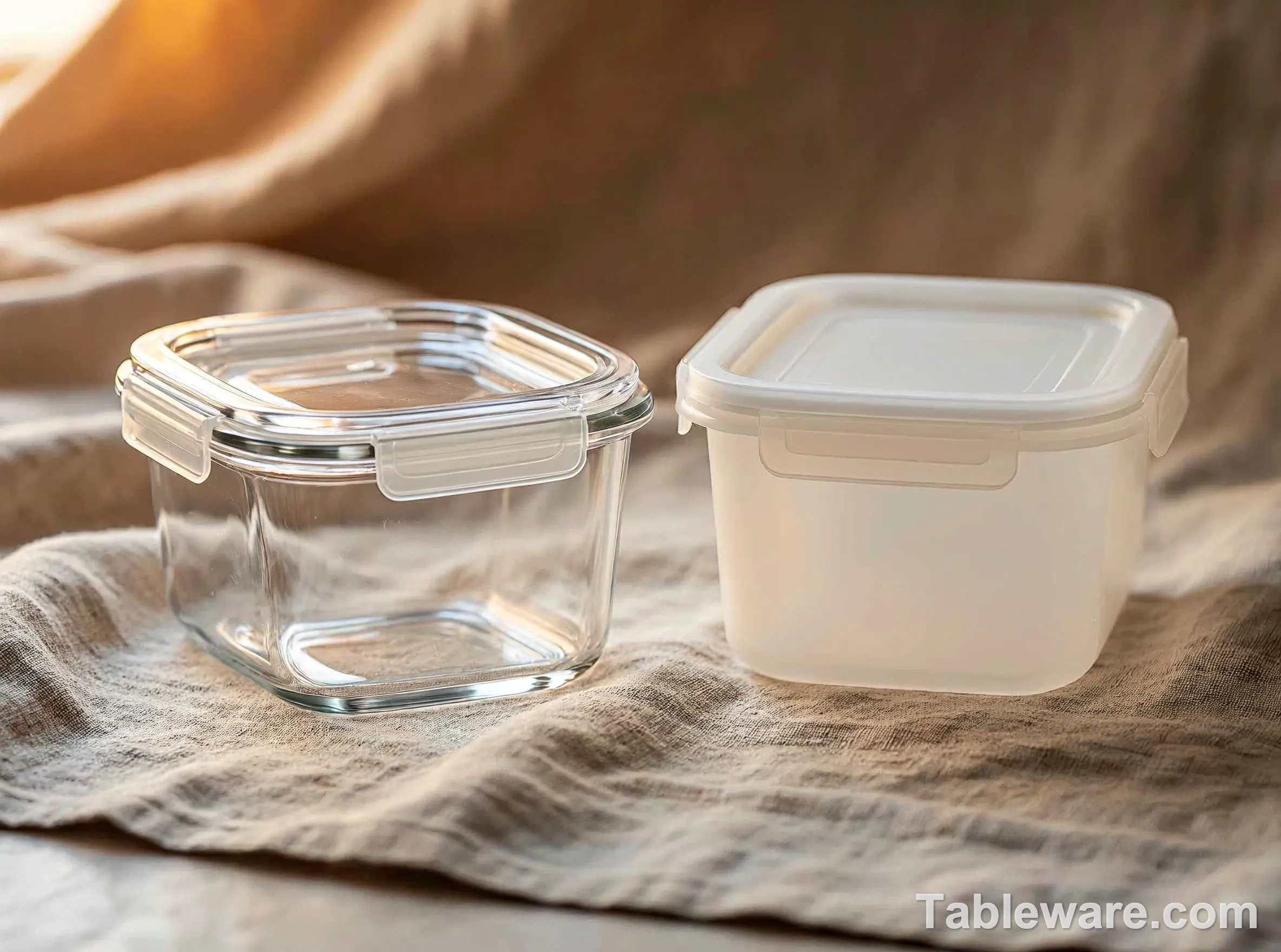
Fig 4. Same volume, same job, different failure mode. Glass loses to a dropped lid. Plastic loses to a dropped pan.
Glass wins on: chemical inertness (nothing migrates, ever, at any temperature), heat tolerance (a borosilicate body goes oven to freezer), stain resistance (tomato sauce will not live in glass), and smell (glass does not hold odors at all).
Glass loses on: weight, breakage, and the fact that a glass container in a moving car or a crowded sink cabinet is a liability. Borosilicate is much tougher than soda-lime glass, but "much tougher" isn't "tough," and the difference between the two glass types matters more than most buying guides admit — we covered the actual thermal-shock math in our drinking glass types explainer.
Plastic wins on: cost (a 50-piece PP set runs about $22 and the container count is the pitch), lightness, nesting efficiency, and drop resistance. A polypropylene container that falls off a counter onto tile will bounce. It will also develop micro-scratches that hold odors later, which is the trade.
Plastic loses on: heat deflection, stain retention, odor retention, and eventual embrittlement.
The comparison nobody makes: most kitchens end up with a mix, and that's fine. Buy glass food storage containers for the leftovers you reheat and the sauces you keep a week, and plastic for the lunches, the snacks, and the bulk freezer stash that takes a beating. Trying to standardize on one material is how people end up replacing a perfectly good $6 container for the sake of a matching set.
Silicone wins on: heat (it goes from freezer to oven), flexibility, and being the only option here that's genuinely collapsible. Stasher-style silicone bags store flat, which is unbeatable for a small kitchen, and they're the only containers that go from freezer to a 450°F oven. Silicone loses on volume, on stacking, and on how many years of daily use you'll get before it gets cloudy and the seal stiffens.
Stainless steel wins on: durability (a stainless container outlasts everything on this list by decades), odor and stain resistance, and working in the oven, freezer, and dishwasher without a single qualification. Stainless loses on transparency — you can't see what's inside without opening it — and on weight, and on price. A quality insulated steel container runs $35 to $60.
My actual rule: plastic for the fridge and freezer, glass for the oven and the microwave, silicone when space is the constraint, stainless when you want it to outlive you. If you want one material and you want it to be plastic, buy #5 polypropylene and accept the trade. If you want one material and you want it to be glass, buy borosilicate, not soda-lime — the cheap soda-lime jars with clamping lids will shatter in a freezer. We run the same thermal-shock math on the baking side in our oven-to-table bakeware engineering guide, and the failure mode is identical: a lid that expands faster than the body it sits on.
Glass food storage containers have a lid problem too, and it's a different one. A glass body with a plastic lid means you're assembling two materials from two suppliers, and the lid is still the part that fails. The advantage: when the lid finally goes, you replace a $6 lid rather than a $30 container.
That last point deserves more weight than roundup guides give it. Every glass food storage container you own has one weak component and one permanent one, and they fail in opposite ways. The glass survives heat, acid, and decades of washing. The plastic lid survives none of that gracefully, and it is the only part you can actually replace.
Why Plastic Food Storage Containers Smell and Turn Orange
Plastic food storage containers hold onto smells and colors for a physical reason, and once you understand it you'll never again wonder why your leftovers taste faintly of Tuesday.
Polypropylene is a semi-crystalline polymer with a slightly polar surface. That surface has micro-pores at the scale of food molecules, and oily, pigmented molecules — lycopene from tomato, curcumin from turmeric, the fat-soluble pigments in curry — migrate into those pores under heat and pressure. The pigment isn't sitting on the plastic. It's inside it.
That's why:
Stains are permanent. Baking soda and water as a paste, left for 30 minutes, then a soft sponge, will shift surface residue. It will not shift lycopene that has migrated below the surface. The stain that survives scrubbing is in the polymer, not on it.
Sunlight genuinely helps. Direct sun for a day bleaches lycopene out of the surface. It works, and it also fades any printed decoration, so don't park a decorated container in a south-facing window.
Odors follow fat, not salt. A container that held salted water is fine. A container that held garlic oil or mayo is permanently scented, because those are fat-soluble and the polymer holds them. Baking soda and a splash of vinegar in warm water, left for 30 to 60 minutes, absorbs a lot of it. It doesn't fix a container that smells like curry.
Acid accelerates aging. Vinegar, citrus, and tomato sauce are the foods most likely to leave a permanent mark and to dull the plastic's surface over time. Long-term storage of acid in PP is the one combination I'd genuinely avoid — use glass for it.
This is also the underlying reason for the "orange container" specifically. Turmeric and curry stain faster and more permanently than almost anything else, and the stain is a real, well-known complaint among people who meal prep curries weekly. If curry is a regular part of your week, that single fact should push you toward glass for that container and away from a $12 polypropylene one. If you want the fuller breakdown of which polymers hold which pigments, we covered the resin chemistry in is melamine dinnerware safe.
Dishwasher vs Hand-Wash, and When to Retire a Container
Everything above converges on one piece of advice: the dishwasher is where most plastic food storage containers die. Not from one cycle. From four hundred of them.
Top rack, no heated dry, and you can expect years. Bottom rack with heated dry and you might be replacing lids annually.
The compromise most people land on is the right one: containers in the dishwasher, lids by hand. Lids take thirty seconds.
Not everything is fixable. Retire a container — or at least stop using it for food — when you see:
Cloudiness that won't wash off. PP goes hazy from micro-scratching, and it's irreversible. That haze is also where odors and bacteria hide.
Yellowing, especially uneven yellowing. That's thermal oxidation from repeated heat. The polymer chain is degrading.
Deep scratches, gouges, or a gummy surface. A knife drawn across a PP container doesn't just scratch it. It creates a stress concentration and a valley where food lodges.
A warped base. If the container rocks when you set it on a flat counter, it has been heated unevenly and its geometry is compromised.
A lid that no longer snaps, or that leaks the water-inversion test. The only honest test of a seal.
The general rule from public health guidance is to expect three to five years of service on a frequently used plastic container, and to replace on any of the above signs rather than on a calendar.
Replace the Lid, Not the Whole Set
Where to find Tupperware replacement lids — and whether the brand even sells them
Here's something the big brands changed recently, and it decides how you should buy.
Tupperware's US and Canada warranty policy, as updated in April 2026, now runs ten years as the default on most products, with a Limited Lifetime Warranty on items carrying the "P" symbol. But here's the catch: individual parts — containers, seals, lids — are not sold separately. A warranty claim generates a voucher credit you can only apply to a complete item, and the voucher expires in 30 days.
That means a warped lid on a container you love does not get you a new lid. It gets you a voucher for a whole new set. Which is a much worse deal than it sounds, and it's exactly the scenario where most people would rather just buy a lid.
The practical answer: buy a system where lids are replaceable, and check that before you commit. OXO Good Grips sells Smart Seal lids separately by size. Snapware and Rubbermaid both stock replacement lids. This is where tupperware replacement lids actually get bought today — the vintage market is full of pieces with good bodies and dead seals, and a $3 replacement can rescue a container you'd otherwise throw out.
Generic lids on Amazon are cheap but rarely fit a specific rim profile, and a lid that doesn't seal properly is worse than no lid at all because it gives you false confidence.
For vintage Tupperware specifically, the sizing code molded into the bottom of the container is what you need to match a replacement. Match the code, not the shape — shapes repeat across generations, codes don't.
One warning about tupperware replacement lids sold as "universal fit." They are mostly universal in the marketing sense. The gasket has to compress against a flat rim of a specific diameter and depth, and if either is off by a few millimeters you get a lid that clicks shut and leaks anyway. A leaking lid is worse than a missing one, because you stop looking for the leak.
What "BPA-Free" Actually Covers
You'll see "BPA-free" on almost everything. It's been on almost everything since about 2010. On its own, it tells you almost nothing, and it's worth spending a minute on why.
BPA — bisphenol A — is a monomer used to make polycarbonate and epoxy resins. It's the plastic of hard clear bottles and baby bottles, and the epoxy lining inside metal food cans. It is not in polypropylene. It is not in polyethylene. It is not in glass. A #5 polypropylene container is BPA-free for the same reason a wooden spoon is BPA-free: there was never any BPA in the recipe.
So "BPA-free" is a claim about a substance that was never in the product. It's not wrong — it's just close to meaningless as a quality signal. A container labeled BPA-free can still be flimsy, still warp in the dishwasher, and still be #1 PET with a heat ceiling of 158°F.
Where the label does matter is polycarbonate, which is where BPA actually lives. And the regulatory picture has moved a lot recently:
- The EU banned BPA in food contact materials under Regulation (EU) 2024/3190, in force January 20, 2025. It covers plastics, coatings, inks, and adhesives, with an 18-month transition for most items and up to 36 months (to January 20, 2028) for BPA-based coatings. Other bisphenols are caught too, as a precaution.
- EFSA's 2023 re-evaluation cut the tolerable daily intake for BPA by a factor of 20,000 — from 4 micrograms per kilogram of body weight to 0.2 nanograms per kilogram.
- The UK Food Standards Agency opened a consultation in October 2025 to ban BPA and its analogues outright.
- The US FDA has not moved in the same direction. It maintains a much higher acceptable exposure level, based on a no-observed-adverse-effect level of 5,000 micrograms per kilogram.
Which means: if you're buying a container made in the EU, "BPA-free" is now a legal baseline rather than a marketing bonus. If you're buying in the US, it still might mean something, or it might mean the manufacturer read the room.
One more wrinkle worth knowing: BPA alternatives are not automatically better. Bisphenol S and bisphenol F replaced BPA in a lot of products and were themselves found to have endocrine activity. The EU's new regulation explicitly covers derivatives for this reason. "BPA-free" is not the end of the conversation, it's the middle of it.
The Eight-Point Buying Checklist
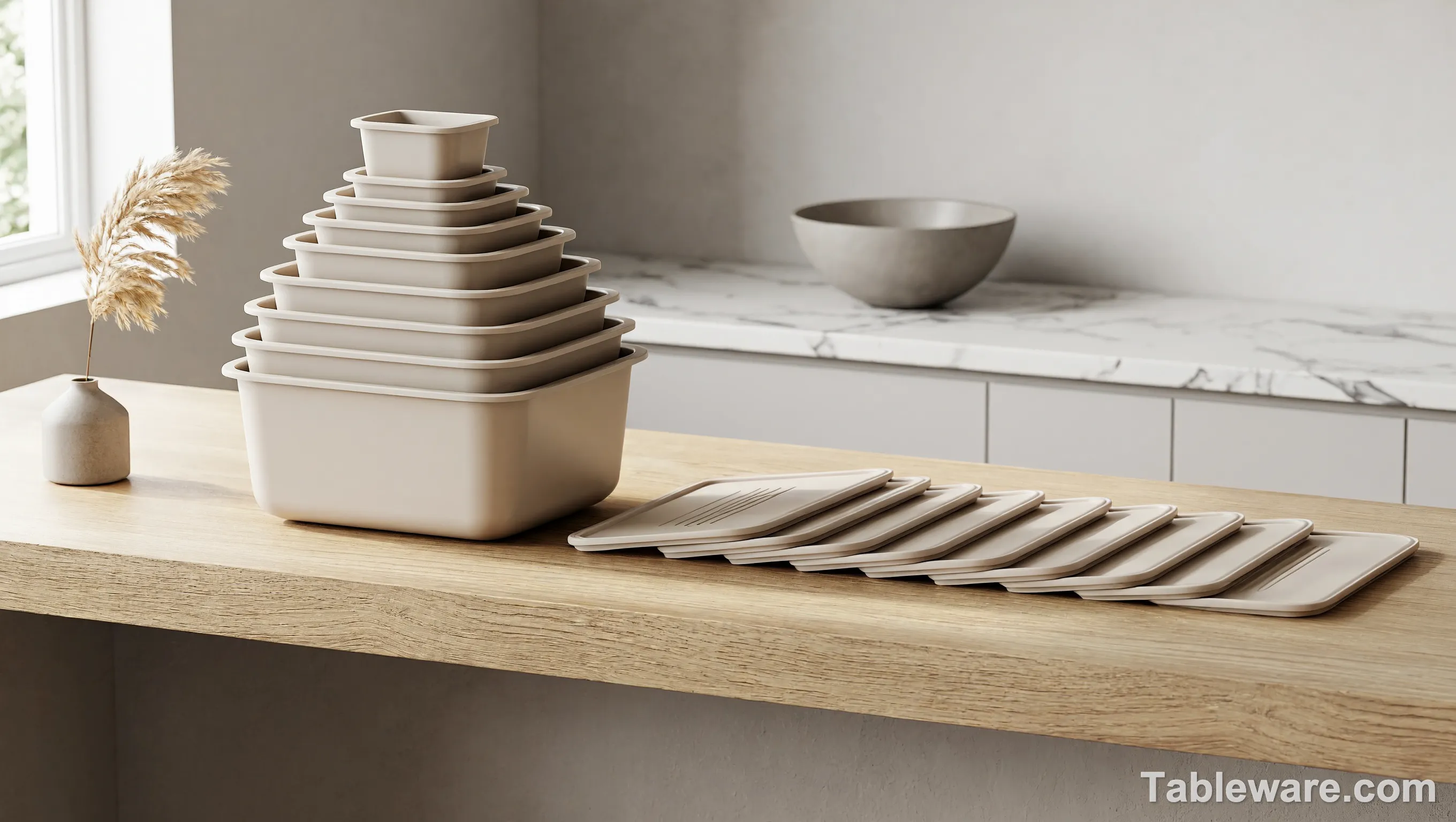
Fig 5. One matched system, in a size ladder that actually nests. The single most useful buying decision in this whole category is avoiding the orphan-lid drawer — and you can only do that by buying one system instead of accumulating mismatched singles.
Run through this in the store, or against a product listing, and you'll know in about ninety seconds whether you're buying something worth keeping.
- The base code is #5. Polypropylene. If you can't find a code at all, walk away.
- The lid code is different, and that's fine. It should be #2 or #4. What's not fine is a lid you'd be tempted to microwave.
- The seal is a gasket rather than a bare snap. Look for a visible silicone or rubber ring if you want genuine airtight storage for dry goods.
- Replacement lids are sold separately. OXO, Snapware, Rubbermaid, Lock & Lock. If the brand doesn't sell spares, the lid is a consumable you can't replace, and your food storage containers with lids quietly become four containers and a drawer of loose plastic.
- Wall thickness is around 1mm, not 0.5mm. Budget sets run 0.4 to 0.6mm of PP. Thin walls flex, lids fit loosely, and seals drift within a few cycles.
- Sizes overlap and nest. A set where each size fits inside the next is worth more than a set with more pieces.
- One brand, one seal mechanism. Don't mix a snap-lid system with a gasket system in the same cabinet.
- No disposable containers. A single-use takeout box is built to a different standard and won't survive one round of reheating. Don't reuse them, no matter how sturdy they look.
On the brands worth knowing about:
Rubbermaid Brilliance — Tritan copolyester, not PP. Stain and odor resistance noticeably better than standard polypropylene, which is why it keeps showing up at the top of category rankings. Around $25 for a 5-piece set of 3.2-cup containers, with the 2-container 9.6-cup set around $20.
Snapware Plastic Total Solution — the locking lid is the whole argument. A genuine gasket, so it seals for dry goods and pantry storage in a way snap-only lids never will. Built-in write-on panels on some versions, which sounds trivial until you've got nine identical leftovers in the freezer. It's one of the few airtight food storage containers where the marketing word and the actual mechanism agree.
OXO Good Grips Smart Seal — one-touch button, silicone gasket, and the only major set where you can buy the lid by itself afterwards. Best long-term value for someone who expects to keep the containers for a decade. Higher price per unit than the bulk sets.
Pyrex Simply Store and Glasslock — glass bodies, plastic lids. Microwave-to-oven-to-fridge with no material change. Pyrex's tempered glass has been the kitchen default since the 1940s; Glasslock uses borosilicate, which takes thermal shock better. Both are glass food storage containers in the modern sense: a tough body with a plastic lid you will eventually replace. If you want the other side of that comparison, our vintage Pyrex vs modern Pyrex test covers what 70 years of glass does to a lid seal.
Tupperware, vintage — and I want to be careful here, because the vintage market is full of containers that predate the BPA phase-out entirely. An 1980s Tupperware piece was made in an era when the resin chemistry was genuinely different, and nobody can tell you today what that resin was. Use vintage for dry goods, not for anything acidic or hot. The sunburst-lid almond and avocado pieces are collectible, not cookware.
Two bulk sets worth mentioning if you want volume: a 50-piece Freshware deli set runs around $17 and a 54-piece airtight set around $15. They're the thin-walled budget tier from point five. Fine for deli portions and short-term storage. Not what you want for the container that holds your Sunday sauce.
The one decision I'd make differently
If you only change one thing about how you buy food storage containers, make it this: buy one system, in one size ladder, and stop mixing.
The orphan-lid drawer isn't caused by buying too few containers. It's caused by buying a 50-piece set, then a 6-piece set, then three random singletons from a housewares store, then a glass set with different rim geometry. Every container you own is a potential lid orphan, and you end up with a graveyard of orphaned lids and a cabinet full of containers that don't stack.
Pick one brand, one seal mechanism, one size ladder. Then buy the next size up when you outgrow what you have. The stack nests, the lids match, and the whole thing becomes something you keep instead of something you replace.
Frequently Asked Questions
Are plastic food storage containers safe to use every day?
For cold and room-temperature food, yes — that's what food-grade polypropylene is designed for, and there's no evidence of harm from normal use. The variables that matter are heat and time. Microwaving in a PP container is a designed use. Microwaving a container that has micro-scratches, holds degraded oil residue, and has been through two hundred dishwasher cycles is not.
How long should a plastic food storage container last?
Three to five years of regular use is the realistic expectation, and considerably longer with hand washing. Retire sooner for cloudiness, yellowing, deep scratches, or a warped base. Storage temperature and cleaning method move this number more than brand does.
Are freezer safe containers worth buying separately?
No, and this trips people up. Freezer safety isn't a feature you pay extra for — it's a property of the resin. #5 polypropylene stays flexible down to around -30°C, so a food-grade PP container is freezer safe as a matter of physics. What you do need to manage is headspace, because food expands as it freezes and a rigid container filled to the brim will crack or pop its lid. Leave about an inch. If you're reading markings rather than resin codes, our dinnerware symbols explainer covers the snowflake and freezer marks too.
Can I microwave a container with a plastic lid?
Not with the lid snapped on. Steam pressure will pop the seal and the heat will warp the lid. Take the lid off, or use a vented lid if the manufacturer designed one for it.
How do I get tomato sauce stains out of polypropylene containers?
Baking soda and water as a paste, left for 30 minutes, then a soft sponge. For stubborn cases, direct sunlight for a day bleaches lycopene out of the surface. Peroxide-based cleaners work too but will dull the plastic over time, and that's trading one problem for another.
Is it worth buying glass when plastic is cheaper?
Yes for oven and microwave use, and for anything acidic you keep more than a week. No for a packed lunch, a kid's snack box, or a cabinet where things get knocked around. The price gap on a two-piece set is maybe eight dollars. The weight gap is the part that actually shows up in your hands.
Is BPA-free plastic actually safe?
Read the resin code. A #5 polypropylene container contains no BPA and never did. If you want to avoid polycarbonate, avoid #7 — and you can do that without reading a single marketing badge.
More practical kitchen buying guides: dinnerware care mistakes, how to buy flatware that lasts, and reading pottery marks. For the material science behind the plastic and glass options covered here, see is melamine dinnerware safe and drinking glass types.