Carbon Steel vs Cast Iron: Which Pan Should You Buy?
I own four cast iron pans and one carbon steel skillet, and I reach for the carbon steel about nine times out of ten. That is not a moral victory for carbon steel. It is a fact about my kitchen, my hands, and how much I resent scrubbing a pan after dinner.
So here is the carbon steel vs cast iron answer the way I would give it to a friend standing in a kitchen store aisle at 7 p.m. on a Tuesday: what actually changes when you swap one for the other, what it costs you in effort, what it costs you in dollars, and which one you should buy first. If you have been googling the carbon steel vs cast iron pan question and getting fifty opinion pieces and zero answers, this is the short version.
The short version of carbon steel vs cast iron: buy carbon steel if you sear, sauté, and fry often and want a pan that responds the second you change the heat. Buy cast iron if you roast, bake, and hit hard sear temperatures, and you want the thing to outlive you. A $35 carbon steel skillet will outlive a $45 nonstick pan if you treat it right. A $40 Lodge will outlive both.
Quick verdict: the carbon steel vs cast iron pan question
Before the spec sheet, here is the honest split — because most of the argument online is people defending a pan they already own. If you only want one line, the carbon steel vs cast iron pan comparison comes down to heat response versus heat retention, and nothing else in this guide changes that.
Where carbon steel wins
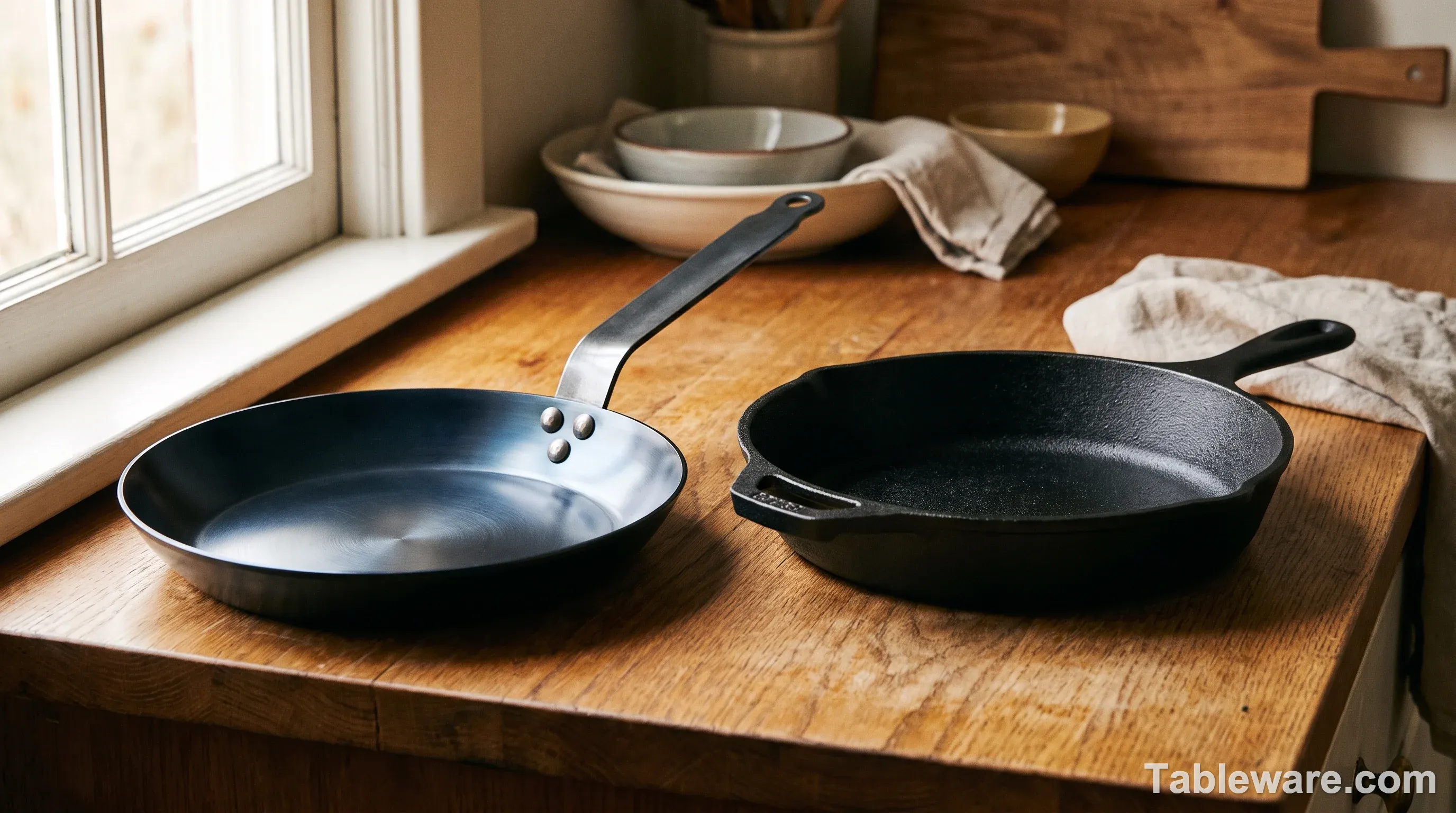
Carbon steel is a thin, fast, light pan. A 10-inch carbon steel skillet typically weighs 3 to 3.5 pounds and runs about 1.5 to 2.5 mm thick. A 10-inch cast iron skillet usually weighs 4.5 to 5.5 pounds and runs 4 to 6 mm. A 12-inch cast iron pan can tip 7 or 8 pounds on the scale.
That difference matters in the hand and on the burner. A thin carbon steel pan hits searing temperature in well under a minute. The same cast iron pan can take three to five minutes to heat up and another five to cool back down. If you are cooking four eggs at a time, that gap is the whole game.
Carbon steel is also cheaper. Good-brand carbon steel runs $25 to $60. Cast iron starts around $40 and climbs steeply: Field Company sits well north of $120, Stargazer and Smithey sit in the $100 to $150 range, and Lodge 10.25-inch pans are still around $30 to $45 depending on the season.
And carbon steel comes with a warranty, which surprises people. Matfer Bourgeat, de Buyer, Misen, Made In, and Solidteknics all back their carbon steel with something close to a lifetime replacement policy. Lodge's lifetime warranty covers defects, not the fact that you left a pan soaking in water for a week.
Where cast iron wins
Cast iron holds heat. That is the entire point of the material, and no amount of thin-pan marketing copy changes it. When you drop a cold, wet 450-gram steak into a screaming-hot pan, a 5 mm cast iron skillet barely drops in temperature. A 2 mm carbon steel skillet loses 100 degrees or more and needs time to climb back.
It also does things carbon steel will not. Cast iron goes into a 500°F oven without blinking, which means cornbread, bread, and roasting a whole chicken all happen in the same pan. Cast iron tolerates long acidic simmering — a two-hour tomato sauce is a normal thing to do in it. In carbon steel, that same two-hour tomato sauce will strip seasoning and leave a distinctly metallic taste in the sauce, which is the fastest way to convince a cook that carbon steel is "too high maintenance."
For a beginner, cast iron is also more forgiving. Factory pans from Lodge, Field Company, and Stargazer come pre-seasoned and ready to cook. Nobody hands a novice a bare carbon steel pan and a can of oil on day one without a lecture attached. If you want to see what actually breaks in an oven, our guide to how bakeware materials fail at temperature is worth a read.
Carbon Steel vs Cast Iron vs Stainless Steel: 9 differences at a glance
Here is the carbon steel vs cast iron vs stainless steel comparison condensed into the nine things that actually change how you cook. Stainless steel is in there as the third column because it is the option most people are quietly comparing against, and it loses on two axes — heat response and the learning curve — while winning on maintenance.
| What changes | Carbon steel | Cast iron | Stainless clad |
|---|---|---|---|
| Gauge (typical) | 1.5-2.5 mm | 4-6 mm | 2.5-4 mm, sandwiched with aluminum or copper |
| 10-inch pan weight | 3-3.5 lb | 4.5-5.5 lb | 3.5-5 lb |
| Time to searing heat | Under 1 minute | 3-5 minutes | 2-4 minutes |
| Heat retention | Low | Very high | Medium |
| Good-brand price | $25-$60 | $40-$250 | $80-$400 |
| Seasoning job | Yours to do | Mostly done for you | None |
| Long acidic sauces | Not recommended | Fine, in bare cast iron | Best of the three |
| Oven use | Only with a steel handle | Yes, 500°F+ | Yes |
| Induction | Yes | Yes | Yes, if magnetic base |
Two footnotes. Stainless clad wins the acid and the oven categories outright and never needs seasoning, and that is exactly why it is the right answer for a lot of people — but it also heats like a brick and it will not take a hard sear without help. If you want the metallurgy behind that column, we break down stainless steel grades in everyday tableware. And both carbon steel and cast iron are magnetic, so both work on induction cooktops, which rules out the most common reason people give for sticking with nonstick.
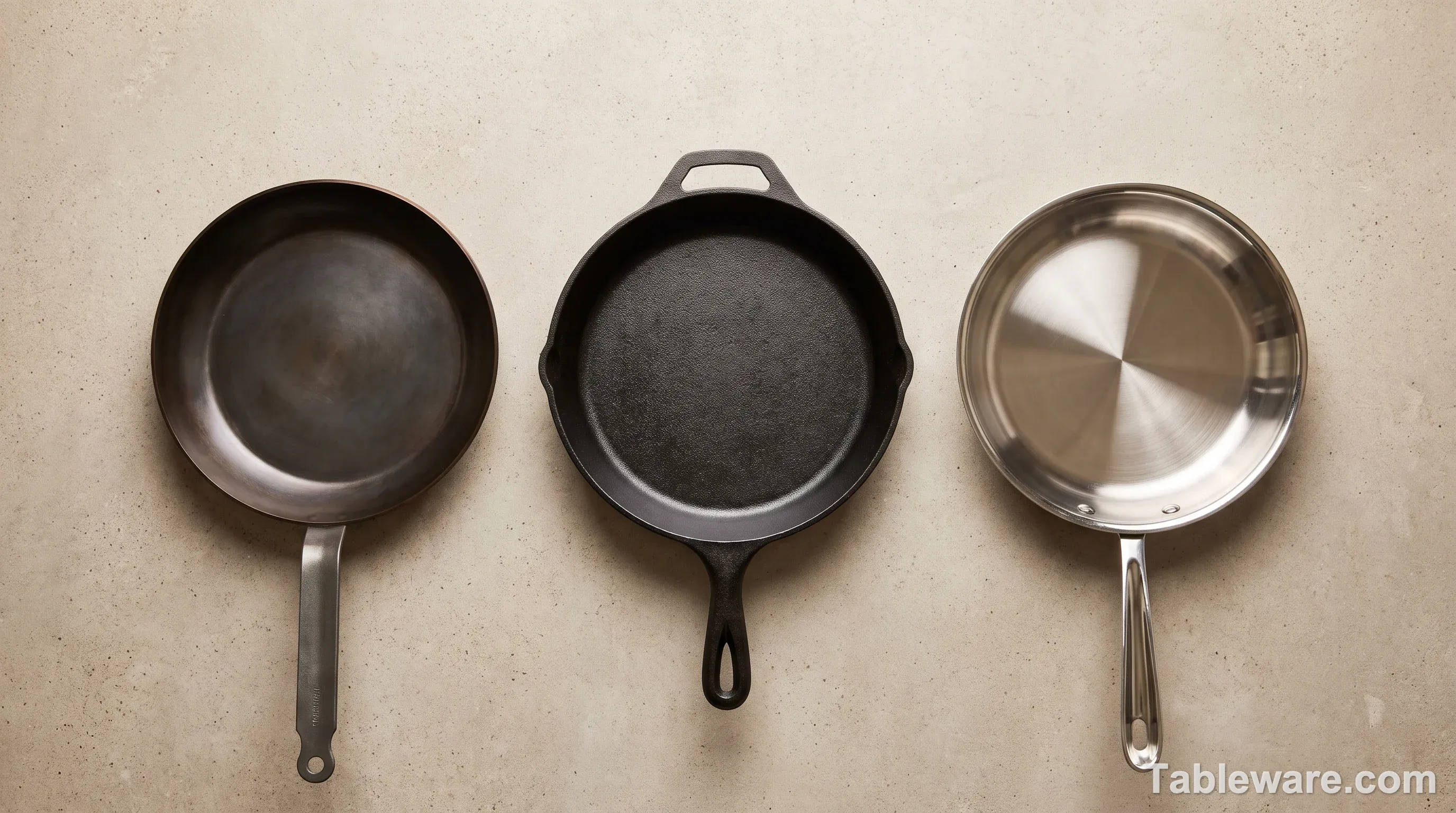
Fig 1. Three pans that get compared constantly. Same job, same burner, wildly different behavior — thin carbon steel on the left, cast iron in the middle, stainless clad on the right.
Heat, searing, and why steak crusts the way it does
A good crust is a chemistry story before it is a hardware story. The Maillard reaction starts kicking in around 285°F (140°C) and runs full speed past 350°F. Below that, a steak steams. Above it, the surface proteins and sugars brown, and you get the thing people call "restaurant crust."
Carbon steel vs cast iron, at heart, is a fight about thermal mass and how much heat the pan can hold.
Your pan's job is to get the surface of the meat past 350°F fast and then hold it there while the interior cooks. Pan mass is the variable people miss. When a cold steak hits the pan, it pulls heat out of the cooking surface. A thin carbon steel pan gives up its temperature almost instantly and then races back up because there is so little mass to reheat. A thick cast iron pan barely notices the hit — it has enough stored heat to keep searing through a 450-gram steak without dropping below browning temperature.
There is a second, subtler advantage to cast iron: the surface texture. Factory-cast iron is microscopically rough, with peaks and valleys. Those irregularities are where browning nucleates, and they give a steak that craggy, shaggy crust you cannot get on smooth stainless. A carbon steel pan will produce a very good crust too, just a little more uniform-looking, and it takes less force to lift the meat off.
Where cast iron clearly wins the sear contest is at high volume. Six smash burgers on a ripping-hot cast iron griddle at 500°F is a real workflow. Six smash burgers on thin carbon steel is a workflow where the second one starts cooking before the first one finishes.
How to season a carbon steel pan (and why cast iron barely needs it)
Everybody gets this wrong at least once, so: seasoning is not salt, pepper, or a spice rub. It is a thin layer of oil that has been heated until its molecules bond to the iron and to each other, forming a hard, glassy, non-stick film. Every time you cook on a seasoned pan, you are adding to that film. Every time you scrub too hard or leave it soaking, you are removing some of it.
The three-cycle method
This is the part of carbon steel that scares people off, and it takes about two hours the first time. Then it is basically maintenance.
- Wash the pan with hot water and a chainmail scrubber, or coarse salt and a handful of water as an abrasive. Get every bit of factory oil off.
- Dry it immediately. Put it on a burner for two or three minutes until the water is gone. Residual moisture is the enemy of seasoning.
- Apply the thinnest possible coat of oil. Grapeseed, canola, and avocado oil all smoke somewhere around 400°F or higher, which is enough. You can also buy a fully polymerized seasoning oil made for carbon steel — because the oil is already polymerized it will not off-gas, and it will not smoke in a 475°F oven. Skip flaxseed for oven seasoning: it smokes well below 475°F, and a smoky layer is not a seasoning layer. Wipe the pan with a paper towel until the surface looks dry and matte. If you can see a wet sheen, you have too much oil.
- Bake it upside down in a 475°F (245°C) oven for one hour. A sheet of foil under the pan catches drips and keeps the oven from smoking.
- Cool it fully, then repeat the oil and bake cycle two more times.
Three cycles sounds fussy. It is not — each one takes ten minutes of actual attention. The result is a dark, faintly iridescent surface that behaves like a good nonstick pan for years.
Why cast iron barely needs seasoning
Lodge, Field Company, and Stargazer all ship cast iron with a factory seasoning layer, made by baking a thin coat of oil at high temperature in a foundry. It is a genuine polymerized layer, not a wax or a wax-and-oil hybrid you have to scrub off. It arrives ready to cook.
You still have to feed it. Cast iron seasoning does not last forever if you only ever cook tomato sauce and never wipe the pan dry. The rule I follow: dry it on the burner, wipe a paper towel with a tiny amount of oil over the cooking surface, and leave it on the burner for two minutes. Do that every few cooks and a cast iron pan will outlive your stove.
When rust shows up
Rust is not a death sentence. It means you left water sitting in the pan. Fix it with a chainmail scrubber and a little oil, not aggressive steel wool — steel wool on cast iron leaves free shards of iron embedded in the surface that will rust again faster than the original spot. Short bursts of 0000 steel wool are fine on carbon steel, as long as you re-season immediately afterward. Re-seasoning after a scrub takes one oven cycle, not three.
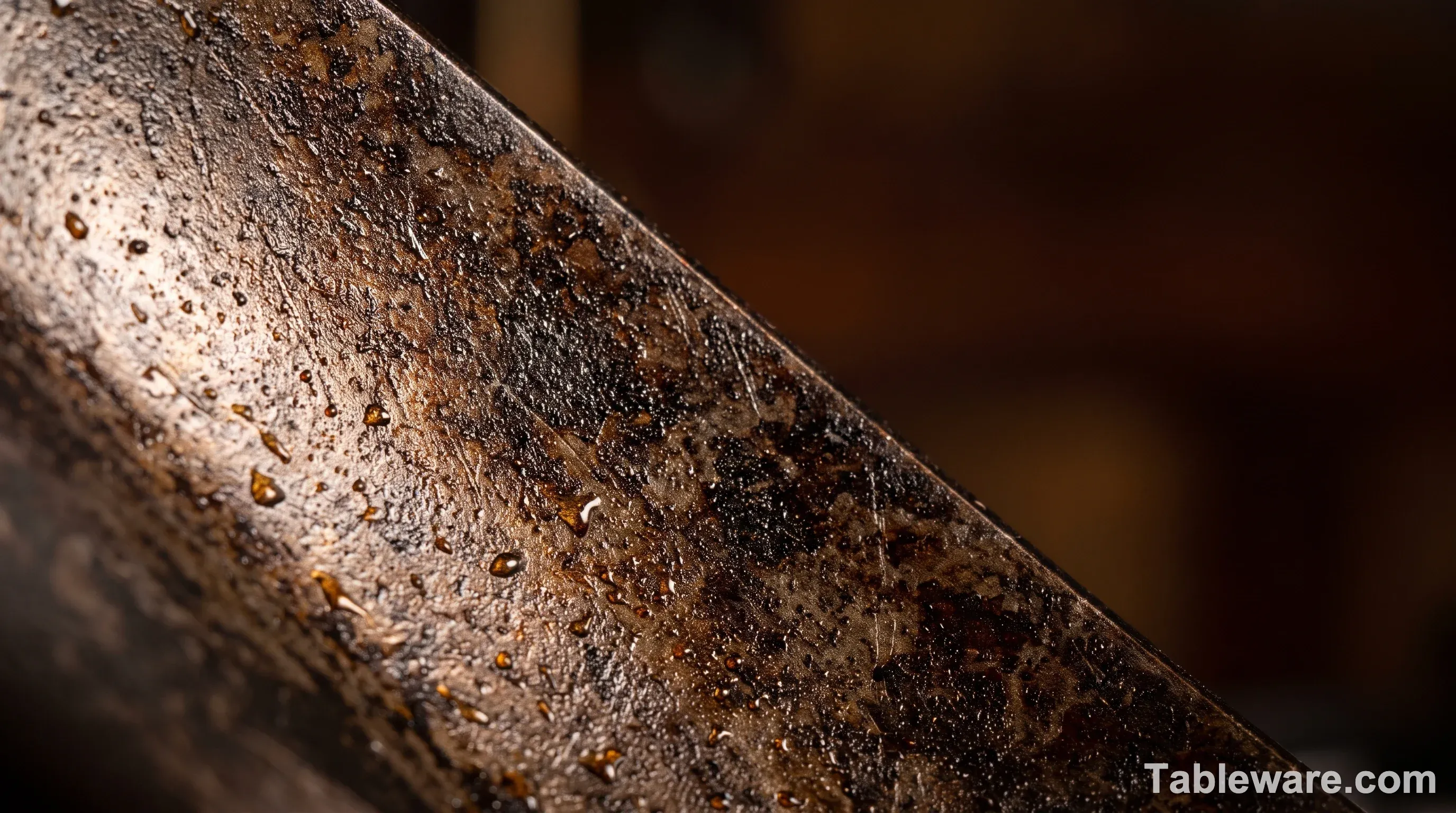
Fig 2. A well-used carbon steel patina after months of cooking. That amber-and-black mottling is a few hundred thin layers of polymerized oil, and it is what makes the pan non-stick. It is supposed to look like this, not like a mirror.
Eggs, Steak, and Everyday Test Cases: Carbon Steel vs Cast Iron for Eggs
Eggs
Carbon steel vs cast iron for eggs is the cleanest test of the two materials, and carbon steel wins it on physics. Eggs cook fast and unforgivingly. You want a pan that goes from cool to 350°F almost instantly, then you want to slide the egg off before the white overcooks. Thin carbon steel does both. The weight of a cast iron pan means your butter browns and the white tightens while the pan is still heating up.
Cast iron makes a fine fried egg. It just takes longer and gives you less control. If eggs are a big part of how you cook, carbon steel is the better pick.
Steak and smash burgers
Reverse the ranking. For a thick steak seared hard, cast iron's mass is the advantage. For smash burgers — thin patty, hard press, crispy edges — cast iron's flat heavy bottom and high heat retention win again. Nothing else on the shelf does quite what a flat cast iron griddle does under a press.
For a pan-seared steak with a crust but no grill, a carbon steel skillet gets you 90% of the way with half the effort and a fraction of the swinging weight.
Induction, camping, and the oven
Both metals are magnetic, so both work on induction. Carbon steel pans with a flat base are actually easier on induction than a cast iron pan with a slightly concave bottom, because induction needs the whole base in contact with the coil.
For camping, cast iron wins on the campfire and carbon steel wins in the car. A 12-inch cast iron pan is a 7-pound object to carry, but it goes straight onto coals. A carbon steel skillet is half the weight and works over a fire too, provided it has a steel handle rather than phenolic.
For the oven, cast iron is a tool and carbon steel is a liability. Many carbon steel skillets are oven safe only if the handle is riveted steel — phenolic and silicone handles soften past 425°F and can let go. And a thin pan that goes from 70°F to 500°F can warp enough to make the base rock when you set it back on the burner.
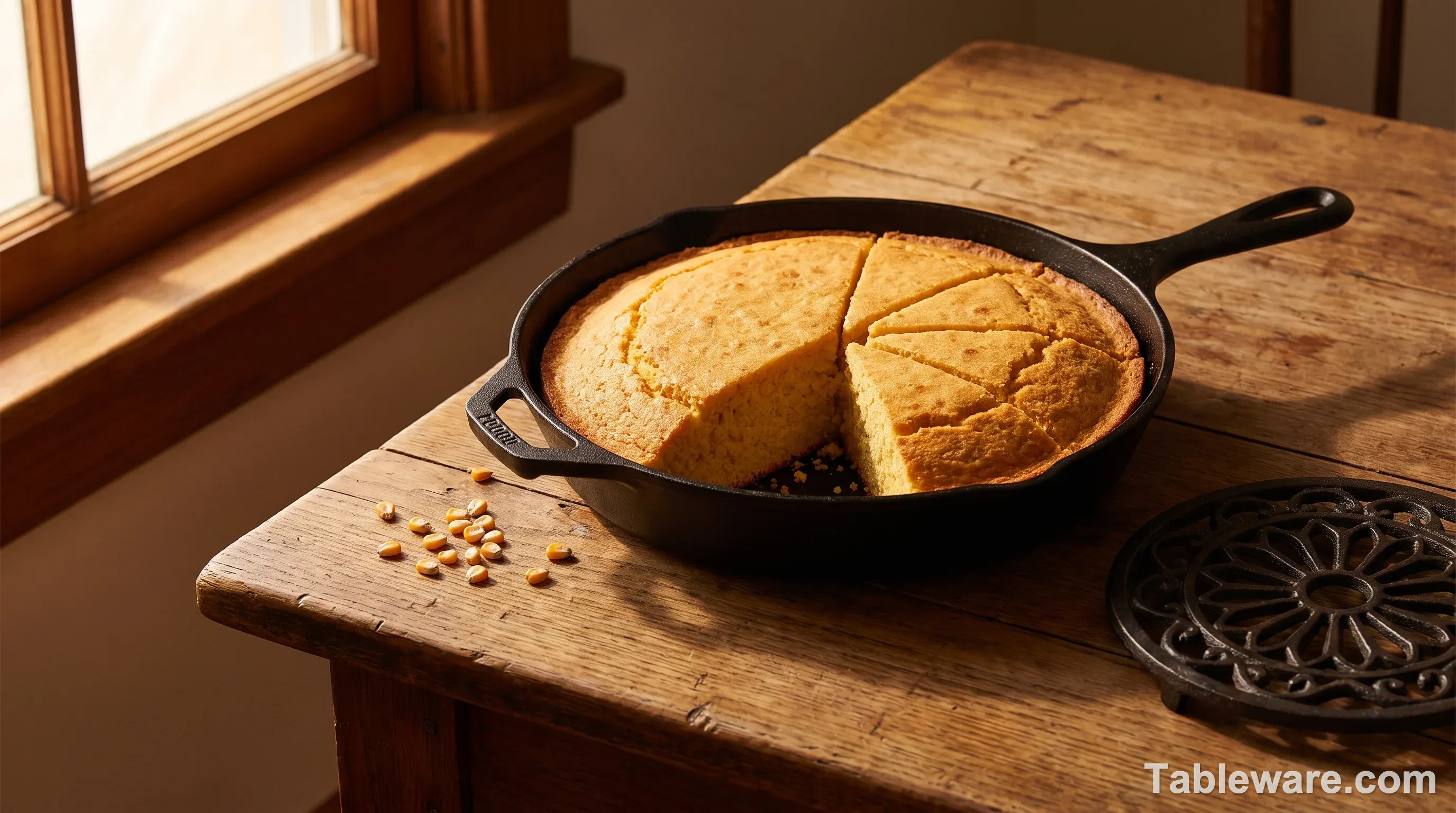
Fig 3. Cast iron in the oven, doing the thing no carbon steel skillet can do without warping. A 500°F oven and a 5 mm base make a cornbread crust you cannot get in a home oven with a thin pan.
PFAS-free cooking in 2026: what the rules change
This is where I want to be careful, because the marketing copy on this topic is worse than useless.
The relevant history: PFOA was the compound in Teflon and similar coatings that scared people for decades. The US EPA announced the phase-out of PFOA in 2004, added reporting requirements from 2006, and phased out remaining uses between 2007 and 2013. PTFE is the polymer still used in most nonstick pans, and PTFE belongs to the broader PFAS family. Some jurisdictions have moved further than others: California requires cookware labeling for PFAS-containing products, and Europe has been working toward a broad restriction on PFAS in food-contact materials, with the timeline shifting repeatedly as the legal text gets rewritten.
Rather than try to parse regulation that is still moving, here is what it means at the register.
Both cast iron and carbon steel are uncoated. There is no polymer, no ceramic sol-gel layer, no PTFE, and nothing to flake into your food. The carbon steel vs cast iron decision is unusually easy on this one point: if PFAS labels are the reason you are buying new cookware this year, then either of these two materials makes that concern disappear entirely. That is a genuine advantage over nonstick, and it is the strongest argument for buying a metal pan that will outlast the coating debate.
One caution about labels: "PFAS-free" on a pan tells you about the coating, not the whole object. It says nothing about the base metal, the rivets, the handle materials, or the factory. If you are trying to avoid PFAS as a class of compound, a solid uncoated iron or steel pan sidesteps the labeling problem entirely instead of trying to parse it — and if you are also trying to get away from plastics in general, our breakdown of what BPA-free and food-safe actually mean is the relevant reading.
On health, both carbon steel and cast iron are iron alloys, and both can add a small amount of dietary iron to food cooked in them. Research on cast iron and iron status is mixed and the effect is modest — most people are nowhere near deficient, and if you have hemochromatosis or another iron-related condition, ask your doctor before making either pan a daily driver. If you are still unsure about what is actually in your cookware and dishes, the current lead and cadmium limits for ceramic glazes explain the other half of the story. The honest summary: switching from coated nonstick to cast iron or carbon steel removes a category of chemical concern and adds a small, mostly beneficial amount of iron. Neither pan is a health intervention.
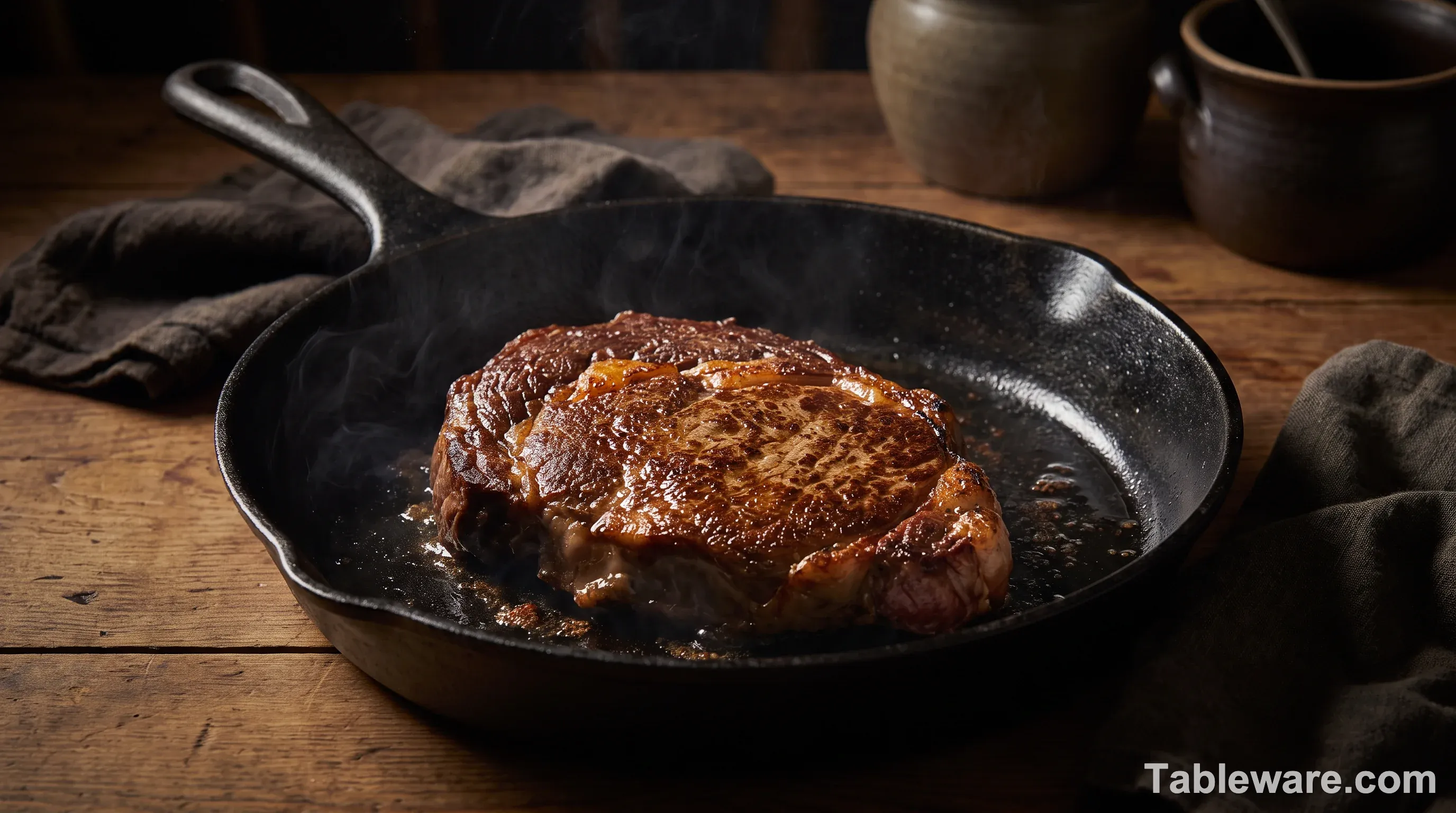
Fig 4. The payoff both materials are chasing. A 5 mm cast iron base holds searing temperature through a cold, wet steak, which is why this crust develops instead of a gray steamed surface.
What to buy: price tiers and the best carbon steel pan picks
Pre-seasoned or raw carbon steel
Buy pre-seasoned carbon steel if you want to cook tonight. Several brands sell it ready to go, and it saves you the initial three oven cycles. Buy raw carbon steel if you like doing the work once and want full control over your seasoning — you get a slightly cheaper pan and you end up with a patina nobody else has.
The budget, mid-tier, and premium shelves
On the budget end of cast iron, Lodge 10.25-inch pans, Windsor, and the Ozark Trail pans sold at Walmart all do the same job. Lodge is the safest buy because parts and warranty claims are easy, and you can re-season it forever. On the premium end, Field Company makes the best-looking cast iron on the market and warrants it for decades.
For carbon steel under $50, Matfer Bourgeat is the value pick — plain, heavy enough, and it works. In the $50 to $110 range you get Misen and de Buyer Mineral B, both excellent, with the de Buyer running hot and fast. Above $150 you are into Made In, Solidteknics, Hestan, and Finex territory. Those pans are genuinely great, and you are also paying a meaningful premium for a surface finish and a brand name rather than for a fundamentally different cooking result.
If you want one name instead of a shelf: the best carbon steel pan under $50 is a Matfer Bourgeat, the best carbon steel pan under $110 is a Misen, and the best carbon steel pan money can buy is whatever de Buyer just discontinued last month.
Five checks before you buy
- Gauge. Look for 2 mm or thicker. Ultra-thin pans under 1.5 mm warp permanently and cook unevenly. Reputable brands print the gauge.
- Handle. Riveted steel handles stay cool longer and are oven safe. Silicone and phenolic sleeves limit you to stovetop only.
- Flatness. Set the pan on a flat counter and press gently on the rim. If it rocks, skip it — an unflat base means a hot spot and a dead zone.
- Surface finish. Carbon steel should be smooth and even, with a fine grain. Cast iron should have the expected pebbled texture. Heavy grinding marks or chatter are a red flag.
- Support. Does the brand help with seasoning? Lodge, de Buyer, and Field Company all have guidance and replacement parts. A no-name pan from a marketplace with no support is a scratch-off ticket.
Final recommendation by cook type
If you are a beginner, buy a 10.25-inch Lodge cast iron. It works the moment you open the box, it is the cheapest durable option, and you will not be tempted to skip seasoning because there is nothing to season. You can always move to carbon steel in a year.
If you sear and sauté daily, buy carbon steel. Matfer Bourgeat if you want to spend under $50, Misen or de Buyer if you want a nicer pan. Get 2 mm or thicker, and spend one Saturday seasoning it.
If you roast and bake, cast iron. Nothing else substitutes for a 5 mm pan that goes to 500°F and comes back to the table as cornbread or a roasted chicken.
If you are on a tight budget and cooking for one, a single 10-inch carbon steel skillet from a brand with a warranty will do more for your cooking than a $200 pan you are afraid to use. We looked at how the cost math actually works over a decade in our real cost of a dinnerware set breakdown — the same logic applies to pans.
If you camp, cast iron for the fire, carbon steel for the car. That is not a compromise; it is just weight.
If you hate maintenance entirely, buy neither and get a clad stainless pan. You give up the hard sear and the oven versatility, and in exchange you never think about the pan again.
The carbon steel vs cast iron decision, once you strip it down, is a question of which pan you will actually use. That is the only criterion that matters, and it is the one nobody argues about in the comments because both camps have already decided.
One last bit of advice that costs nothing: buy a $30 carbon steel skillet and a $40 Lodge, and keep both for a year. Every cook has a real answer after that. I kept my carbon steel and gave a beautiful vintage cast iron pan to my brother, because I was never going to season it properly and it deserved better than sitting in my cabinet.
If you want the other side of the cast iron story, our Dutch oven comparison covers the enameled versions in detail — and our guide to dinnerware care mistakes covers what ruins coated and uncoated surfaces alike.