How to Build a Dinnerware Set in 3 Phases: $200, $700, and $1,500+
Here's a question I've been asked a lot lately: "Should I just buy the 16-piece set and be done with it?" The honest answer is no. If you're wondering how to build a dinnerware set that actually lasts 5+ years, here's the short version: don't. And the longer answer is what this article is about.
If you're starting from scratch, getting married, or finally admitting the plates you've had since college need to go, you have two paths. The first is the box store 16-piece set for $149 to $300. You bring it home, it looks fine for a year, and by year three half of it is chipped and the brand discontinued the pattern. Now you need a new set. Sound familiar?
The second is what I call the 3-phase build—and it's a much better answer to how to build a dinnerware set that actually lasts. You buy a small starter set for $200, use it hard for two to three years, then upgrade selectively as your hosting habits (and your budget) evolve. By year five you have a mix-and-match collection that looks better than any sealed box, costs about the same in total, and—critically—never goes obsolete, because you can replace any single piece any time.
I've been refining this approach for about eight years across my own kitchen and a dozen friends who've done it. The numbers below are real. The brands are real. The disappointment stories are real too.
Let me walk you through all three phases, the cost math that makes it work, and the one styling rule that makes or breaks the whole thing.
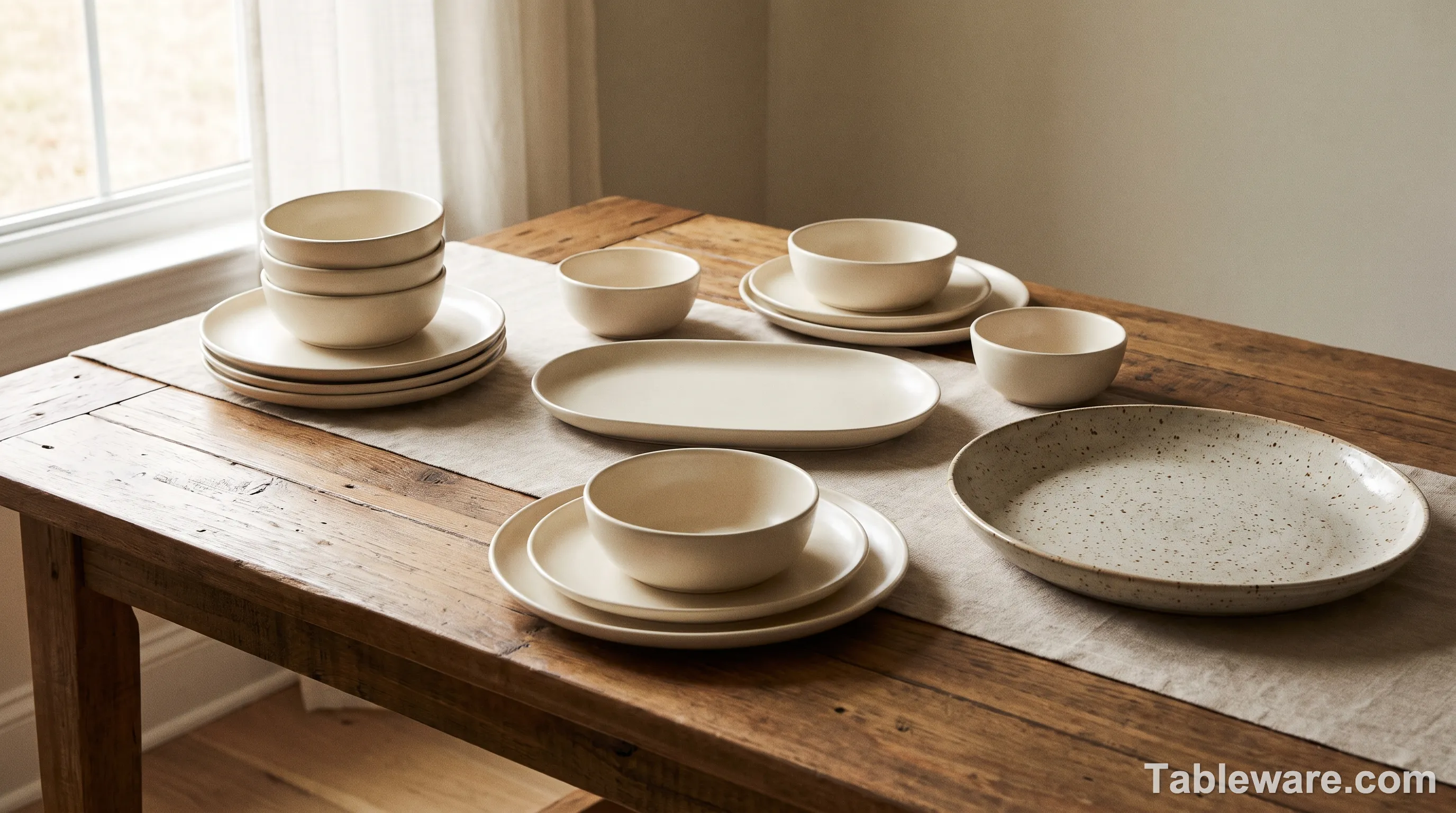
Why the 16-Piece Set Is a Trap (and What to Do Instead)
Anyone learning how to build a dinnerware set that will actually last 5+ years has to first understand why the default 16-piece set is the wrong starting point.
I want to be careful here, because a lot of good 16-piece sets exist. I've owned two of them. The problem isn't the sets. The problem is the assumption that buying one box is the end of the story.
Here's what actually happens to most people. You move into a new place, or you get engaged, and you walk into Crate & Barrel or Williams Sonoma or Target and there's a 16-piece set on display for $180. It looks great in the store. You buy it. You use it. A dinner plate chips in month eight. You go online to find a replacement. The brand has discontinued the pattern. Or the replacement plate is $22, which feels insane for one plate, so you don't bother. By month 18 the set is mismatched—two dinner plates from a new line, one missing bowl, and a salad plate from a third pattern that your partner bought at HomeGoods "because it matched."
The dinnerware set upgrade is now a $400 problem you didn't budget for.
I ran the actual math on this for a friend last year. She bought a 16-piece set from a mid-range brand in 2021 for $220. By 2025 she'd replaced 4 dinner plates, 3 salad plates, 2 bowls, and 2 mugs at a mix of new-pattern and HomeGoods prices. Total spent: $612. Total set value: somewhere around $200 if she sold it on Facebook Marketplace today.
That's the dinnerware set upgrade trap. The "cheap" set wasn't cheap.
The 3-phase alternative
The 3-phase build is the antidote because it splits the dinnerware purchase across three budget tiers, each with a different goal:
- Phase 1 ($150–250): A small open-stock starter you can replace cheaply for the first 2–3 years while you figure out your actual hosting habits.
- Phase 2 ($500–800): A workhorse upgrade of the pieces you use daily, with the serving pieces and second-tier settings your life actually requires.
- Phase 3 ($200–1,500): One or two handmade or vintage statement pieces—a serving platter, a tureen, a pasta bowl—that you keep forever.
By the end of year three, your open stock collection costs the same as a 16-piece set would have, but you never have a single point of failure. Any piece can be replaced. Any piece can be swapped. And the statement piece you added in Phase 3 is the one that actually makes the table feel like yours.
Phase 1 — The $150–250 Starter (4 Place Settings)
Phase 1 is the foundation of any how to build a dinnerware set plan. Get this right and the rest of the build is a series of small, cheap upgrades.
Phase 1 is where you want to spend the least amount of money you can spend without hating the plates. The goal here isn't to find your forever pattern. It's to get a functional, durable, decent-looking set you can use hard for two to three years, then quietly upgrade piece by piece as your taste (and your hosting calendar) becomes clearer.
For most people, that means 4 place settings of stoneware, all open stock, in a neutral color. Eight pieces for a starter makes sense. Four place settings cover a couple plus regular dinner guests. You can always eat cereal from a mixing bowl for the next two years.
What to look for in a starter set
Three things, in order of importance:
- Open stock, not set-only. This is non-negotiable. If the brand doesn't sell individual replacement pieces, walk away. Your $14 plate in 2029 is worth nothing if the brand drops the pattern in 2027.
- Stoneware or porcelain, both dishwasher and microwave safe. Don't start your dinnerware journey with hand-wash-only. You'll be tired on Tuesday night. The plates will sit in the sink until Sunday.
- Neutral palette. White, cream, oatmeal, soft gray, matte black. Not bright red. Not "Tuscan sunset." Phase 3 statement pieces can carry the color. Phase 1 needs to disappear into the background.
Three starter sets worth buying in 2026
If you want the best starter dinnerware set 8 piece under $200 in 2026, start with one of these three. They're all open stock, dishwasher safe, and quietly good-looking.
Fiestadt (Fiestaware): 4 dinner plates run about $50–$60. The 4-piece place setting is around $80 if you buy it as a bundle. Pick a color you'll tolerate for five years. Fiestadt has been open stock since 1936 and will be open stock in 2036. The downside: it's heavy. Like, actually heavy. A Fiestadt dinner plate is a third heavier than the IKEA equivalent. Some people love that. Some people think it feels like cafeteria ware.
IKEA 365+: This is the move if you want light, modern, cheap. A 4-piece place setting is $24. The full 16-piece set is $79. The plates are thinner than Fiestadt but they hold up. Color options are white, beige, dark gray, and a very pale blue that sells out constantly. The catch: IKEA discontinues patterns more often than Fiestadt. Buy now, replace as needed. Don't expect to find the exact same plate in 2030.
Stone Lain: The $50 sweet spot. Stone Lain makes mid-weight stoneware in soft neutrals—cream, taupe, charcoal—that's good enough to put on a dinner party table and cheap enough to replace piece by piece. 16-piece set runs $90–$120 on Amazon. The pieces are open stock, although the selection on Amazon is the better indicator of what's actually available.
If you want a specific recommendation: start with the IKEA 365+ place settings in white or dark gray, $24 per setting, $96 total. Add a 4-pack of bowls for $16. You now have an 8-piece starter for $112. That's a Phase 1 budget with $138 left over for mugs, serving pieces, or—more honestly—a backup dinner plate when the first one chips.
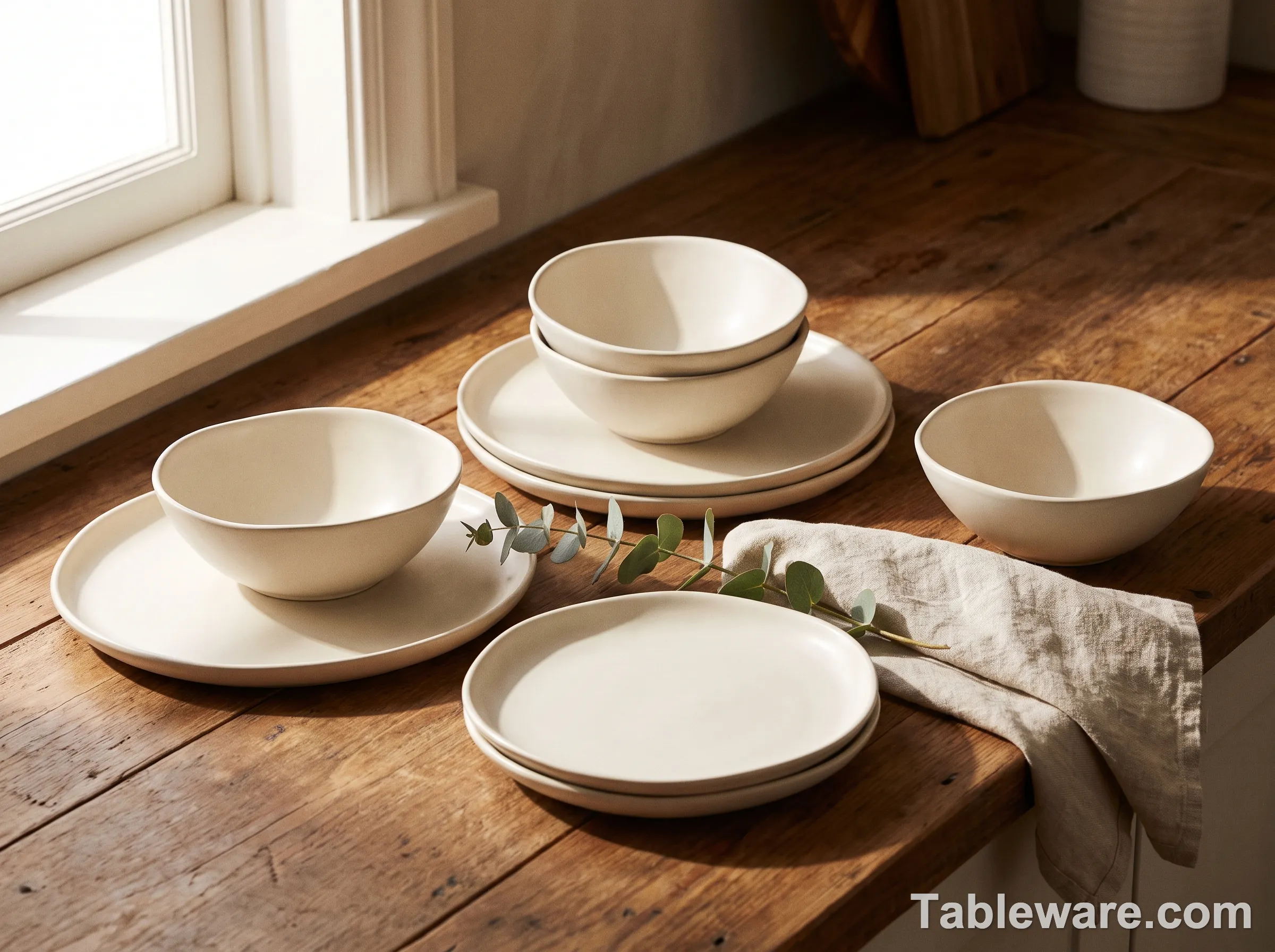
Phase 2 — The $500–800 Workhorse Upgrade
Phase 2 happens somewhere between month 18 and month 36. By now you know three things: (1) which plate shape you actually like, (2) how many place settings you really need (it's almost never 4, it's almost always 6 or 8 if you host regularly), and (3) which Phase 1 pieces you want to keep.
This is where mix and match dinnerware sets from different brands start to make sense. Phase 1 was all one brand for simplicity. Phase 2 is where you start curating.
When to know it's time for Phase 2
The honest triggers are:
- You host dinner parties of 6+ and you're borrowing plates from a neighbor
- You chipped a Phase 1 piece and the replacement cost is now $14–$18, which feels like too much for a starter set
- You have a serving piece budget you didn't have at Phase 1
- You got a wedding registry gift card burning a hole in your pocket
If none of those apply, stay in Phase 1 longer. There's no schedule. The 3-phase build is a philosophy, not a calendar.
What to buy in Phase 2
The Phase 2 budget of $500–$800 typically breaks down as:
- 2–4 additional place settings to round out to 6–8 settings: $150–$300
- A serving platter: $40–$120
- A serving bowl (the big one, for pasta or salad): $30–$80
- A second set of bowls or mugs if your Phase 1 was light on either: $50–$120
- A gravy boat or small sauce dish if you cook that kind of food: $20–$50
Total range: $290 to $670. Add a Phase 3 statement piece budget on top, and you're at the $700 to $1,500 number from the title.
Three Phase 2 brands worth your money
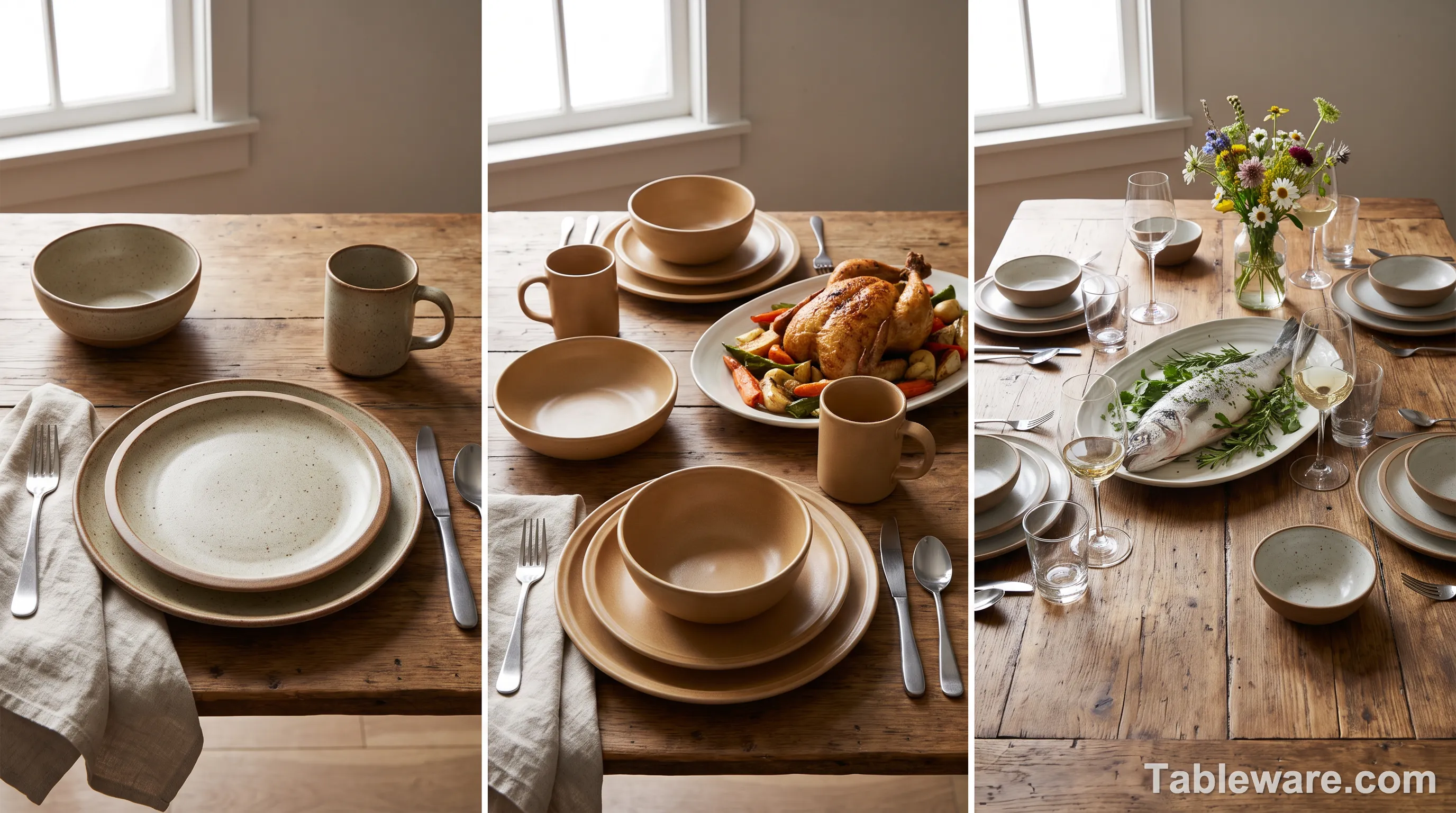
East Fork: Based in Asheville, NC. A 4-piece place setting runs $112 (dinner plate, salad plate, bowl, mug). The pieces are heavier than IKEA, lighter than Fiestadt, and have that subtle speckled glaze that makes them feel handmade without the handmade price tag. East Fork runs direct-to-consumer with seasonal color drops, but their core neutrals—eggshell, morel, soot, puff—are open stock year-round. The first dinner party I hosted after switching to East Fork, three guests asked where I got the plates. That doesn't happen with IKEA.
Heath Ceramics: The California studio pottery institution. A single Heath dinner plate is $42 to $58. A 4-piece setting is around $200. The catch: Heath is expensive enough that most people treat it as a long-term buy, not an upgrade. The 4-setting Heath is a Phase 2-3 hybrid purchase. If you can afford it, you skip Phase 2 entirely and just buy 6 Heath settings straight up. If you can't, the Heath Seconds store in San Francisco (and the online Seconds shop) sells factory seconds for 30-40% off. A $48 plate becomes $32. The seconds are usually invisible flaws. Worth knowing about.
Williams Sonoma Home Open Kitchen: This is the boring-but-effective pick. A 4-piece place setting is $40 to $60, the patterns are open stock, the quality is consistent. Williams Sonoma runs a "complete the set" program where you can buy individual pieces forever. If you want a $500 Phase 2 budget that quietly becomes a $900 Phase 3 budget over the next four years, this is the brand for that.
The mix and match dinnerware sets from different brands approach that actually works is: pick one brand for the core plates and bowls, then layer in one or two accent pieces from a different brand for visual interest. All-East Fork, all-Heath, all-Williams-Sonoma is fine. All-East-Fork with one Heath platter is better. The mistake is buying 3 plates from 3 brands and 4 bowls from a 4th brand. That's not mix-and-match, that's a flea market. (If you're deep in this rabbit hole, the open stock vs full set money math is worth a separate read.)
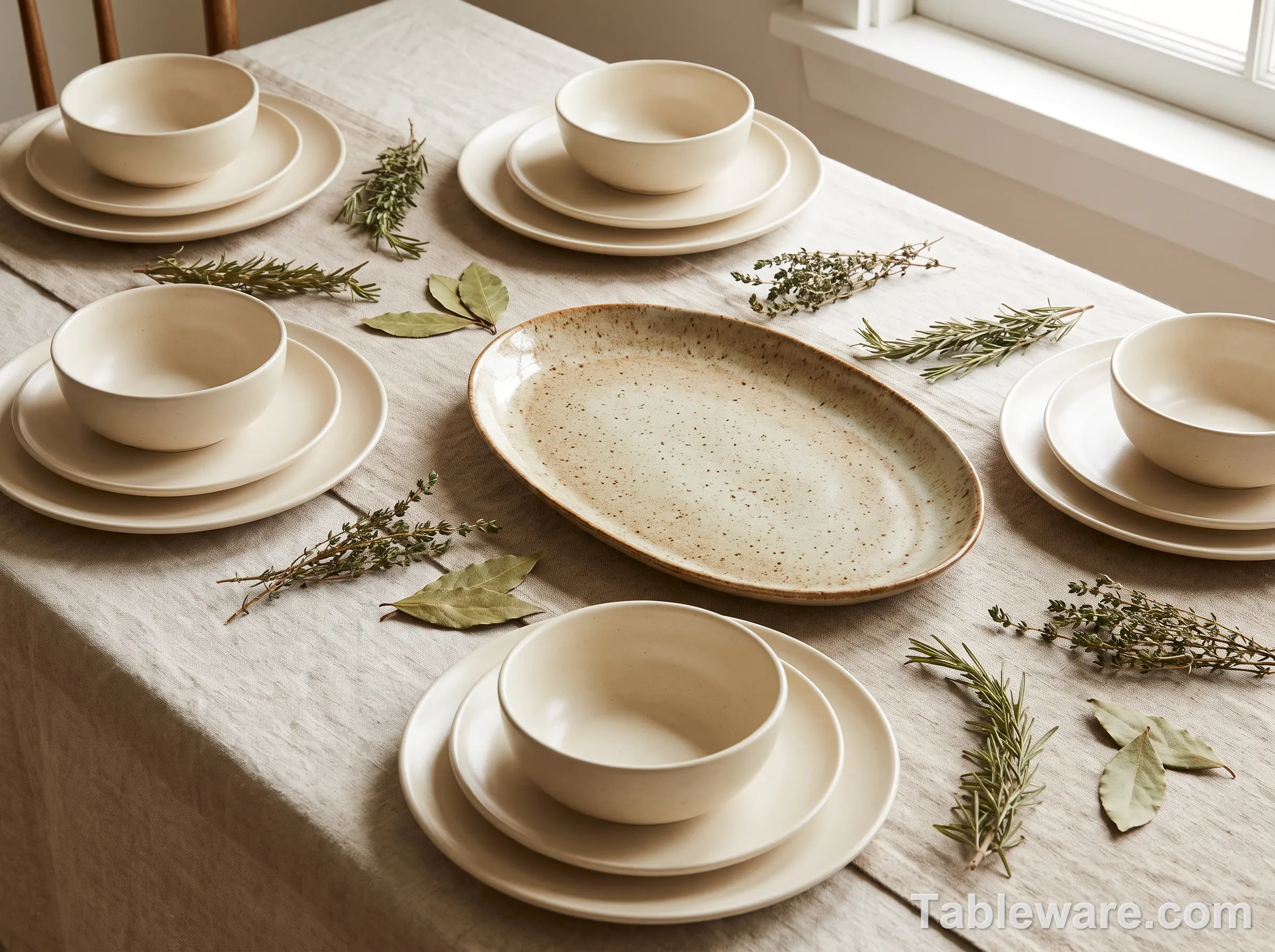
Phase 3 — The 1–2 Statement Pieces
Phase 3 is the most fun and the most optional. You can run a perfectly good table with Phase 1 and Phase 2 pieces for the rest of your life. But if you want a table that actually looks like a grown-up put thought into it, Phase 3 is where the magic happens.
A statement piece is one large, beautiful, slightly impractical object that anchors the table. Not a piece you use every day. A piece you bring out when the food deserves it.
What makes a piece "statement"
Three rules:
- It's larger than your everyday pieces. A 14-inch platter when your dinner plates are 10.5 inches. A 3-quart tureen when your everyday bowl is 16 ounces. The size difference is what makes it stand out.
- It's handmade or vintage. A factory-stamped piece is decor. A handmade piece is art. The handmade pottery serving platter statement piece is the most common entry point—a $180 to $400 investment that gets used twice a month for the next 30 years.
- You don't have a duplicate. One statement piece. Maybe two, max. If you have four matching platters, they're not statement, they're dinnerware. A single, slightly weird, beautiful object on the table is what makes people remember the meal.
Where to source Phase 3
Local studio potters: The 80/20 rule. 80% of the pottery you'll find on Etsy is mass-produced overseas and resold. The other 20% is actually handmade by a person, and that's what you want. Find a local potter through a Saturday morning craft market or a quick Instagram search for "[your city] ceramics studio." A hand-thrown serving platter is $120 to $300. It will outlive you.
The Heath Seconds store: Already mentioned. If you live in or visit the Bay Area, the Seconds store in the Heath complex in SF is the single best Phase 3 hunting ground. Last time I went, they had a 14-inch serving platter in a discontinued glaze for $80. It was the best $80 I've spent on a piece of houseware in 15 years.
The East Fork Seconds shop: Same concept, online. East Fork sells factory seconds directly. Cosmetic flaws only. A $90 platter for $45.
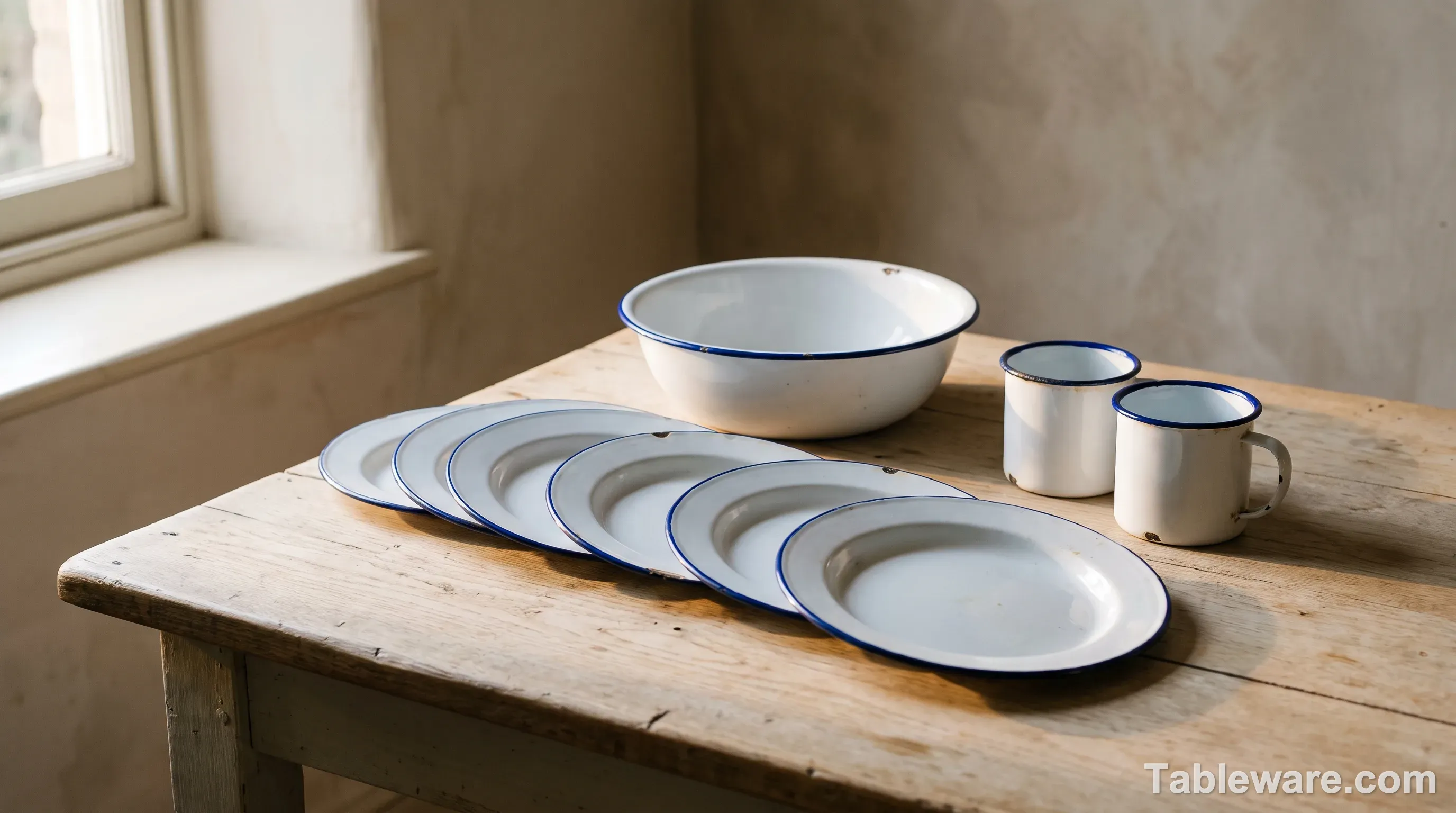
Estate sales and vintage shops: This is the deep cut. An estate sale in a nice zip code will have 30-year-old Fiestadt, hand-painted Italian ceramic, Japanese Mino ware, vintage California pottery. The selection is random. The prices are 50-80% off retail. A 1960s California pottery serving bowl might be $25 at a garage sale. At an antique mall, the same bowl is $90. Patient hunting is the whole game.
Etsy, with the filter: Filter by "handmade" (not "vintage"), set the location to your country, and sort by "most recent." The first three pages will still be dropshippers. Pages four through eight will have actual studio potters. That's where you want to be.
A good handmade pottery serving platter is a 20-year purchase, not a 5-year one. Spend accordingly. $180 to $400 is the right range. Below $100 and you're probably buying dropshipped junk. Above $500 and you're paying for a name.
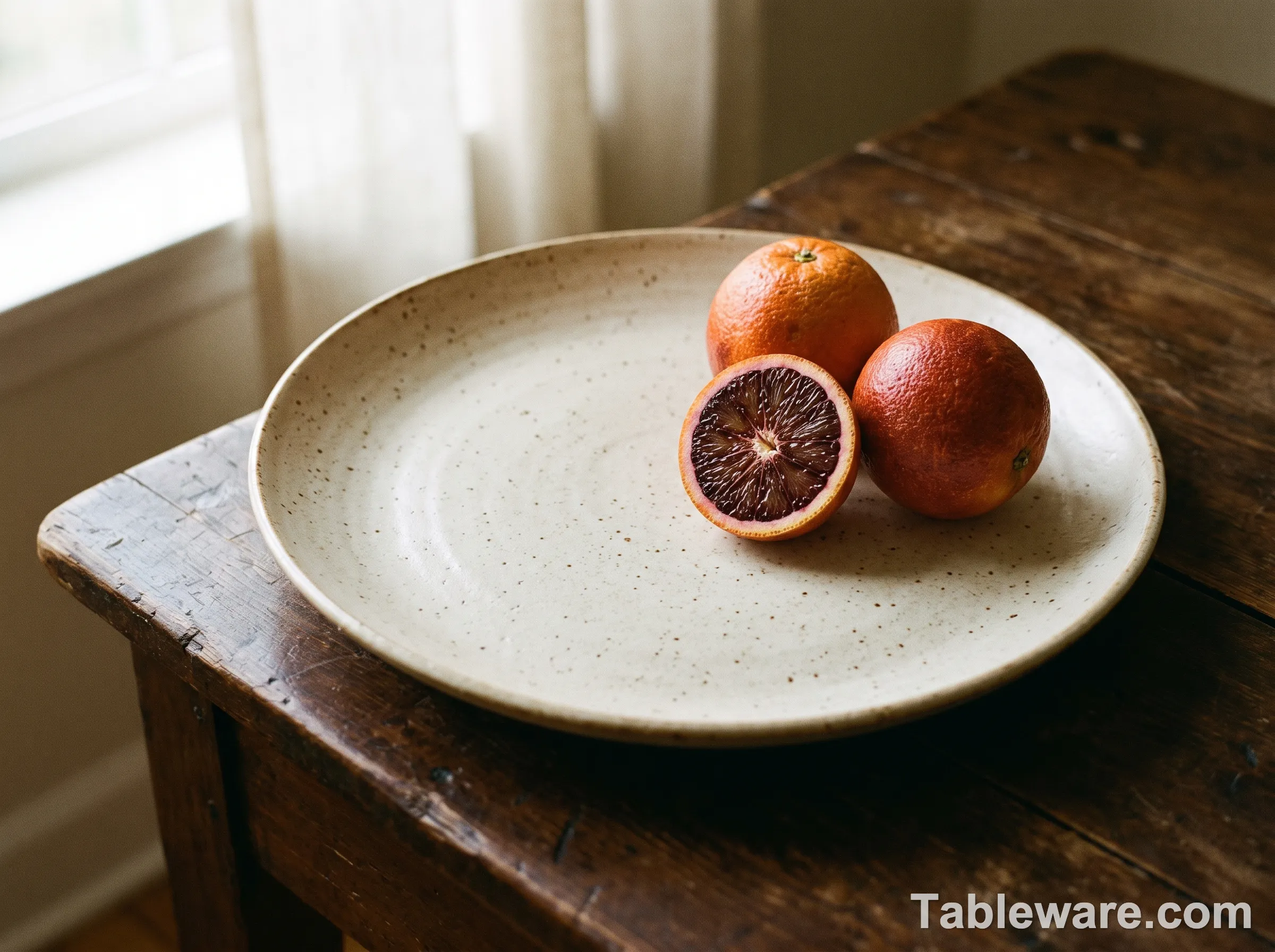
The Cross-Phase Styling Rule (the make-or-break principle)
Here's the rule that makes or breaks the 3-phase build. It's the one most guides skip because it's hard to photograph.
Every Phase you buy for must be visually compatible with what you already own.
That's it. That's the rule.
What this means in practice: your Phase 1 IKEA 365+ cream plates need to look good next to a Phase 2 East Fork eggshell bowl. A Phase 2 Williams Sonoma white platter needs to look good next to a Phase 3 handmade speckled platter. The whole point of the 3-phase build is that your table evolves over time without ever needing a full reset.
The way to enforce this rule is to make a "compatibility check" before any Phase 2 or Phase 3 purchase. Bring a Phase 1 piece to the store. Or take a screenshot of your Phase 1 set on your phone. Put the new piece next to it. Does the new piece work?
This is also why starting with a neutral Phase 1 matters so much. If you start with bright red Fiestadt, you cannot add East Fork, Williams Sonoma, or any handmade piece without it clashing. Bright red is a 5-year commitment. Cream is a 30-year commitment.
The mix and match dinnerware sets from different brands that actually look good on Instagram are almost always built on a neutral foundation. The accent pieces can be wild. The base has to be quiet.
5-Year Cost Math: Open Stock vs. 16-Piece Set
Let's run the actual numbers, because "3 phases" sounds cute until you do the math.
Scenario A: Buy the 16-piece set, replace as needed.
- Year 1: 16-piece Crate & Barrel set, $200.
- Year 2: 1 replacement dinner plate (discontinued, buy full set from new line), $50.
- Year 3: 2 replacement bowls (different brand, HomeGoods), $30.
- Year 4: 2 replacement mugs (whatever's in stock), $24.
- Year 5: 1 new salad plate from a third line, $14.
Total spent over 5 years: $318. Total set value at year 5: maybe $80 on the resale market, if you're lucky. Net cost: $238.
Scenario B: The 3-phase build.
- Year 1 (Phase 1): IKEA 365+ 4 place settings + 4 bowls, $112.
- Year 2 (still Phase 1): 2 additional mugs, $16.
- Year 3 (Phase 2): East Fork 2 additional place settings, $224. Serving platter from Williams Sonoma, $80.
- Year 4 (still Phase 2): 2 additional East Fork bowls, $56.
- Year 5 (Phase 3): 1 handmade serving platter from a local potter, $220.
Total spent over 5 years: $708. Total set value at year 5: $400 to $500 (handmade pieces hold value, East Fork holds value, IKEA is replaceable so worth less). Net cost: $208 to $308.
The 3-phase build costs about the same as the 16-piece set over 5 years—but you end up with a collection worth $400+ instead of $80, no discontinued patterns, and a statement piece that genuinely makes hosting feel special.
The dinnerware set upgrade is no longer a problem. It's a feature.
Quick Reference: Which Phase Are You In?
| Your situation | Phase | Budget | What to buy |
|---|---|---|---|
| Just starting out, first apartment | Phase 1 | $150–$250 | 4 place settings of neutral stoneware, open stock |
| 2+ years in, hosting 4+ people | Phase 2 | $500–$800 | 6–8 settings, serving pieces, accent pieces from a different brand |
| Mature collection, want a "real" table | Phase 3 | $200–$1,500 | 1–2 handmade or vintage statement pieces |
The Bottom Line
If you've been agonizing over whether to buy the 16-piece set, here's my advice. Don't.
Buy the small starter. Use it for two to three years. Notice which pieces you reach for and which you don't. Notice which shapes feel right in your hand. Notice how many place settings you actually need when you host. Then upgrade—selectively, beautifully, one piece at a time—into a collection that reflects how you actually live.
The dinnerware set upgrade trap is real, but only if you let the sealed box be the starting point and the ending point. Once you treat the first $150 as a starting point rather than a final answer, the rest of the build takes care of itself.