Oven-to-Table Bakeware: 5 Materials, 5 Different Failure Modes
Two Sundays ago I pulled a Le Creuset out of a 400°F oven, set it on a wet stone countertop (rain tracked in through the kitchen window), and heard the sound. That deep, two-second thock that means a beautiful piece of French stoneware just earned a 6-inch crack down the side. Twenty years of Tuesday-night chili, gone.
The crack wasn't random. It wasn't bad luck. It was the predictable failure mode of one material — vitrified stoneware — being asked to do something its physics doesn't forgive: a 380°F temperature swing in under 3 seconds, applied to one side of the piece.
That's the thing most "best bakeware" lists won't tell you. They rank pans by looks, by price, by "oven safe to 500°F" stamps on the bottom. None of them rank bakeware by how it fails. And the failure modes are wildly different across materials. A stoneware dish cracks. A porcelain dish crazes. A soda-lime glass dish explodes. A borosilicate dish shrugs. A cast-iron dish warps. If you cook enough, you'll see all five. This article is the engineer's guide to what each material actually does under thermal load — and how to buy the one that fails in the way you can live with.
If you only have 90 seconds, here is the oven to table bakeware cheat sheet.
| Material | CTE (ppm/°C) | Thermal Shock Tolerance | Failure Mode | Freezer → Oven? |
|---|---|---|---|---|
| Soda-lime glass | ~9 | ~90°F swing | Minimal crushes (small shards) | No |
| Earthenware (glazed) | ~6 | ~120°F swing | Glaze crazes, body chips | Risky |
| Stoneware (vitrified) | 5–7 | ~200°F swing | Stress fracture, often diagonal | No |
| Porcelain | 3–5 | ~280°F swing | Crazing followed by fracture | Yes |
| Borosilicate glass | ~3.3 | ~330°F swing | Shatters on impact, not heat | Yes |
| Cast iron (enameled) | 5–6 (iron) | Very high | Enamel crazes on impact | Yes (cool first) |
| Pyroceram (CorningWare) | ~0 | Effectively unlimited | Shatters on impact, not heat | Yes |
For a broader look at how stoneware performs on the table (not just in the oven), my stoneware wiki entry covers the durability, vitrification, and everyday-use side. But oven-to-table is its own physics problem. Let's dig in.
Why Baking Dishes Crack: It's Not Bad Luck
Before we get to materials, the physics. There's one number that decides whether a bakeware piece survives: the coefficient of thermal expansion (CTE). Every solid expands when it warms and contracts when it cools, at a rate measured in parts per million per degree Celsius (ppm/°C). The problem isn't the expansion. The problem is differential expansion — when one part of a piece is 350°F and another part is 70°F, the hot side stretches and the cold side doesn't, and the stress has to go somewhere. If the stress exceeds the material's tensile strength, something gives. Usually a crack.
Here's the rub: the CTE of a bakeware material is fixed by its chemistry. The piece on your countertop has whatever CTE it was born with. What you can control is the rate of temperature change (ΔT/Δt). Slow changes — preheating with the oven, letting the dish rest 30 minutes on the counter before refrigerating — keep ΔT/Δt low and stress manageable. Fast changes — freezer to 400°F, hot dish to wet granite — push stress past the failure threshold.
So "why do baking dishes crack in the oven" has two layers:
- Sudden temperature change — the most common cause. You take the dish out of a hot oven and set it on a cold stone counter, or you put a cold dish into a preheated oven. The thermal gradient across the piece exceeds its design tolerance.
- Pre-existing stress — chips, crazing, micro-fractures, and uneven wall thickness concentrate stress. A dish that's been dropped, run through the dishwasher 800 times, or has visible crazing on the glaze is much more likely to fail at a lower temperature swing than a pristine one.
The other thing most guides get wrong: cracking isn't a "this material is bad" judgment. Stoneware cracks at a 200°F swing. Soda-lime glass explodes at a 100°F swing. Borosilicate glass shrugs at a 330°F swing. None of those are bad materials — they're just different materials designed for different jobs. The mistake is using a soda-lime glass dish as a freezer-to-oven vessel, or a stoneware baker on a wet stone counter. That's not bad luck. That's a category error.
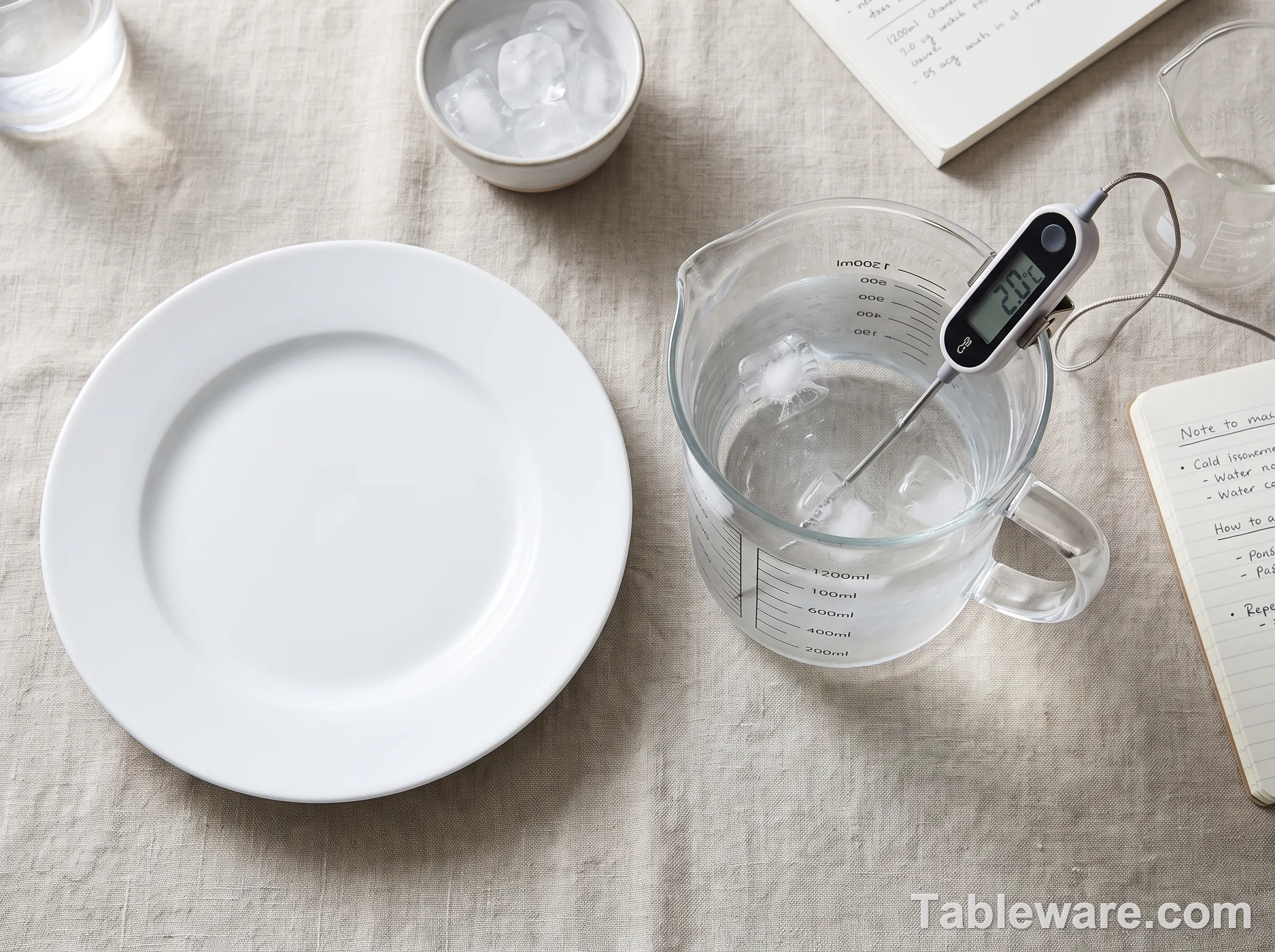
Fig 1. Thermal shock tolerance of the five bakeware materials covered in this article. Higher bars = bigger temperature swing before cracking. The numbers are typical values from manufacturer datasheets and aren't universal — Corning's Pyroceram and Schott's Robax are extreme outliers at the top.
Stoneware Bakeware: The Workhorse, With One Weakness
Stoneware is the default bakeware material in most American kitchens, and for good reason. It's cheap (relative to porcelain), it holds heat beautifully, and it tolerates the abuse of a busy kitchen — fork scratches, dishwasher cycles, the occasional drop from a counter. Le Creuset, Staub, Emile Henry, Pampered Chef, the IKEA 365+ stoneware line, and most of what you'll find at Target and Crate & Barrel are all stoneware.
The body is mid-fire clay — typically a mix of ball clay, fire clay, and grog — fired somewhere between cone 5 and cone 10 (roughly 2,167–2,345°F). At those temperatures the fluxes in the clay melt and form glass between the particles, a process called vitrification. A well-vitrified stoneware body has water absorption of 1–3%, which means it's mostly non-porous. A poorly vitrified stoneware body — cheap imports, seconds, badly-controlled firing — has absorption in the 5–10% range, which is where most of the early crazing problems come from.
The CTE of a typical stoneware is somewhere around 5–7 ppm/°C. That's actually decent. The problem isn't the CTE itself — it's the mass and the wall thickness. A heavy stoneware baker takes longer to heat through. If you put it in a 425°F preheated oven, the inside surface hits 400°F while the outer surface is still at 200°F, and the gradient stresses the piece. Same thing in reverse: pull a stoneware baker out of a hot oven and set it on a cold granite countertop and the bottom contracts faster than the top. Crack.
Stoneware's failure mode is the stress fracture, often running diagonally from a rim or foot where the geometry already concentrates stress. It's almost always a clean break, not a shatter. The piece usually fails at the rim first (where wall thickness transitions) or at the foot (where the unglazed base is).
The honest summary for stoneware: It's the best general-purpose bakeware if you treat it gently. Don't freeze it (1–3% water absorption means it'll absorb and expand in the freezer, often cracking the body). Don't put it on wet stone, granite, or steel counters when it's hot. Pre-heat it with the oven instead of dropping it into a preheated one. And accept that a 30-year-old Le Creuset that has been dropped twice is more likely to fail than a new one — even if it "looks fine."
For more on stoneware engineering and the difference between vitrified and non-vitrified bodies, my stoneware wiki entry has the chemistry details.
Porcelain Bakeware: The Thoroughbred (If You Don't Freeze It)
Porcelain is the refined cousin of stoneware. Higher firing temperature (cone 8–12, roughly 2,280–2,420°F), finer particle size (kaolin clay is the dominant ingredient), and a fully vitrified body with water absorption under 0.5%. The result is a denser, less porous, often translucent material with a CTE around 3–5 ppm/°C — meaningfully better than stoneware.
The classic porcelain bakeware brands you'll recognize: Revol (French), Pillivuyt (also French), Limoges porcelain bakers, Masa porcelain, and the porcelain offerings from IKEA (the IKEA 365+ porcelain line is porcelain, not stoneware, despite looking similar). Restaurant supply stores sell porcelain bakers by Steelite, World Tableware, and Vertex — these are workhorse porcelain pieces designed for 500°F ovens and the abuse of a hotel buffet line.
Porcelain's CTE advantage shows up in one specific scenario: freezer to oven. A porcelain baker that has been sitting at -10°F can go into a 400°F preheated oven with much less thermal stress than a comparable stoneware piece. The lower CTE means the cold-to-hot expansion differential is smaller, and the higher firing temperature means the body has more tensile strength to absorb the residual stress.
So why isn't porcelain the default? Three reasons.
- It is more expensive. Stoneware is cheap because the raw materials are cheap and the firing temperature is lower (less energy). A porcelain baker runs $35–$80 versus $20–$40 for an equivalent stoneware piece.
- It chips more visibly. Porcelain is harder than stoneware, but harder also means more brittle. A chip on a porcelain rim is a sharp, white-edged scar that doesn't blend into the body. A chip on a stoneware rim is a darker, rounded nick that fades in.
- It is unforgiving of impact. Drop a porcelain baker on a tile floor and you usually get two pieces plus shards. Drop a stoneware baker on the same floor and you usually get one piece plus a crack. The lower CTE doesn't help with mechanical shock.
Porcelain's failure mode is crazing followed by fracture. Crazing is the fine network of hairline cracks that appears in the glaze over time, usually after enough thermal cycling or impact. On porcelain, crazing is mostly cosmetic at first, but the cracks become stress concentrators, and the next major thermal event tends to propagate one of the crazing lines into a full fracture. If you see crazing on a porcelain baker, retire it from heavy use.
The honest summary for porcelain: It's the better thermal performer, especially for freezer-to-oven work, but the cost and the brittleness tradeoff means it's not the right choice for daily abuse. For an oven-to-table-to-fridge dish in a small household that doesn't drop things, porcelain is the sweet spot. For a household with kids and a dishwasher that runs twice a day, stoneware is more forgiving.
For a deeper comparison, my stoneware wiki entry covers the practical buying decision in more detail.
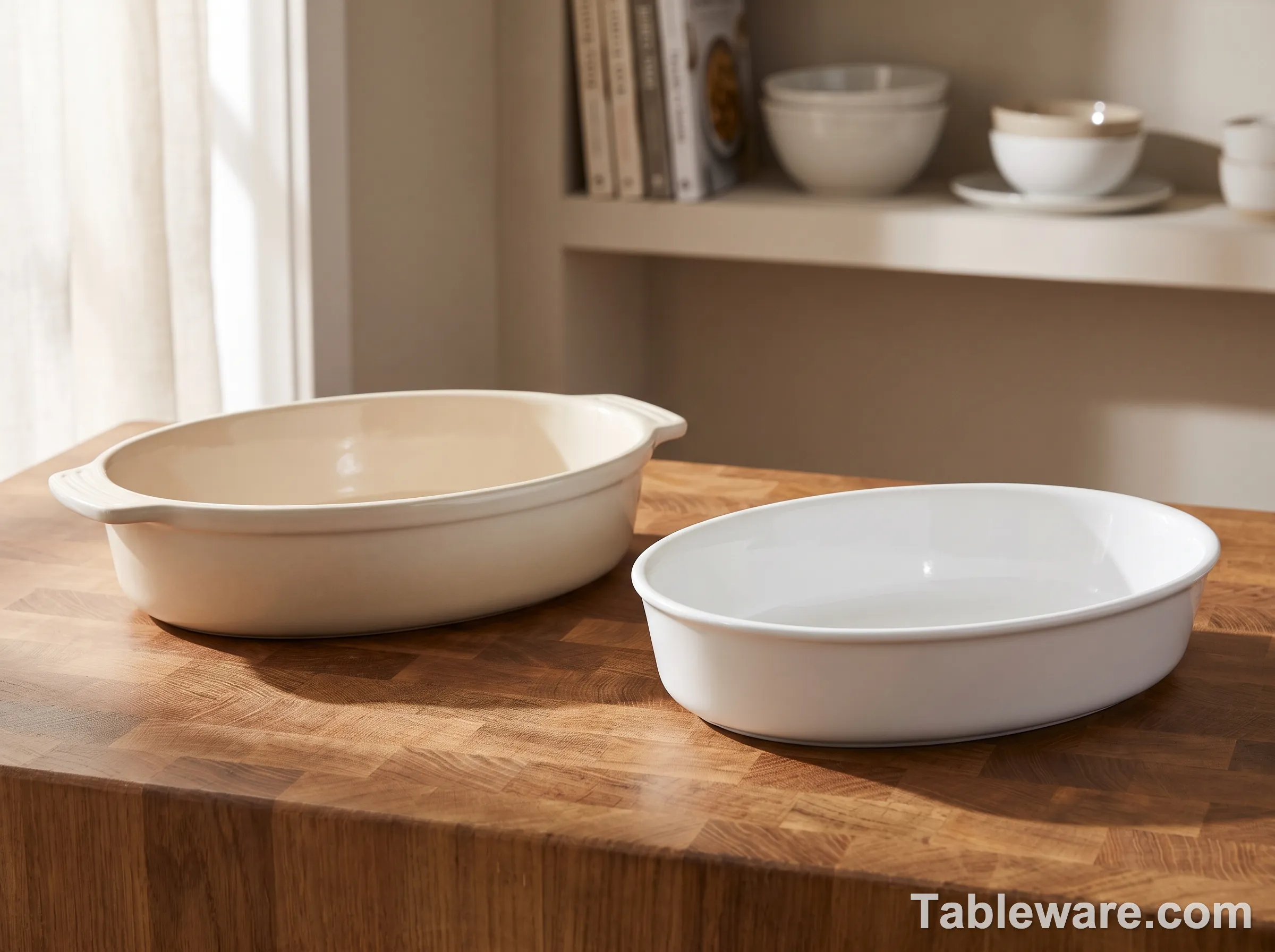
Fig 2. A typical stoneware baker (left) has thicker walls and a heavier body, around 5–8 mm wall thickness in commercial pieces. A porcelain baker (right) is thinner — 3–5 mm walls — and lighter. The thinner wall is part of why porcelain heats faster but also why it's more sensitive to impact.
Glass Bakeware: Soda-Lime vs Borosilicate vs Pyroceram
Glass bakeware is where the engineering gets interesting, because there are three very different glasses sitting on the same shelf at Target, all stamped "oven safe."
Soda-lime glass is what most American "glass baking dishes" are made of. The iconic Pyrex in the US (the clear 9x13 you grew up with) was soda-lime glass from about 1915 until 1998. Then the manufacturing moved — first to a different plant, then to a different glass formula in the late 1990s, and the new "Pyrex" in the US is borosilicate, not soda-lime. Wait, no — let me correct myself. The current US Pyrex-branded bakeware (made by Corelle Brands, since the original Corning Consumer Products sale in 1998) is soda-lime tempered glass, not borosilicate. The European and Indian Pyrex (still made by Arc International in France and by Borosil in India respectively) is borosilicate. This split is the source of almost all "Pyrex exploded" stories on the internet, and it's important.
Soda-lime glass has a CTE around 9 ppm/°C, roughly twice that of stoneware. That means a temperature swing that stresses stoneware to its limit will shatter soda-lime glass. Soda-lime glass bakeware is not freezer-to-oven safe. The brand will tell you "do not subject to extreme temperature changes," which is manufacturer-speak for "we know this glass will fail at a 90°F swing." Putting a soda-lime dish from the freezer into a hot oven is the textbook way to make it explode. Putting a hot soda-lime dish on a wet or cold surface does the same thing. The shards are nasty — small, sharp, and they spread.
Borosilicate glass (European Pyrex, Indian Borosil, most laboratory glassware, Pyrex lab glass in the US) has a CTE around 3.3 ppm/°C, similar to porcelain. That low CTE is why borosilicate can take a 330°F thermal shock without failing. Borosilicate bakeware is freezer-to-oven safe in a way soda-lime is not. The downside is that borosilicate is more expensive to produce (higher melting temperature, harder to shape), and the pieces tend to be thinner-walled than soda-lime, which means they're lighter but also more sensitive to mechanical impact. A borosilicate dish dropped on a tile floor will shatter into more pieces than soda-lime.
Pyroceram is a glass-ceramic — a glass that has been heat-treated to nucleate and grow tiny crystal phases inside it, which dramatically changes its thermal and mechanical properties. The classic Pyroceram bakeware is CorningWare, made by Corning from 1958 to the late 1990s and now under the Corelle Brands umbrella. Pyroceram has a CTE close to 0 ppm/°C — essentially zero thermal expansion across normal cooking temperatures. A CorningWare dish can go from freezer to a 500°F broiler with no thermal stress. It's the only common bakeware that genuinely shrugs off any temperature change you'll inflict in a home kitchen.
Pyroceram's downside is mechanical: the same crystallized structure that gives it zero CTE also makes it brittle. A CorningWare dish dropped from counter height will shatter into more pieces than borosilicate, and the shards are sharper. Also, CorningWare stopped using the original Pyroceram formulation in the late 1990s and switched to a stoneware body with a "Pyroceram-like" name. The vintage CorningWare (the cornflower blue and the "French White" patterns from 1958–1998) is the real deal. The "CorningWare" sold today at Target and Walmart is stoneware with a different body and a fraction of the thermal performance.
The honest summary for glass bakeware:
- If you're buying new in the US and you want thermal safety, look for borosilicate labeled bakeware (brands: Simax, Glasslock's borosilicate line, specific Amazon "European Pyrex" imports) or vintage CorningWare Pyroceram from eBay and estate sales.
- If you're buying current US Pyrex, treat it as soda-lime tempered glass — fine for room-temp-to-oven, never for freezer-to-oven or hot-to-cold counter.
- If you're buying European Pyrex (still made in France), it's borosilicate and freezer-to-oven safe.
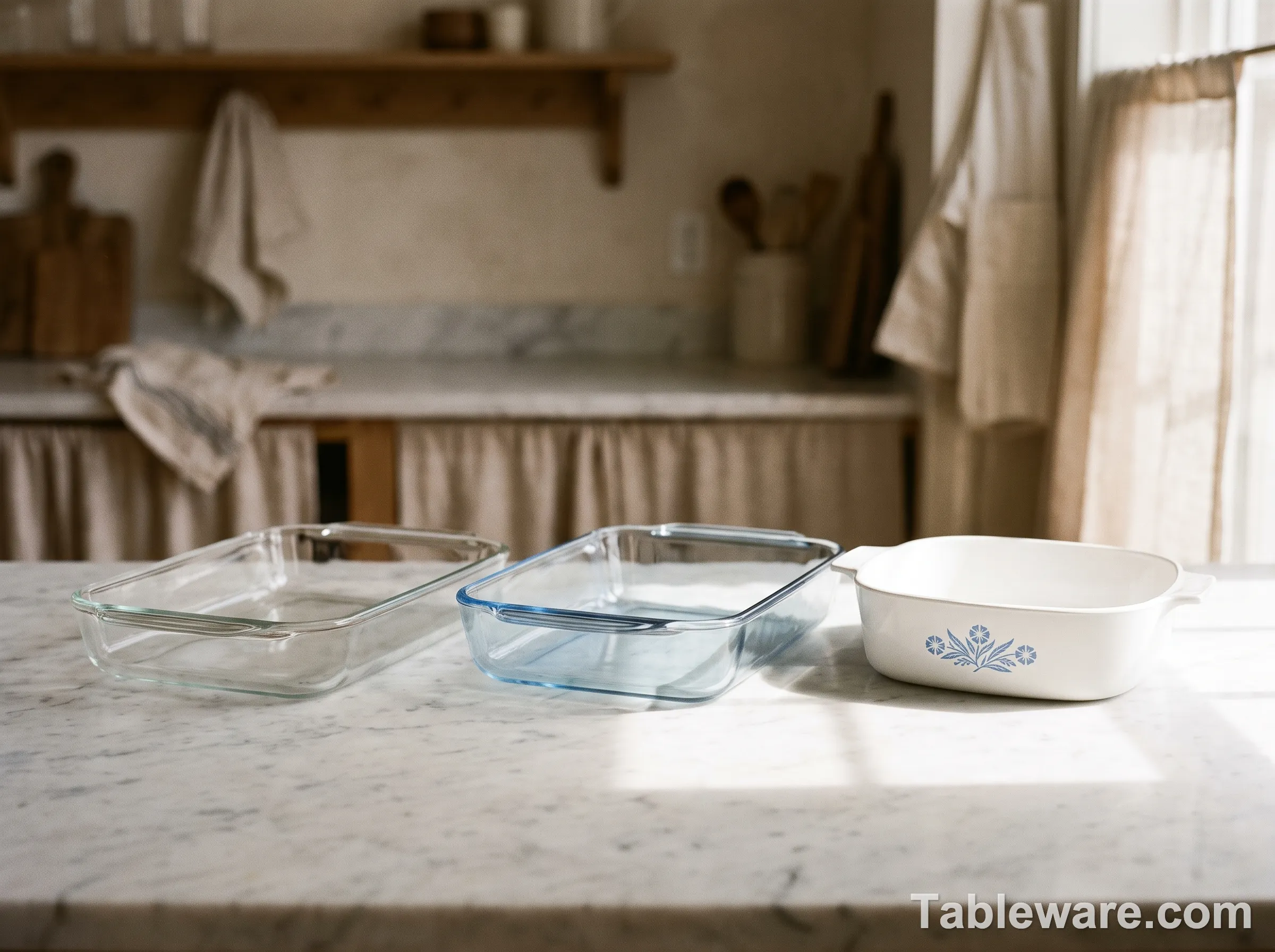
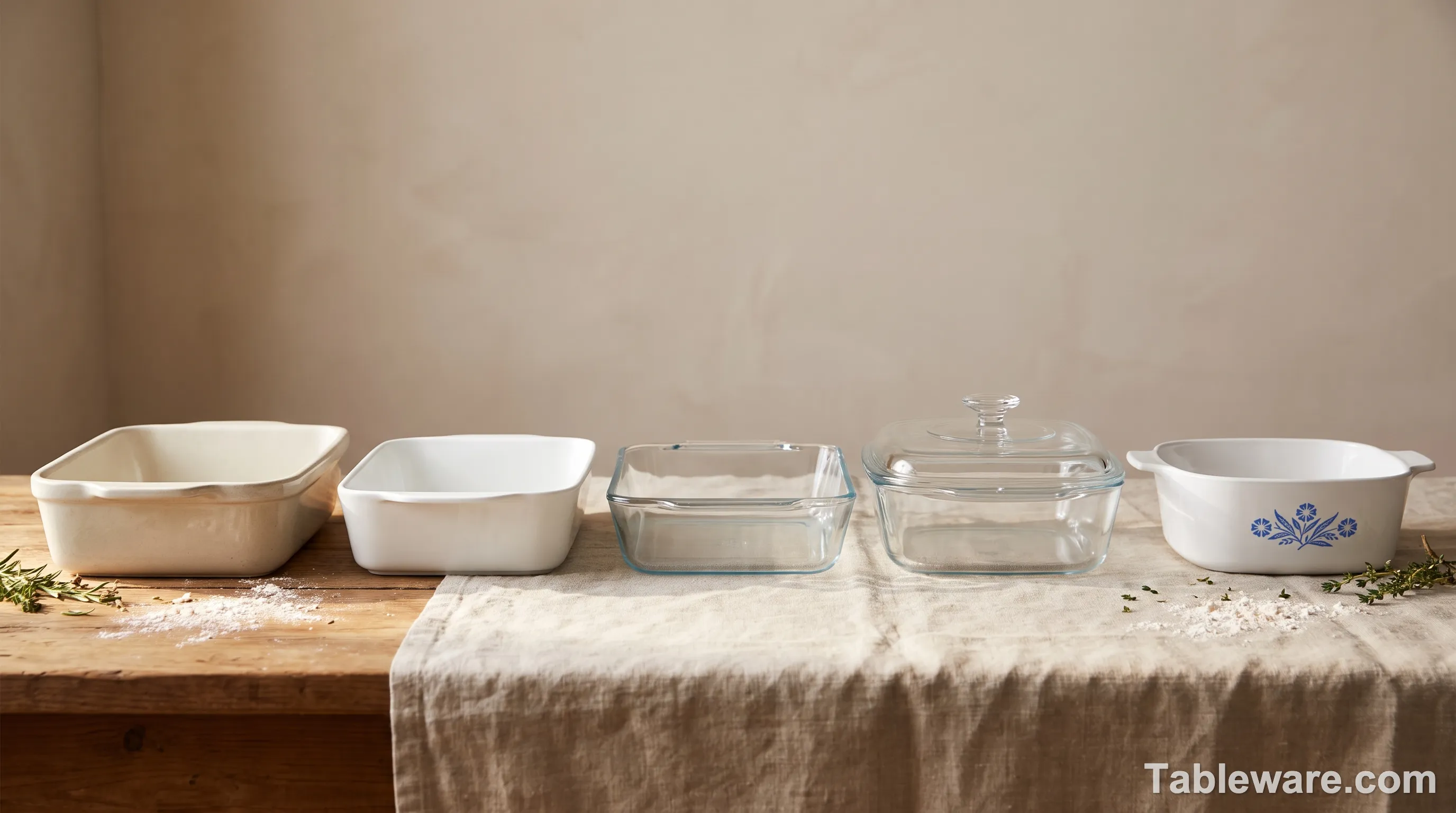
Fig 3. Three glass baking dishes that look identical on the shelf: soda-lime tempered glass (current US Pyrex, left), borosilicate glass (European Pyrex, middle), and vintage CorningWare Pyroceram (right). Same approximate size, vastly different thermal performance. The Pyroceram dish weighs more than the other two — that's the crystalline glass-ceramic body.
Earthenware, Cast Iron, Enameled Steel: The Three Other Players
Beyond the big five, there are three more materials you'll see on bakeware shelves, each with its own failure mode.
Earthenware is the traditional low-fire clay body, fired at cone 06–04 (about 1,828–1,945°F). The result is a porous body with water absorption of 5–15%, almost always glazed to make it functional for food. Earthenware's failure mode is chipping and glaze flaking. The body is soft, the glaze is the only thing keeping it waterproof, and the CTE mismatch between the body and the glaze is large enough that crazing appears within months of regular dishwasher cycling. Once the glaze crazes, water gets into the body and the piece slowly falls apart.
Earthenware's one genuine thermal advantage: the open, unvitrified structure tolerates thermal shock reasonably well. That's why traditional cooking vessels in many parts of the world are low-fire earthenware — a tagine, a Mexican cazuela, an Italian pignatta. These pieces handle a temperature swing that would crack a vitrified stoneware baker, because the porosity gives the body room to expand and contract. The tradeoff is they chip and glaze-craze much faster.
You don't want earthenware for daily bakeware. You want it if you're cooking traditional dishes where the earthenware flavor profile matters (the slight mineral taste that leaches into the food from the porous body) and you're willing to replace it every 5–10 years. La Chamba (Colombian black clay), Italian terra cotta from Impruneta, and authentic Mexican cazuelas are the ones to look for. Mass-market terra cotta roasters are usually too thin and crack after 20 dishwasher cycles.
Cast iron is the opposite of earthenware: dense, heavy, mechanically tough, low CTE (around 5–6 ppm/°C for the iron itself), and almost indestructible in normal use. Cast iron bakers (think Staub cast iron, Le Creuset enameled cast iron, the Smithey iron bakers) hold heat beautifully, go from stovetop to oven to table without drama, and last forever. The catch is weight — a 5-quart cast iron baker weighs 9–12 lbs empty, which is not what you want for everyday oven-to-table work. And cast iron's thermal advantage is heat retention, not thermal shock resistance. Drop a hot cast iron baker into a sink of cold water and the iron itself handles the gradient fine, but the enamel coating on enameled cast iron is a separate material with a different CTE. Enamel crazing is the failure mode for enameled cast iron.
Enameled steel is the material in the old-school Swedish-style gratin pans, the Falcon enamelware, the graniteware roasting pans your grandmother used. A thin steel substrate coated with a porcelain enamel layer. The steel is tough; the enamel is glass. The CTE mismatch between the steel and the enamel is enormous, and the enamel will chip if you drop the pan. But the thermal performance is decent — steel conducts heat well, and the thin body means the temperature differential across the piece stays small under normal cooking conditions.
Enameled steel is the cheap-and-cheerful bakeware category. Falcon enamelware, the IKEA FÄRGRIK gratin pan, and the vintage graniteware roasting pans at flea markets are all enameled steel. They work fine for gratins, sheet-pan roasting, and cobblers. They fail by enamel chipping rather than thermal cracking.
The honest summary for the three other players: Earthenware is for traditional dishes where you want the flavor. Cast iron is for stovetop-to-oven work where heat retention matters. Enameled steel is for cheap everyday gratins where weight matters. None of them are the right answer for a "one dish that does everything" oven-to-table piece.
How to Read a Bakeware Label Like an Engineer
Buying bakeware gets easier once you know what the labels actually mean. Here's the field guide.
"Oven safe to 500°F" is the standard stamp on most stoneware and porcelain bakeware. It tells you the upper temperature limit — the piece won't fail structurally at 500°F. It does not tell you the thermal shock limit. A dish oven-safe to 500°F can still crack from a 200°F ambient heat rejection onto a wet counter.
"Freezer to oven safe" is the stamp on borosilicate glass, Pyroceram, and high-quality porcelain bakeware. If a piece doesn't have this language, assume it's not freezer-to-oven safe. Most stoneware doesn't carry this label for a reason.
"Microwave safe" is mostly meaningless for thermal performance — microwaves don't heat the dish the way an oven does. But "microwave safe" combined with the absence of metallic decoration is the signal that there's no metal in the body.
"Dishwasher safe" is also misleading. Almost all bakeware is "dishwasher safe" in the sense that the dishwasher won't destroy it on the first cycle. What the label doesn't say is that 800 dishwasher cycles will degrade the glaze on most stoneware and porcelain bakers, eventually leading to crazing. If you want bakeware to last, hand-wash.
"Vitrified" or "fully vitrified" on stoneware or porcelain means the body has been fired hot enough that water absorption is under 3% (stoneware) or under 0.5% (porcelain). Unvitrified or "earthenware body" stoneware is a red flag — it will craze and absorb water within a few years.
"Made in [country]" matters more than the brand. French porcelain from Revol and Pillivuyt is genuinely porcelain. German porcelain from Rosenthal and Villeroy & Boch is porcelain. Italian porcelain from a reputable maker is porcelain. "Porcelain" bakeware from no-name manufacturers on Amazon is often just vitreous china with marketing copy. The country of origin is a better proxy for actual material than the marketing claims.
"Hand-thrown" or "handmade" is a red flag for thermal performance, not a quality flag. Handmade pottery has variable wall thickness, which means variable thermal mass, which means more stress under thermal load. A handmade stoneware baker is more likely to crack than a slip-cast or pressed one. The tableware-engineering tradeoff is real — for thermal performance, slip-cast wins.
The honest summary: Most of what you read on bakeware boxes is true but incomplete. The two questions that matter are: (1) what is this made of (and is the manufacturer being honest about that?), and (2) what temperature swing is it designed to survive?
The Bottom Line: Choose by Failure Mode, Not by Brand
Here's the engineer-grade buying decision.
Buy borosilicate glass or Pyroceram if: you want one dish to do everything — freezer to oven to microwave to fridge to table — and you don't drop things. Borosilicate is the most thermally forgiving material in common bakeware. Pyroceram is the most forgiving material ever made, but vintage CorningWare is the only Pyroceram you'll find, and the supply is finite.
Buy porcelain if: you want freezer-to-oven performance, you don't mind the cost, and you're willing to hand-wash. Pillivuyt, Revol, and IKEA 365+ porcelain are the sweet spots. Avoid thin porcelain and "porcelain" labeled earthenware.
Buy stoneware if: you want a forgiving workhorse for daily use, you won't freeze it, and you're willing to replace it every 8–15 years. Le Creuset, Emile Henry, Staub ceramic, IKEA 365+ stoneware, and the mid-range Target Threshold stoneware are all fine. The very cheap stoneware (under $15 for a 9x13) is usually under-vitrified and will craze within a year. The stoneware vs porcelain bakeware decision for most households comes down to this: if you ever want to put leftovers in the freezer and then straight into the oven, porcelain wins. If your leftover workflow is fridge → microwave → table, stoneware wins.
Buy cast iron if: you want one dish that goes stovetop to oven to table for the next 30 years, and you don't mind 12 lbs. Staub and Le Creuset enameled cast iron are the standards. Skip the cheap enameled cast iron from no-name brands — the enamel quality varies dramatically.
Avoid earthenware for daily bakeware. Save it for the traditional dishes where the earthenware flavor matters and you're replacing the piece on a 5-year cycle anyway.
Avoid current US Pyrex for thermal work. It's soda-lime tempered glass, and the "exploded Pyrex" stories on Reddit are not exaggerations. Buy European Pyrex if you want the original borosilicate formula.
The dish that ended my Sunday chili was a 20-year-old Le Creuset stoneware baker. It wasn't bad luck. It was the predictable consequence of vitrified stoneware meeting a wet granite countertop. The replacement is a sitting on my shelf — a 12-year-old French porcelain Pillivuyt baker that survived the same Sunday's second batch of chili without drama. The two pieces cost about the same. One failed; one didn't. The material was the entire difference.
If you're building a bakeware set from zero, my real 10-year cost of owning a 12-piece set breaks down the dollars. And for the broader material science behind dinnerware, the stoneware wiki entry is the starting point. The oven is a physics lab. The dish is your test subject. Buy accordingly.