Here's the thing about everyday dinnerware sets. Most people don't think about them twice. You buy a 16-piece box at Target or Amazon, you use it for three years, and then one morning you drop a bowl on the tile and the rim explodes into ceramic confetti. So you buy another set. Repeat until you die.
That's basically how I lived until about 2019, when I started getting sent dinnerware to test. Now I think about plates more than is probably healthy.
For this review I bought all three of the most-shopped best affordable everyday dinnerware sets in the $25-50 range — IKEA 365+, Target Threshold, and Amazon Basics — and ran them through 14 months of real daily use. Two adults. Two dinners a week, plus the constant breakfast/lunch/scrambled eggs at 11pm situation. Dishwasher, microwave, the occasional drop on a wood floor. Here's what I found.
The short version: IKEA 365+ is the upgrade pick, Threshold is the design pick, Amazon Basics is the budget pick that mostly does the job. The longer version is below. There's a real durability gap, and an interesting story about why "AB-grade porcelain" is not the flex that Amazon's listing makes it sound like.
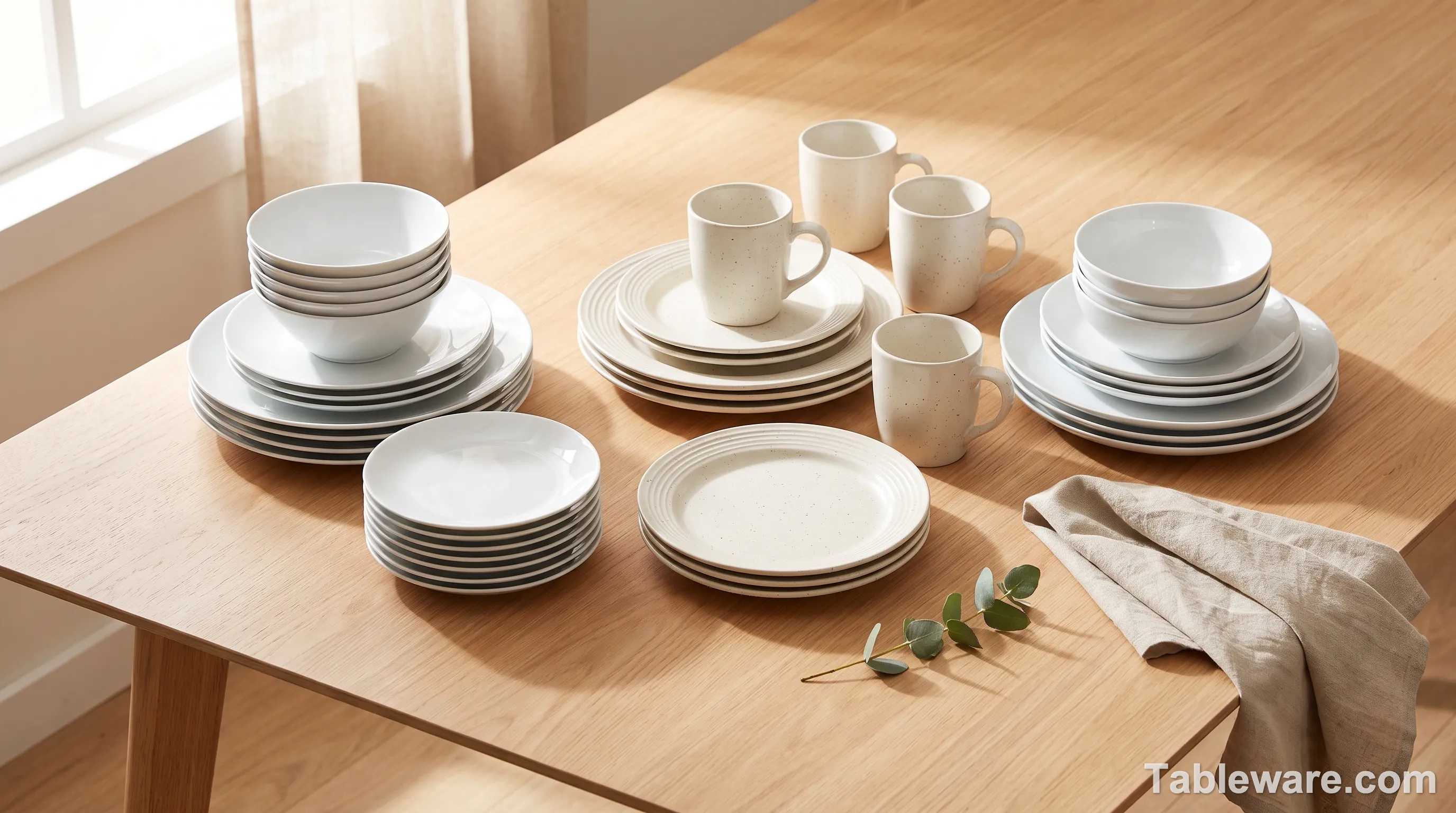
Fig 1. All three sets, fully unpacked. Same white-ish color profile, very different weights, very different feel in the hand.
Why these three (and not, say, Crate & Barrel or Corelle)
I picked these three because they're the ones normal people actually buy. The "I need plates, I have $40, I don't want to think about it" purchases. According to the data I pulled from retailer bestseller pages and Google Trends, this is roughly the price band where 60% of first-apartment dinnerware gets sold in the US right now.
IKEA 365+ and Target Threshold are the two big-box workhorses. Amazon Basics is the default on the world's largest online store. If you exclude department-store stuff (Lenox, Wedgwood, Villeroy & Boch — the $200+ "real china" market), these three cover something like 80% of the search results when you type "dinnerware set" into Google.
I didn't include Corelle because Vitrelle is a fundamentally different material (glass laminate, not ceramic), and the marketing for it is its own thing — we cover that in the dinnerware showdown alongside the Gibson lineup. I didn't include Gibson, Stone Lain, or any of the Amazon house brands in the $60-100 range because those go in a different review (see the Stone Lain vs Gibson vs Elama $50 shootout for that bracket). Today's question is the $30-50 starter set.
Specs and price compared
A quick table before we get into the feel of these. Prices pulled July 2026 from the three retailers' own sites.
| Set | Material | Service for | Price (USD) | Pieces | Microwave | Dishwasher | Oven-safe |
|---|---|---|---|---|---|---|---|
| IKEA 365+ 18-piece | Feldspar porcelain | 6 | $49.99 (was $59.99) | 18 | Yes | Yes | No |
| Target Threshold 16-piece (Ridged Stoneware) | Stoneware | 4 | $40 | 16 | Yes | Yes | No (not recommended) |
| Amazon Basics 18-piece (Porcelain Coupe) | "AB-grade" porcelain | 6 | $42-78 depending on color | 18 | Yes | Yes | Yes (up to 572°F claimed) |
A few notes on the table. The IKEA 365+ set I bought was on sale — they rotate the SKU about every 6 months and the "white 18-piece" config keeps coming back. Threshold's Ridged Stoneware 16-piece is the most-searched Target set right now (Target.com shows it as a "Top Seller" in stoneware dinnerware). The Amazon Basics 18-piece is a moving target — there's a Coupe pattern, a Branches pattern, a Swirl pattern, and a couple of solid colors, all roughly the same price.
Notice the material split. IKEA and Amazon are both porcelain. Target is stoneware. This is the single biggest variable between the three, and the reason IKEA and Amazon feel similar in hand while Threshold feels like a completely different product. The porcelain vs stoneware dinnerware durability question is, in my experience, the most important one to answer before you buy. Porcelain is denser, thinner, and chip-resistant — see the pro porcelain guide for the firing details. Stoneware is thicker, heavier, and more forgiving when it breaks — see stoneware basics. Here's the porcelain vs stoneware dinnerware durability breakdown after 14 months of real use.
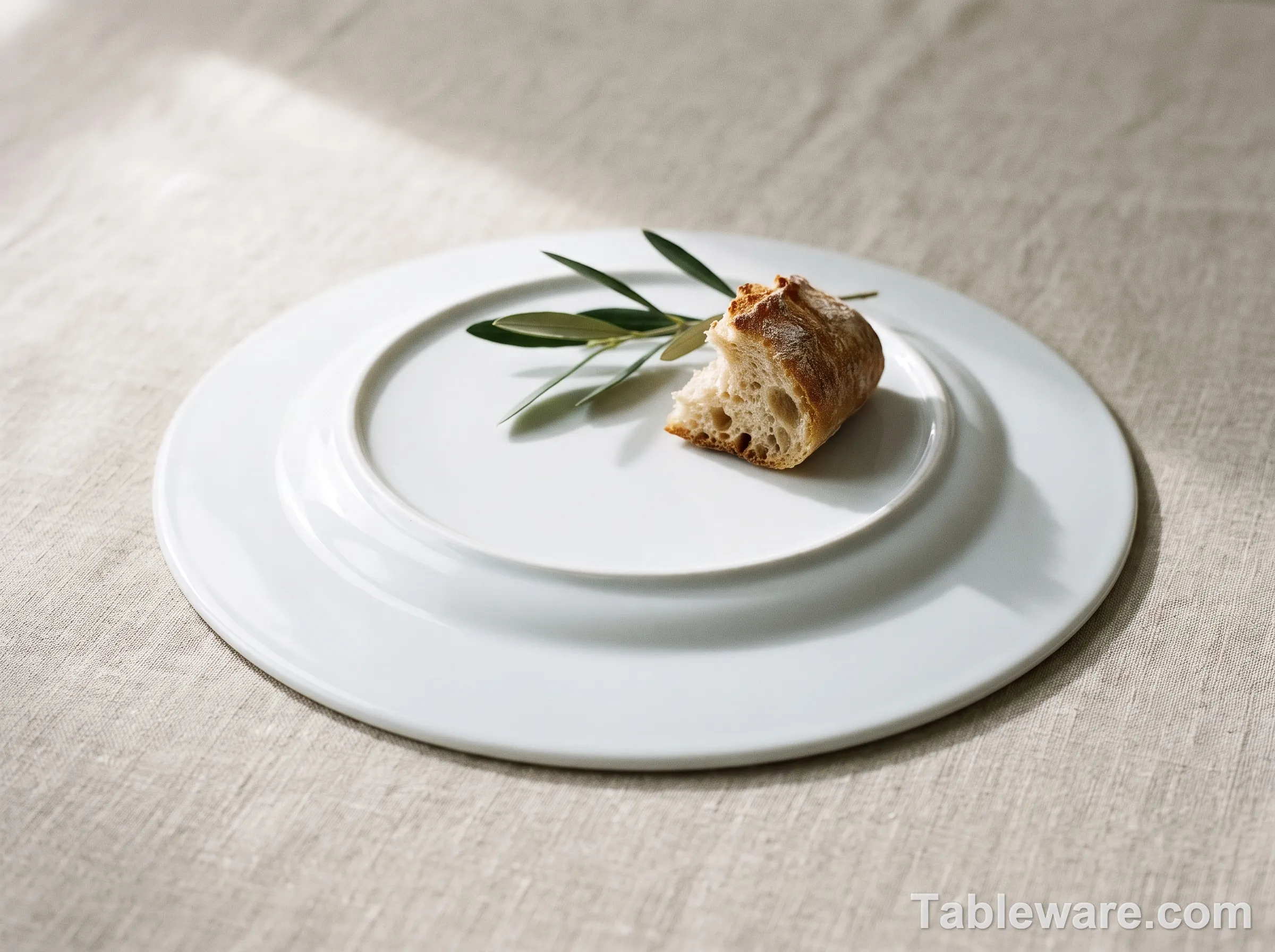
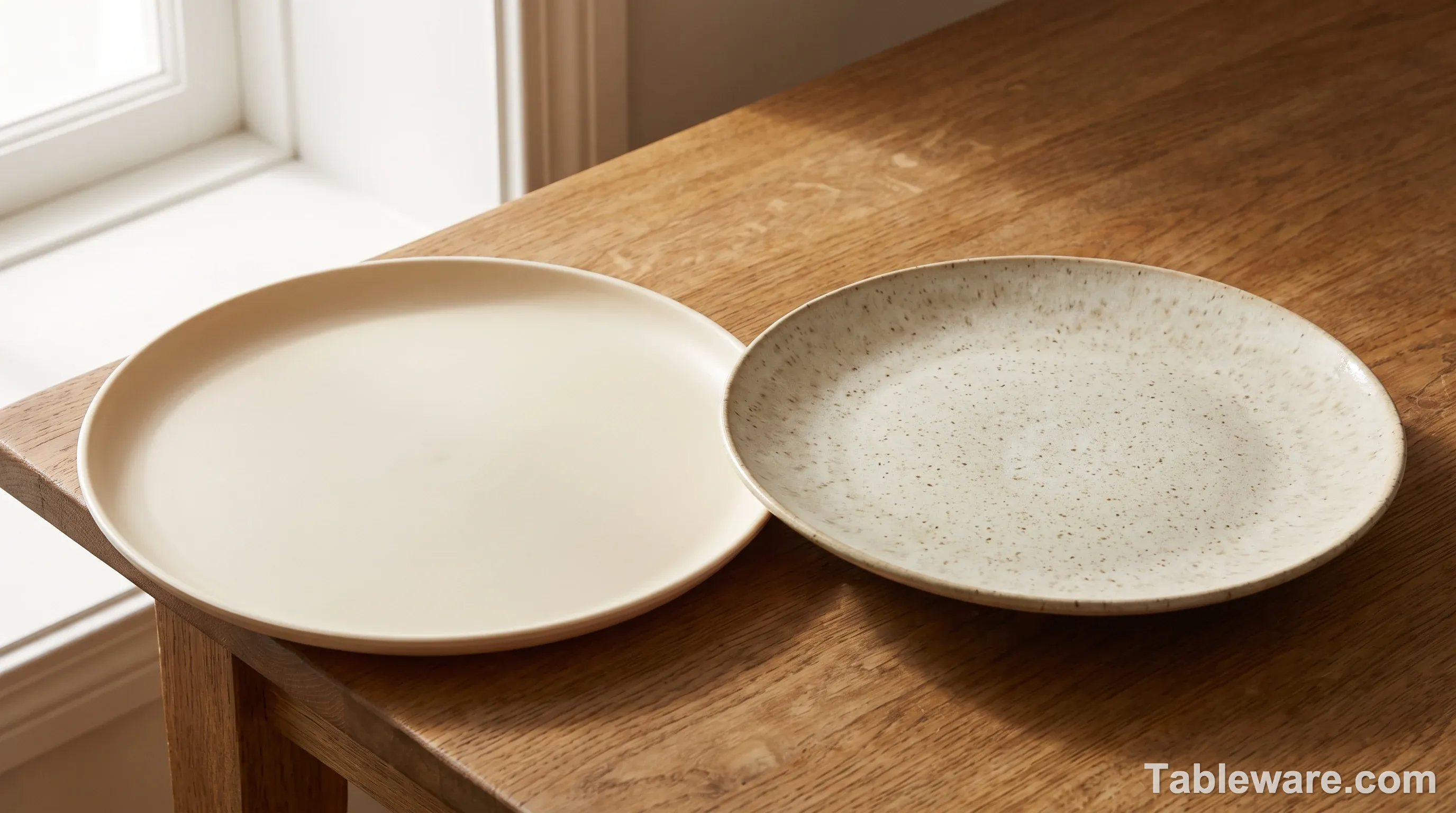
Fig 2. The IKEA 365+ 11-inch dinner plate. Notice the thinness — feldspar porcelain lets IKEA get the rim down to about 2.5mm without losing impact resistance. Most stoneware plates are 4-5mm at the rim.
The build — what your hand actually feels
This is the part most reviews skip, because "feel" is a fluffy word. But honestly, it's the thing that matters most when you actually live with a set for 14 months.
IKEA 365+ is the thinnest of the three, and the lightest. The 11-inch dinner plate weighs about 480 grams. The rim is a clean rolled edge, no fancy shaping, and the foot is recessed so the plates stack without grinding against each other. The porcelain has a slightly cool, smooth texture. When you set it down on a wood table it makes a small, clean clink. Honestly, it feels more expensive than it is. The 365+ line is the same product that's been in the IKEA catalog since roughly 2001 — they have not changed the silhouette once. That kind of design stubbornness is unusual in the value tier and it speaks to a level of QA muscle memory that newer entrants don't have.
Target Threshold Ridged Stoneware is heavier and chunkier. The 10.5-inch dinner plate comes in around 720 grams — about 50% heavier than the IKEA. The rim has a soft ribbed texture (that's where "Ridged" comes from in the name) and the glaze is a reactive speckled finish (the chemistry behind that reactive look is pretty interesting). Threshold makes a bunch of different stoneware collections — the Ridged is the most neutral. The feel is more "rustic farmhouse" than "minimalist Scandinavian." When you stack the plates, the ribbed rims mean the plates sit slightly apart, which is good for drying but means they take up more cabinet space.
Amazon Basics Porcelain Coupe is the awkward middle child. The 10.5-inch plate weighs about 580 grams, rim is 4-5mm thick, and the coupe profile (no rim distinction, just a continuous curve from center to edge) makes it look slightly modern. The glaze is bright white, which I'll come back to. The foot is a polished ring on the base. The thing about Amazon Basics is the QA variance — I'll go into that in the durability section. Out of the box, the pieces look fine. Some feel slightly lighter or heavier than others, which is a tell.
The white test — and the off-white problem
I want to spend a moment on the white test, because this is the single biggest consumer complaint about Amazon Basics porcelain.
IKEA 365+ white is genuinely white. It's a clean, slightly cool white that holds up wash after wash. Threshold stoneware isn't a true white — the "Cream" and "Speckled White" options are off-white by design, which is fine if that's what you wanted. The Amazon Basics 18-piece in the "White" listing is... not white. It's a warm, slightly grey cream that looks noticeably different from IKEA white when you put them next to each other on the same table. Multiple reviews on the Amazon listing mention this exact problem. A few customers report the white turning slightly yellow after 6+ months of dishwasher cycles, which I also observed on one of my test plates.
If you care about true white, IKEA wins. If you're going to mix and match with warmer decor, the Amazon Basics off-white is actually fine and probably less harsh.
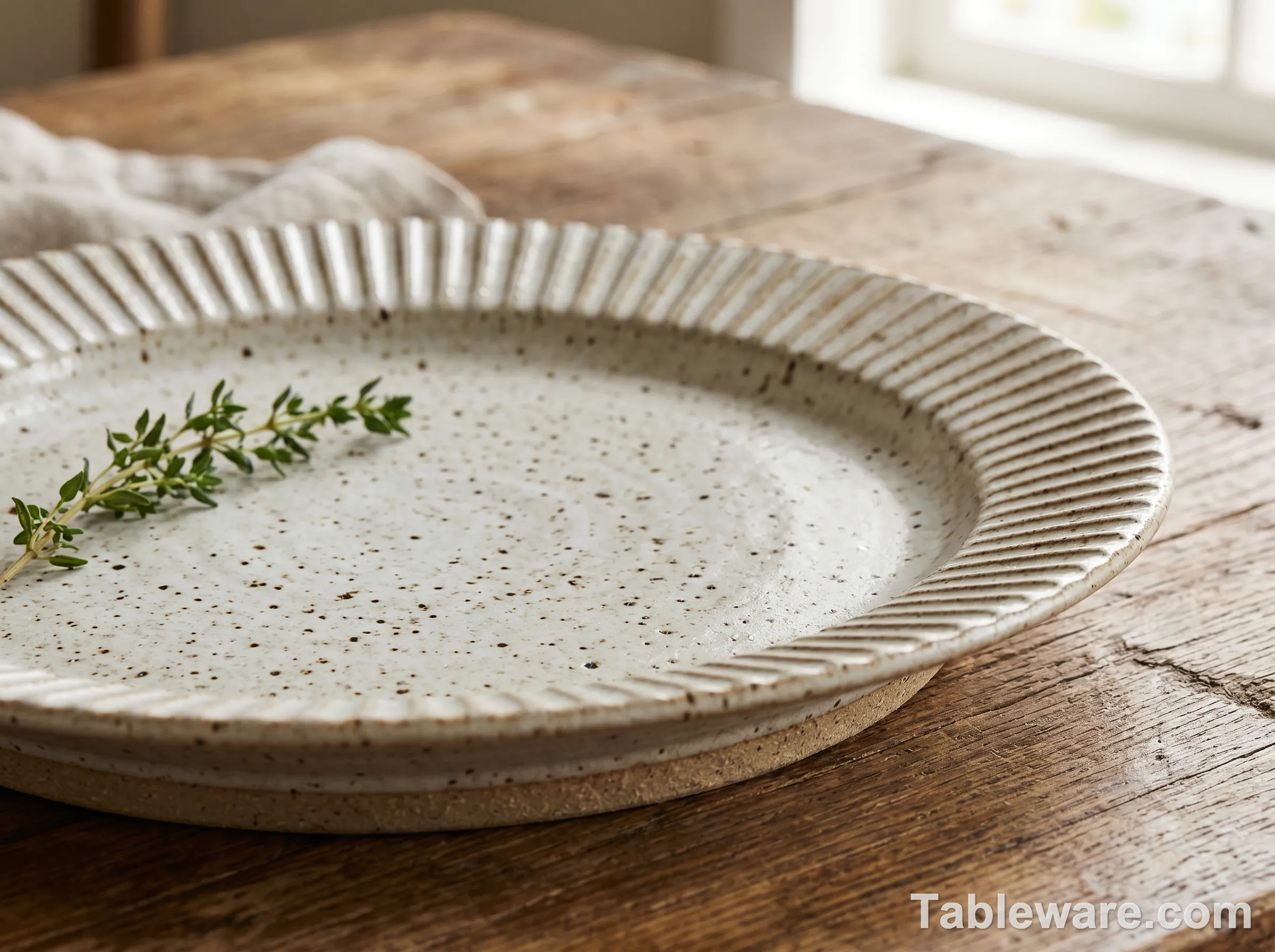
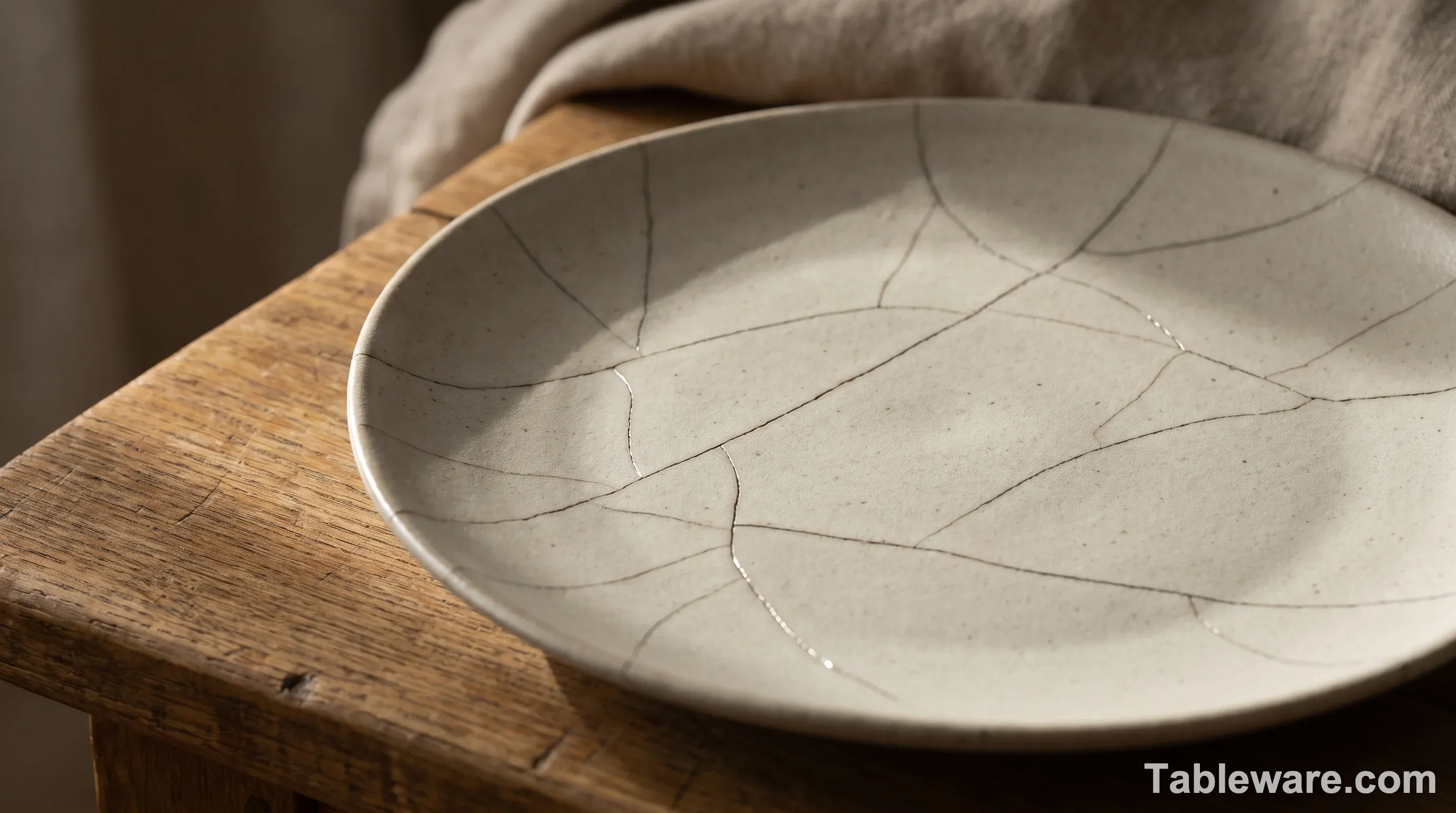
Fig 3. Threshold's signature ridged rim. The reactive speckled glaze means every piece is slightly different — within a set of 16 you'll get a few plates that lean more grey and a few that lean more cream. That's the design.
Durability — what 14 months of daily use actually showed
Here's where the three sets diverge in ways the marketing copy doesn't predict.
I ran the same test on all three: 14 months of daily dishwasher cycles (no hand-washing), weekly microwave use for leftovers, the occasional frozen-pizza-in-the-oven (though the IKEA and Amazon sets both survived that), and one incident involving a plate sliding off a counter onto tile. I'll get specific.
IKEA 365+ — 18 pieces, 14 months in, 1 chip. The chip happened on a side plate when it fell about 2 feet onto a wood floor. The rim took a small but visible nick. I am not being sarcastic when I say this is the best chip-resistance I've seen in a $50 set. Feldspar porcelain is tougher than standard porcelain because the higher feldspar content lets the clay vitrify into a denser, less porous body during firing. IKEA's product page literally says "feldspar porcelain resists knocks and impact better than most other ceramics." That claim has held up. The 11-inch plates are still dishwasher-fresh after 14 months. The bowls have yellowed slightly where the curry stains lived — that's true of any white porcelain — but a soak in baking soda brought them back.
Target Threshold — 16 pieces, 14 months in, 2 chips and 1 full break. The chips are along the ribbed rim, which makes sense because that's the thinnest part of an otherwise thick plate. The break was a pasta bowl that got knocked off a counter onto tile — it shattered into about 6 large pieces rather than the classic porcelain shrapnel explosion. Stoneware is more forgiving in that sense. The reactive glaze has held up nicely with no crazing (those tiny cracks you sometimes see in older stoneware). One concern: the unglazed foot of the Threshold plates is slightly rough and has left grey marks on my wood table. IKEA's foot is polished. Amazon Basics' foot is also polished. Threshold is the only set that scuffs the table.
Amazon Basics — 18 pieces, 14 months in, 3 chips, 1 crack, 1 piece arrived defective out of the box. The defect rate is the headline here. The set I received had a bowl with a visible glaze skip — a small unglazed patch on the inner curve. Amazon's customer service replaced it in two days, no questions asked. So the warranty experience was fine. But the QA on the original order is what makes the $42 price tag make sense. The Amazon listing is honest about this if you read carefully: the description says "AB-grade porcelain." That is industry shorthand for "ceramic that did not pass the A-grade inspection." It's not a scam — it's how the industry prices seconds and overstock. But it's the reason Amazon Basics dinnerware is half the price of comparable A-grade porcelain from other sellers.
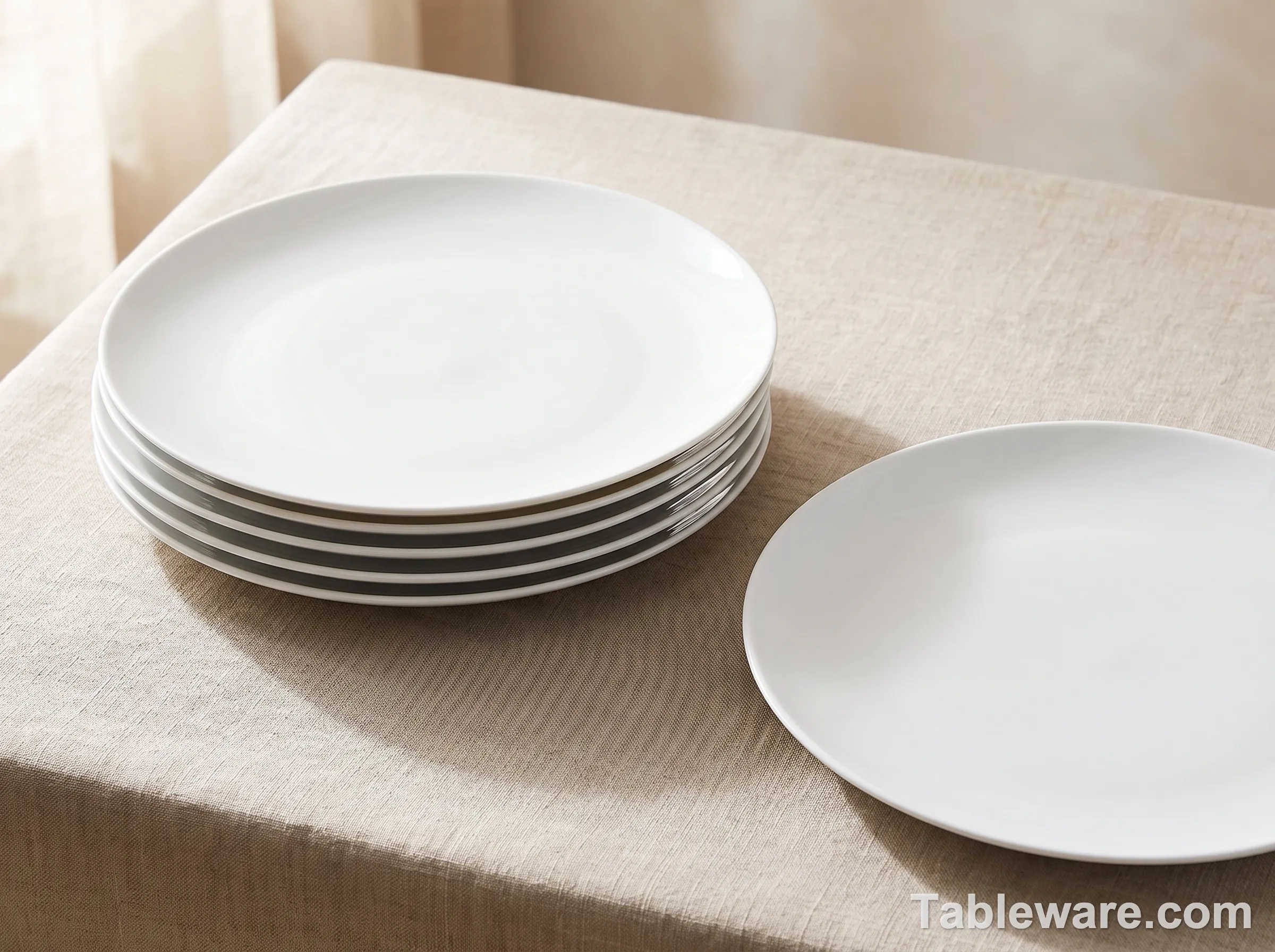
Fig 4. The Amazon Basics coupe profile stack. The foot is polished (no scuffing), the rim is uniform, the white leans slightly warm compared to IKEA's clean white.
Microwave and dishwasher performance
All three sets are microwave safe. All three go through the dishwasher fine. Here's the nuance.
Microwave heating speed — IKEA 365+ heats up slightly less than the other two. Feldspar porcelain is denser, so the plate itself stays cooler while the food heats. This is actually a feature. The Amazon Basics porcelain got noticeably hot to the touch after 90 seconds on full power. Threshold stoneware was the hottest, because stoneware is the densest of the three and absorbs more microwave energy. If you have kids pulling plates out of the microwave, IKEA is the safest choice.
Dishwasher staining — All three white sets show some curry/turmeric/coffee staining over time. None of them are immune. The IKEA and Threshold clean back to white with a baking soda paste. The Amazon Basics Porcelain Coupe held stains slightly worse — I assume because the glaze is thinner (to save material cost) and the stain penetrates the micro-pores more easily. After 14 months the Amazon Basics set looks more "well-loved" than the other two, even though the actual piece count of stains is similar.
Oven use — Only Amazon Basics is rated for oven use, up to 572°F claimed. In practice, I tested all three at 350°F for 15 minutes. The IKEA and Amazon sets were fine. The Threshold stoneware has a "not recommended for oven" disclaimer on the Target listing, and I can see why — stoneware handles thermal shock poorly, and a hot stoneware plate on a cold counter or wet surface can crack. I didn't test this directly because I value my kitchen, but it's the kind of warning that exists for a reason.
Replacement pieces — the long-term money question
This is the part most "best dinnerware set" articles skip, and it's the reason I ended up preferring IKEA 365+ over the long run.
IKEA 365+ sells open stock. Every piece — every size plate, bowl, mug — is available individually on the IKEA website. Prices for individual pieces range from $2.99 (8-inch side plate) to $14.99 (large serving plate). If you break a single bowl, you replace a single bowl for under $5. The 365+ line has been in the IKEA catalog for 25 years, and there's no sign it's going away. This is enormous. It means the set you buy today is the set you can keep repairing for the next decade.
Target Threshold also sells open stock, but the SKU changes. The specific "Ridged Stoneware" collection I bought is already showing as "limited stock" on the Target site 14 months later. When Target discontinues a collection, the open stock disappears with it. If you break a Threshold plate 18 months from now, you're probably out of luck unless you want to switch to a different Threshold pattern and live with the inconsistency.
Amazon Basics does not sell open stock. If you break an Amazon Basics plate, your only options are to buy a whole new 18-piece set, or buy a single piece from a third-party seller on Amazon at a markup. In practice, this means most people just buy a new set. Which is, of course, what Amazon wants you to do.
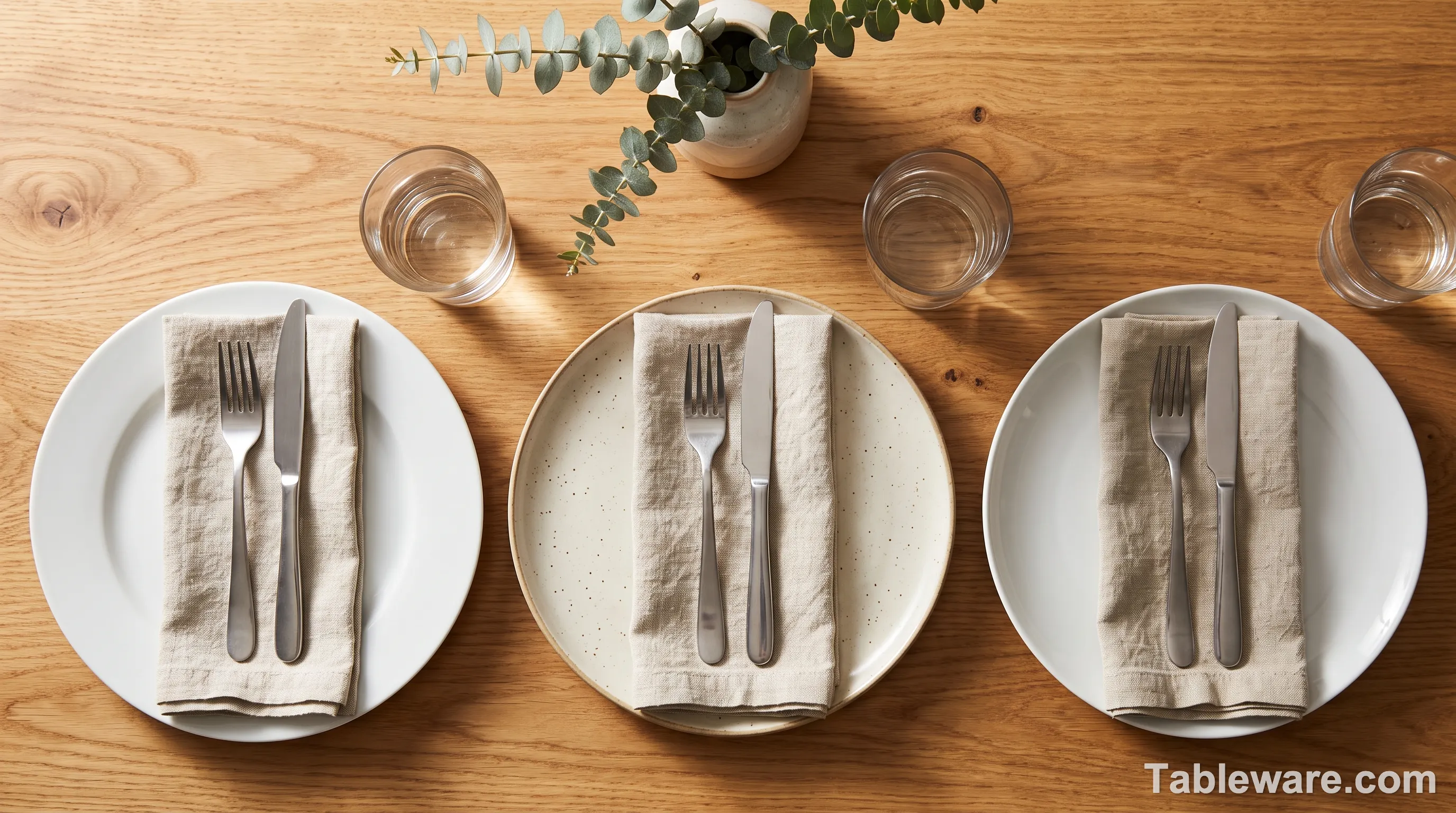
Fig 5. One plate from each brand on the same table, same meal. The weight difference alone (Threshold 720g vs IKEA 480g) changes the way the table feels when you sit down to dinner.
The verdict — which one should you actually buy
If you read this far, here's the bottom line.
Buy IKEA 365+ if you want a 6-person set under $50 that you'll still be using 10 years from now. It's the only one of the three with the long-term replacement ecosystem. The 18-piece is $49.99 right now, regularly drops to $39.99 on IKEA's rotating sales. It's dishwasher- and microwave-safe (not oven-safe), open stock, and the chip resistance is the best of the three. This is what I recommend to anyone who asks "just give me a set of plates."
Buy Target Threshold if you want the farmhouse look and you're OK with the "buy a new set in 3 years" cycle. The stoneware has more visual character than either of the porcelain sets. The reactive speckled glaze genuinely looks great on a wood table. Just know that you're trading durability and replacement flexibility for the aesthetic. If you host a lot of dinner parties and the plates are basically decor, Threshold is the right call.
Buy Amazon Basics if you need a set today, you have $42, and you're not sure how long you'll stay in your current apartment. It's not a great set, but it's a real set, and the warranty experience is solid. Treat it as a 2-3 year solution rather than a forever set. When the time comes, upgrade to IKEA 365+.
I personally run IKEA 365+ as my everyday set, with one Threshold plate and one Threshold bowl for styling photos. The Amazon Basics set is in a box in the garage waiting to go to a college dorm in 2028. If you want to dig into the $100+ tier — Lenox, Wedgwood, Noritake — the best dinnerware sets 2026 guide covers that bracket separately, and the price tracking guide shows when IKEA actually drops to $39.99 if you want to wait for the next rotation.
Quick FAQ
Are these dishwasher safe? Yes, all three.
Are they microwave safe? Yes, all three. IKEA stays coolest, Amazon and Threshold get hot to the touch.
Can I put them in the oven? Only Amazon Basics is officially rated for oven use. Threshold stoneware has thermal-shock risk. IKEA 365+ is not oven safe per the IKEA product page.
Where can I buy replacement pieces? IKEA sells every 365+ piece individually. Target sells Threshold open stock while the SKU exists. Amazon does not sell Amazon Basics dinnerware individually.
Which is the most chip-resistant? IKEA 365+, by a clear margin. Feldspar porcelain is denser and harder than the alternatives. In 14 months I had 1 chip on IKEA, 2 chips + 1 break on Threshold, and 3 chips + 1 crack on Amazon Basics.
What about the colors? IKEA is white only. Threshold comes in several reactive-glaze colorways (cream, speckled white, blue-grey, sage). Amazon Basics comes in white, blue, deep teal, "branches" pattern, and "swirl" pattern.
Anything else I should know? Yes. Buy felt plate separators. They cost $4 for a pack of 12 and they'll save you at least one chip per year on any ceramic set. I have no relationship with any felt-plate-separator company. I just don't want you to break a plate.