We have all been there. You find the perfect 16-piece stoneware set in a reactive blue glaze. The price is $89.99. You hesitate, wondering if it will go on sale. You come back a week later, and it’s $119.99. Or worse, you buy it, and two days later, it drops to $65.00.
In the world of online retail, dinnerware prices are notoriously volatile. Unlike books or standard electronics, tableware prices fluctuate wildly based on seasonality, wedding registry trends, and algorithm-driven dynamic pricing.
This guide removes the guesswork. We have analyzed pricing data to determine exactly when you should buy and what price you should aim for.
The "Golden Price" Benchmarks
Before you track a price, you need to know what a "good" price actually looks like. A 20% discount label means nothing if the base price was inflated.
Based on our tracking of major brands (like Gibson, Stone Lain, Elama, and Corelle) on Amazon and Wayfair over the last 12 months, here are the Target "Buy Now" Prices for a standard 16-Piece Set (Service for 4):
| Material | Average Retail Price | Great Deal (Buy Now) | Do Not Buy Above | |
|---|---|---|---|---|
| Stoneware | $70 - $90 | Under $55 | $100 | |
| Porcelain | $80 - $110 | Under $65 | $120 | |
| Bone China | $150 - $250 | Under $130 | $280 | |
| Vitrelle (Corelle) | $60 - $80 | Under $45 | $95 |
Note: Prices vary by design complexity, but these serve as solid baseline metrics for standard sets.
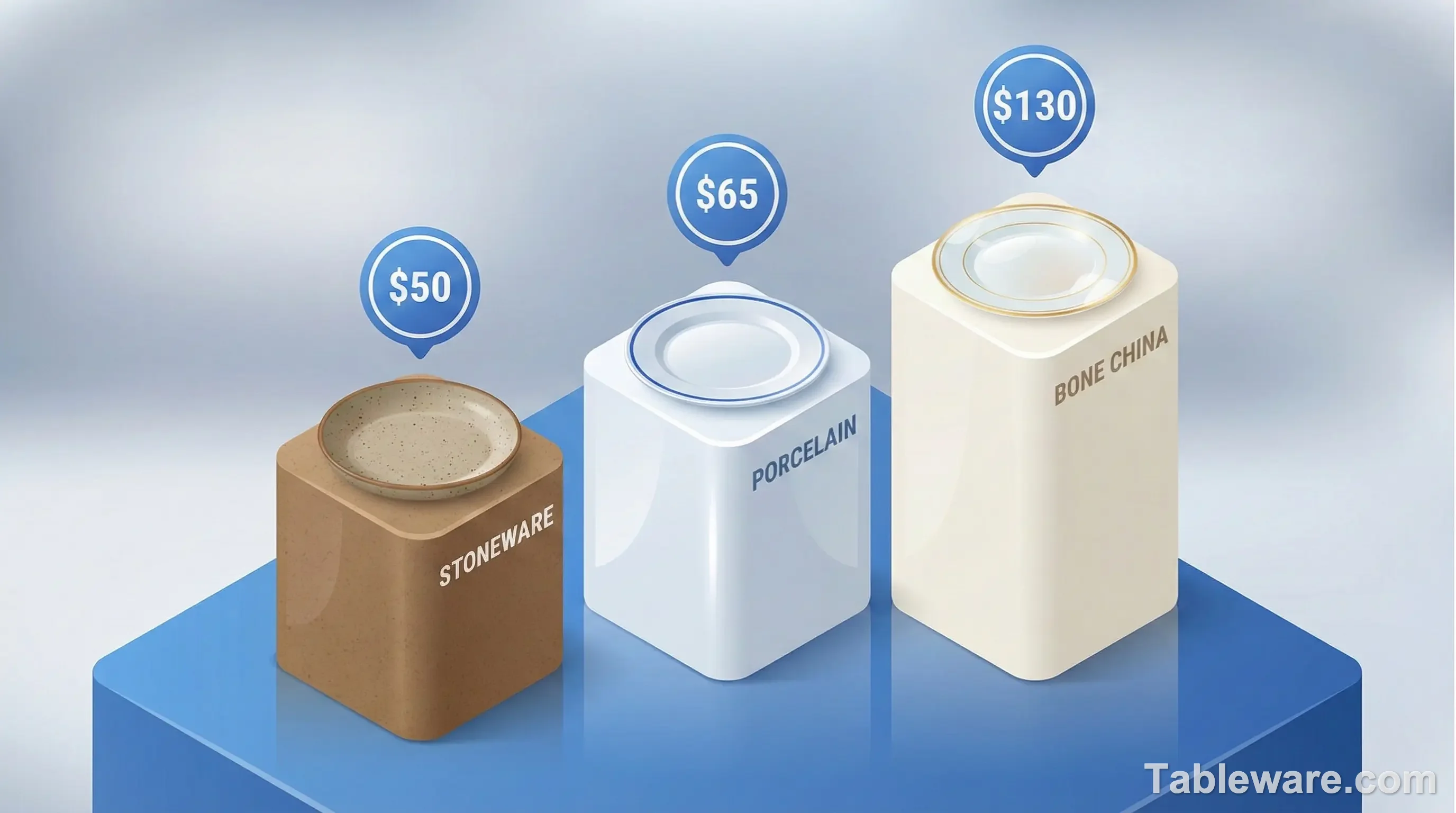
Fig 1. Knowing the baseline "Buy Price" is crucial. Just because a site says "Save 15%" doesn't mean it's near the historical low.
The Seasonal Cycle: When to Strike
Dinnerware pricing follows a predictable rhythm driven by two main factors: Gift-Giving Holidays and Wedding Season.
1. The "Black November" Window (Lowest Prices)
Unsurprisingly, the absolute lowest prices for boxed sets (especially popular brands like Corelle and Pfaltzgraff) occur between November 15th and Cyber Monday.
- Strategy: This is the time to buy "workhorse" daily dinnerware. Retailers know people need extra plates for Thanksgiving hosting.
- Discount Depth: Expect 30% - 50% off.
2. The "Wedding Lull" (January - February)
After the holidays, demand crashes. Retailers need to clear inventory before spring collections arrive.
- Strategy: Look for clearance deals on "Holiday" specific patterns or discontinued colors.
- Discount Depth: 20% - 40% off (often in clearance sections).
3. The "Registry Spike" (May - July)
Prices often rise in late spring and early summer. Why? Wedding season. Guests are buying gifts from registries, and they are less price-sensitive than personal shoppers.
- Strategy: Avoid buying standard white sets during this time unless necessary.
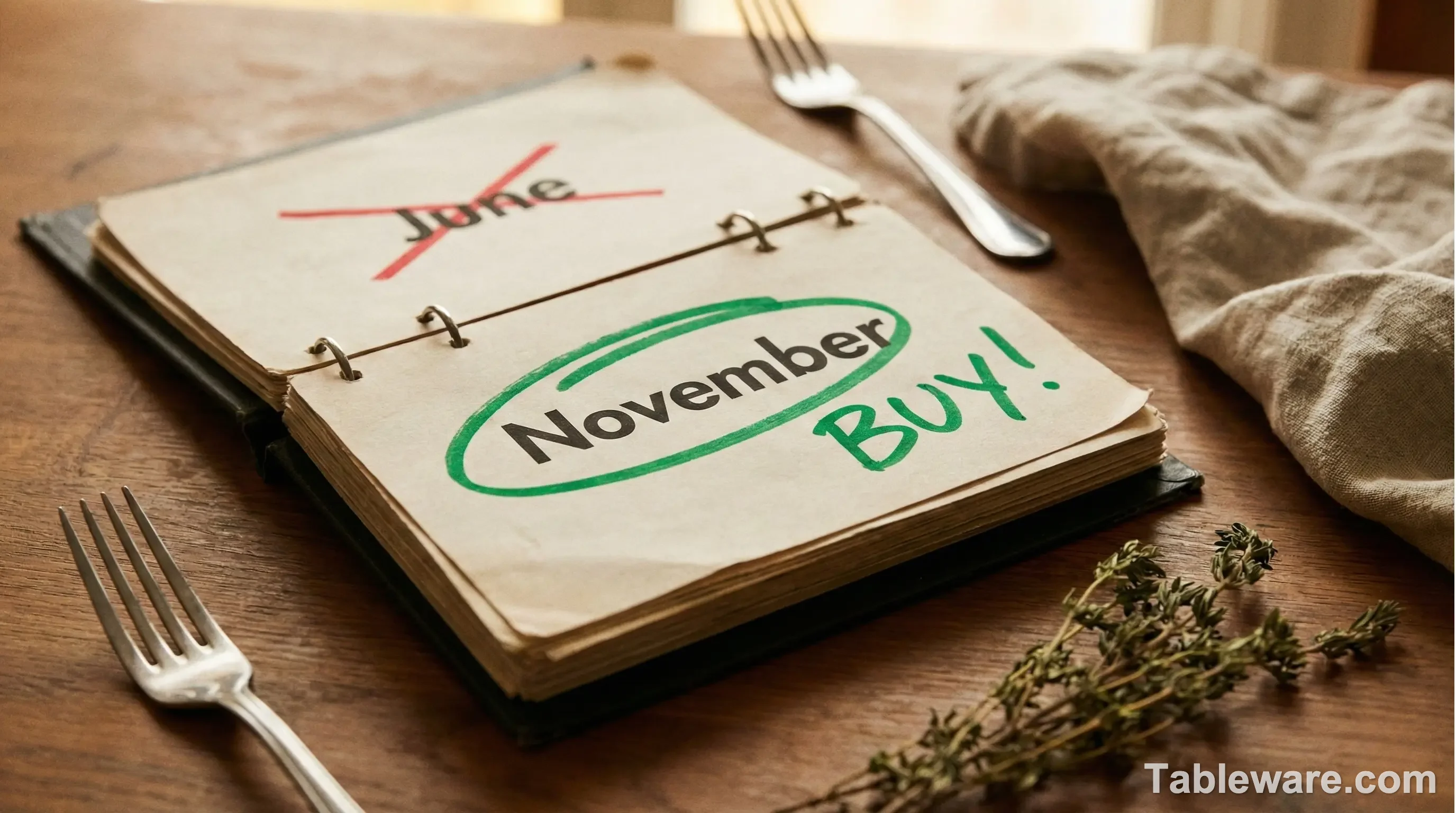
Fig 2. The annual pricing cycle of tableware. Buying in June vs. November can result in a 30% price difference for the exact same item.
The Tools: Automating Your Savings
You don't need to check the website every day. There are powerful, free tools that will do the watching for you.
CamelCamelCamel (The Amazon Specialist)
This is the gold standard for tracking Amazon prices.
- How it works: You paste the Amazon URL of the dinnerware set into their search bar.
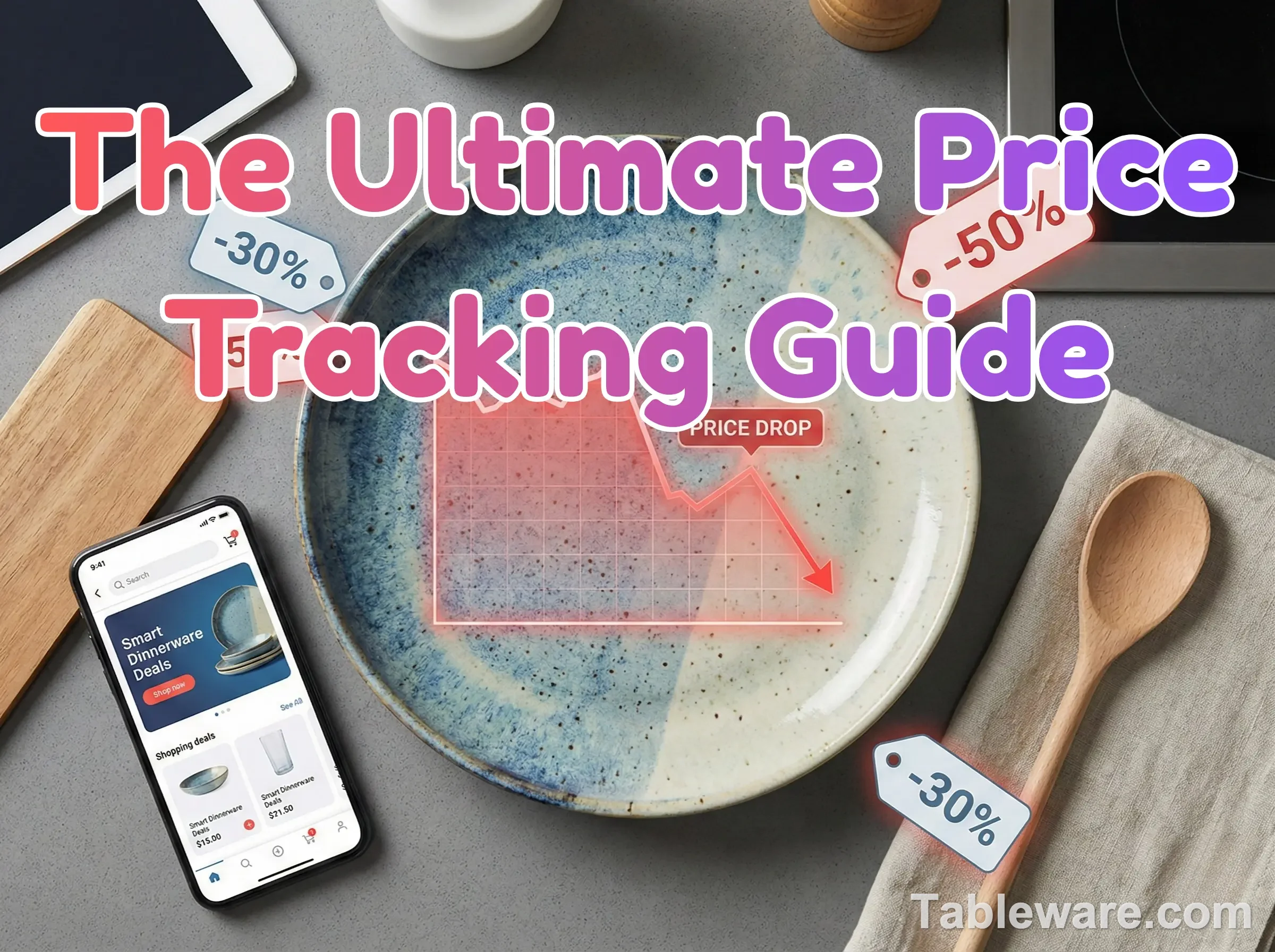
- The Killer Feature: It shows you a Price History Chart. You can see if that $50 price tag is actually a deal, or if the item was $35 last month.
- Set an Alert: Tell it "Email me when this plate set drops below $40," and forget about it until the deal arrives.
Honey (The Browser Extension)
Honey is great for non-Amazon sites like Macy's, Wayfair, or specialized kitchen retailers.
- Droplist: Similar to alerts, you can add items to your "Droplist," and it monitors them for price changes.
- Price History: It also offers a simplified price history view to see if the current price is trending up or down over the last 30 days.
Keepa (The Power User Tool)
If you are serious about data, Keepa is a browser extension that embeds a detailed price graph directly onto the Amazon product page. It shows not just the price, but also "Lightning Deals" and "Warehouse Deals" (open box returns).
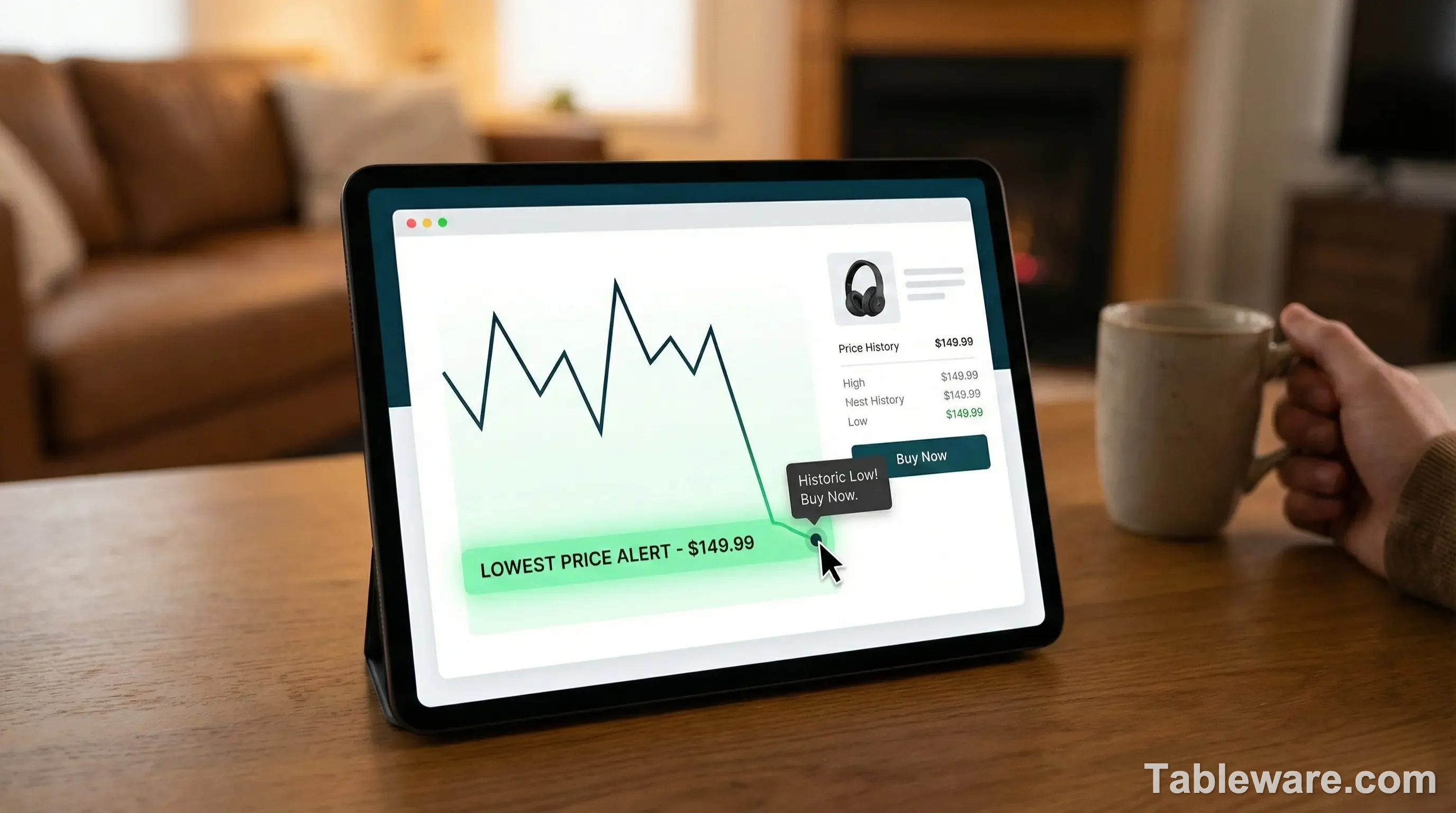
Fig 3. Using a price history graph allows you to spot "fake sales" where the price is raised just before a discount is applied.
Summary: Your 3-Step Action Plan
- Identify your set: Don't just look for "plates." Narrow it down to a specific model (e.g., "Stone Lain Coupe Series Black").
- Check the History: Run the URL through CamelCamelCamel. Has it been cheaper in the last 6 months?
- Set the Trap: If the current price isn't the historical low, set an alert for 10-15% below the current price.
By separating your "want" from the "buy" moment, you can build a luxury kitchen collection on a budget price tag.