You spot a blue-and-white bowl at the antique mall for $40. The dealer calls it "spatterware." Three stalls over, the same pattern is labeled "spongeware" at $60. The price difference isn't a markup. It's a vocabulary problem — and at auction, that same vocabulary problem turns into a $5,000 value problem when you try to resell.
I've been collecting American blue-and-white for about eight years, and I spent the first three of those years confidently using "spatterware" as a catch-all for anything with a splattered blue rim. I was wrong about half of what I was buying. The real split — the one that collectors, auction houses, and the Kovels price guides all use — is between three distinct techniques: spatterware, spongeware, and stickware. They look related because they are related. They came out of the same Staffordshire factories, they crossed the Atlantic together, and they ended up in the same American kitchen cupboards. But they are made with three different tools, and the price tags reflect it.
What I want to do here is give you a single framework that works in 60 seconds at the antique mall, tells you which of the three you're looking at, and gives you a value benchmark so you don't overpay or undersell. We'll also settle the "stickware" question, because half the dealers I talk to don't even agree the term exists.
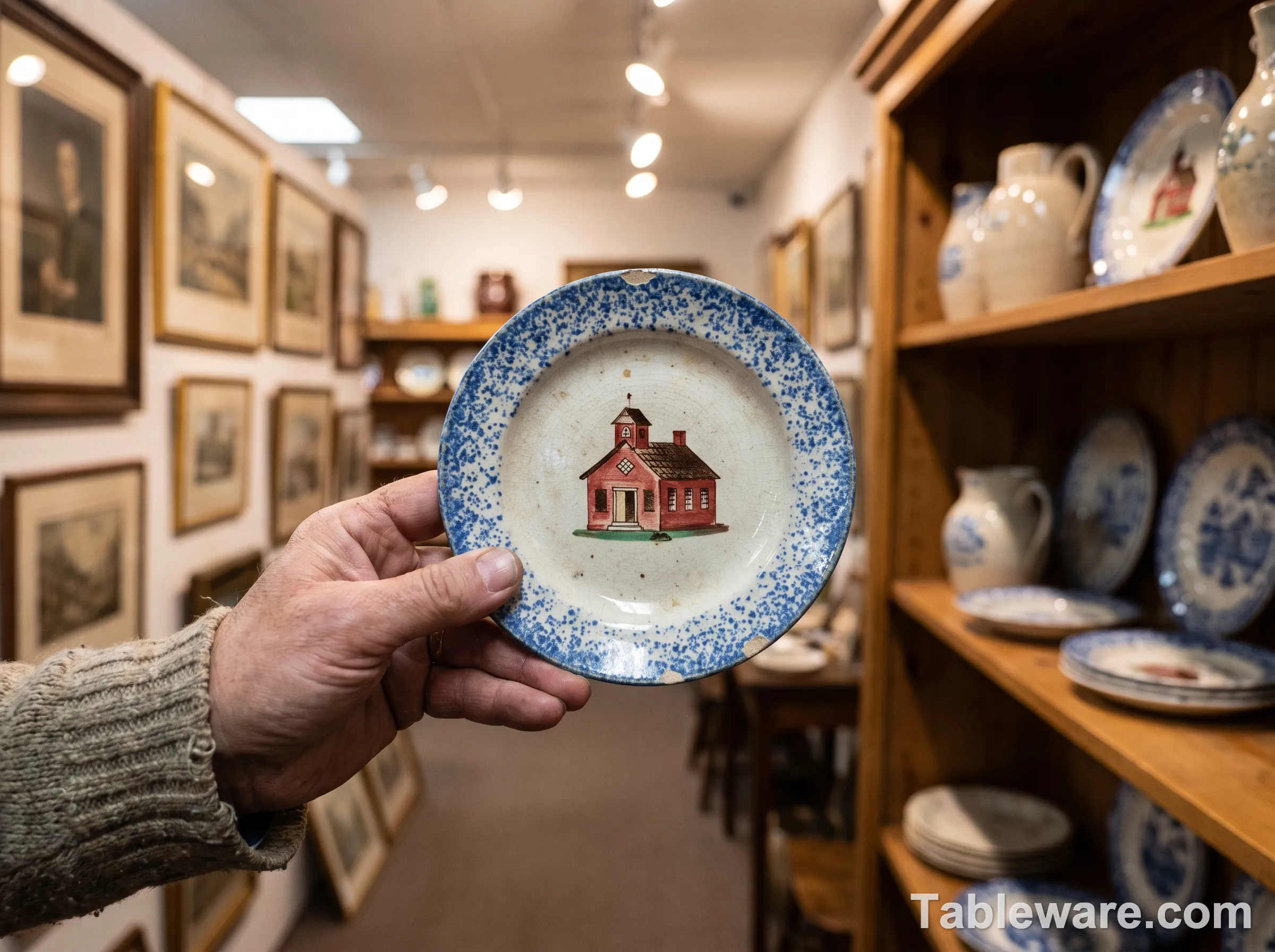
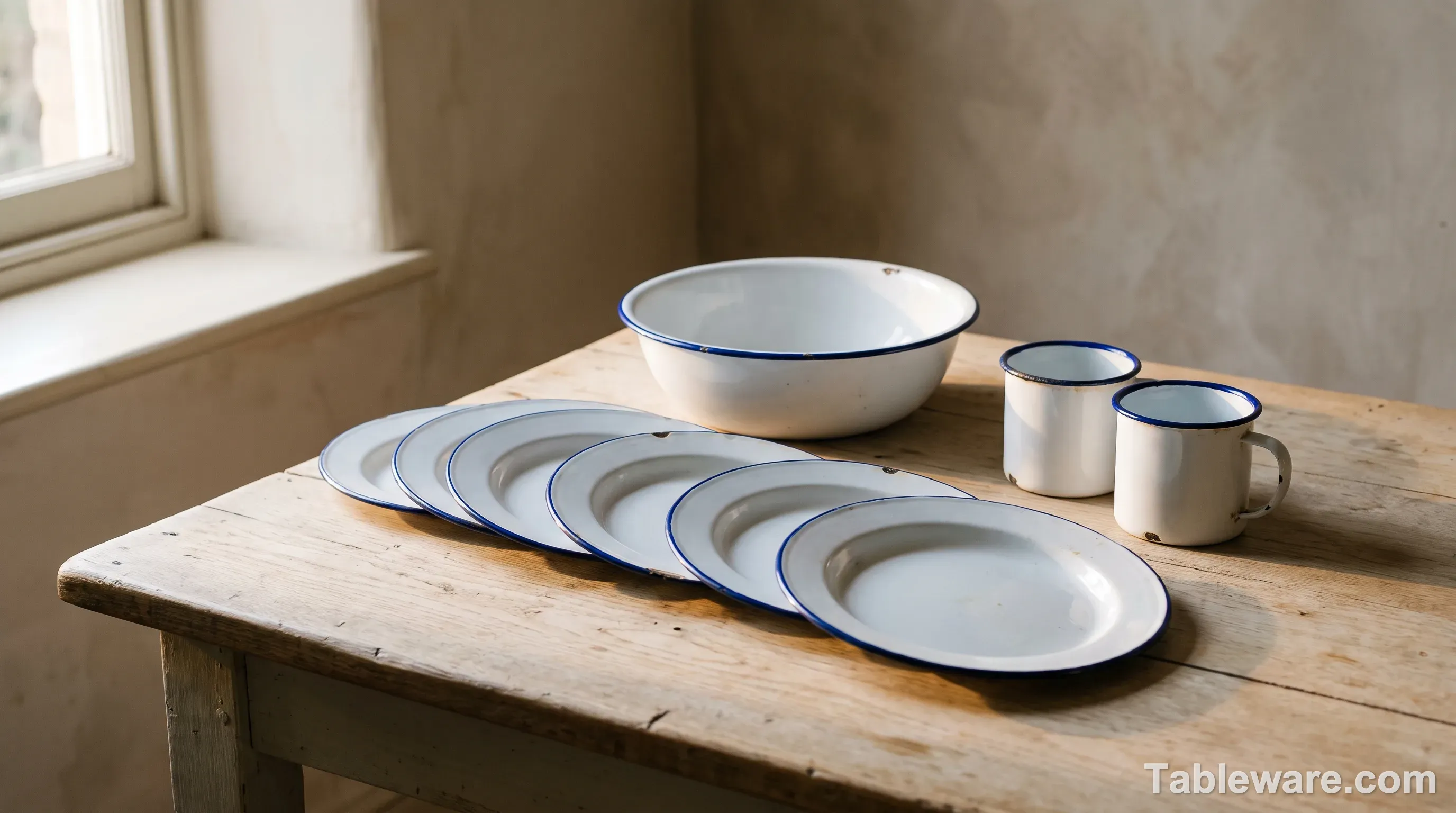
Fig 1. The single most reliable test for these three patterns: hold the piece in your hand under good light, look at the body color (pearlware, whiteware, stoneware, or redware), then look at the rim marks. Random = spatterware. Regular = stickware. Mottled interior = spongeware. From two feet away, the three patterns can fool you. Up close, the difference is usually obvious in under a minute.
The 3 Folk-Pattern Techniques Every Antique Mall Stocks
Why these three names get jumbled (and why dealers use them interchangeably)
The short version: from about 1810 to 1920, English and American potters used a small handful of cheap decoration techniques to make a cheap body of pearlware or whiteware look more expensive than it was. The techniques were: blow pigment through a brush or quill onto the rim (spatterware), dab a piece of natural sponge dipped in cobalt oxide onto the body (spongeware), or stamp a cut-sponge or carved stick dipped in pigment onto the surface in a regular pattern (stick spatterware, often shortened to "stickware"). All three used cobalt oxide for the blue. All three were painted over a clear lead glaze. And all three were sold — often in the same shop, on the same day — under labels the potters themselves didn't always differentiate.
By 2026 the jumble is mostly a North American antique-mall problem. British auction houses like Bonhams and Lyon & Turnbull, and American specialists like Crocker Farm and Pook & Pook, use the three terms precisely. A "spatterware" lot in a Crocker Farm catalog means spatterware only — and the price reflects it. The mall dealer, working without a reference catalog, defaults to "spatterware" for everything blue and stippled. That's the gap this article is going to close.
What "stickware" actually means — and why some authorities reject the term
"Stickware" is a colloquial American shortening of "stick spatterware." It's not in the British reference books. It's not in most museum catalogs. What it refers to is a sponge (or a piece of leather, or a bit of rolled cloth) lashed to a stick, dipped in cobalt oxide, and then stamped in a regular pattern — usually a row of small ovals or teardrops — around the rim of a plate or bowl. The effect, from two feet away, looks similar to spatterware. Up close, the pattern is regular, not random. The stamps are visible. Some pieces have as few as 12 stamps around a 10-inch rim. Some have 40 or 50.
Kovels' price guides and the appraizely.com database use "stick spatterware." The Adirondack Girl @ Heart collector blog uses "stickware." Antique-identifier.app uses "stick spatter" or "Pennsylvania spatterware." All three are talking about the same object. For the rest of this article I'll use "stickware" because it's shorter, but I'll flag the formal term every time it matters.
The Staffordshire-to-Pennsylvania pipeline: how the same techniques crossed the Atlantic
All three of these techniques were developed in Staffordshire, England, between about 1780 and 1820. The potters who invented them were working-class decorators in factories like Spode, Wedgwood, Ridgway, and the smaller shops in Burslem and Stoke-on-Trent. The English pattern books that came out of these factories in the 1820s and 1830s — printed inexpensively on tissue paper and shipped to American general stores — were the original how-to manuals. By the 1840s, American potters in Pennsylvania (the Moravian potters in particular, plus a handful of German-American shops in Berks and Lehigh counties) were doing their own versions, often on a red-bodied earthenware instead of the white pearlware the English had used. By the 1880s, the technique had migrated again — this time to the American industrial Midwest. Red Wing Stoneware, Western Stoneware (in Monmouth, Illinois), and the Ohio potteries all produced sponge-decorated stoneware mixing bowls in cobalt blue, and that is what most American households actually owned.
So the geographic family tree is: Staffordshire (1780-1840) → Pennsylvania (1840-1880) → American Midwest (1880-1920). Three centers, one technique family, two bodies (pearlware then stoneware).
Spatterware: Blowing Pigment, Painting the Center
How the stipple was actually made (three competing theories, no one knows for sure)
Here's the honest truth about spatterware: nobody living knows exactly how the original decorators made the stipple. Three theories circulate, and the auction catalogs politely use the word "probably" in all of them.
Theory one — the "brush-flick" method. The decorator holds a brush loaded with cobalt oxide pigment in one hand, and a second brush or a stiff piece of straw in the other. They drag the loaded brush across the stiff object, and the pigment flicks off in a fine spray. This is the most commonly taught method in modern studio classes. The problem: nobody has reproduced a perfect 1820s spatterware rim with this method. The modern results are too uniform.
Theory two — the "quill-blow" method. The decorator loads a quill or a small tube with pigment and blows through it onto the rim, the way a courtroom sketch artist spatters ink. The result is a finer, more random spray than the brush-flick method, and it matches what we see on surviving pieces. This is the theory I find most convincing.
Theory three — the "toothbrush" method, an anachronistic modern myth. Ignore it.
What we know for certain is the order of operations. The cobalt pigment was applied first, then a clear lead glaze was poured over the body, then the piece was fired at cone 6 to cone 8 (about 1200°C to 1280°C). The pigment fused into the glaze. The result was a stipple that does not wash off, does not fade in sunlight, and does not rub off with use. A piece of spatterware from 1830 still has its blue.
The 4 motifs that drive value: peafowl, schoolhouse, eagle, and fort — and where spatterware schoolhouse value lands in 2026
Not all spatterware is created equal. A plain cobalt-blue rim is the baseline. The motifs that actually drive collector value are four:
Peafowl. A peacock (or peahen) standing in a landscape. Usually hand-painted in the well, with the spatter rim. The peafowl motif is the most photographed piece in any spatterware auction catalog and the most frequently faked. A genuine 1820-1840 peafowl plate in good condition (no chips, no hairline cracks, original spatter intact) will sell for $3,000 to $15,000 at Pook & Pook or Crocker Farm. Fakes are usually modern Mexican or Chinese import blanks with a hand-painted peafowl copied from a Sotheby's catalog photo. Look for the spatter rim — if the rim is too uniform, the piece is too uniform, and the motif is too clean, walk.
Schoolhouse. A one-room schoolhouse with a bell tower, often with a child or two walking up a path. This is the most sentimental motif and the most reproduced on modern reproductions. Genuine schoolhouse pieces (1825-1850, English or Pennsylvania) are in the $800 to $5,000 range. If you're trying to estimate spatterware schoolhouse value in 2026, the safest working number is: a 9-inch plate in good condition with an intact spatter rim and a clean hand-painted schoolhouse will clear $2,500 at a Pook & Pook or Crocker Farm auction. Painted schoolhouses on reproduction blanks sell for $40 to $80 at the mall. The visual difference is the rim.
Eagle. An American bald eagle, often with a banner, often perched on a rock. The eagle motif is the most "American" of the four and was the dominant design after about 1830. Pieces range from $400 to $4,000.
Fort. A military fort (usually stylized, often with a flag). This is the rarest of the four and the easiest to date from the fort design itself — pre-1830 forts have rounded bastions, post-1830 forts have angular ones. Top fort pieces have sold at auction for $10,000+.
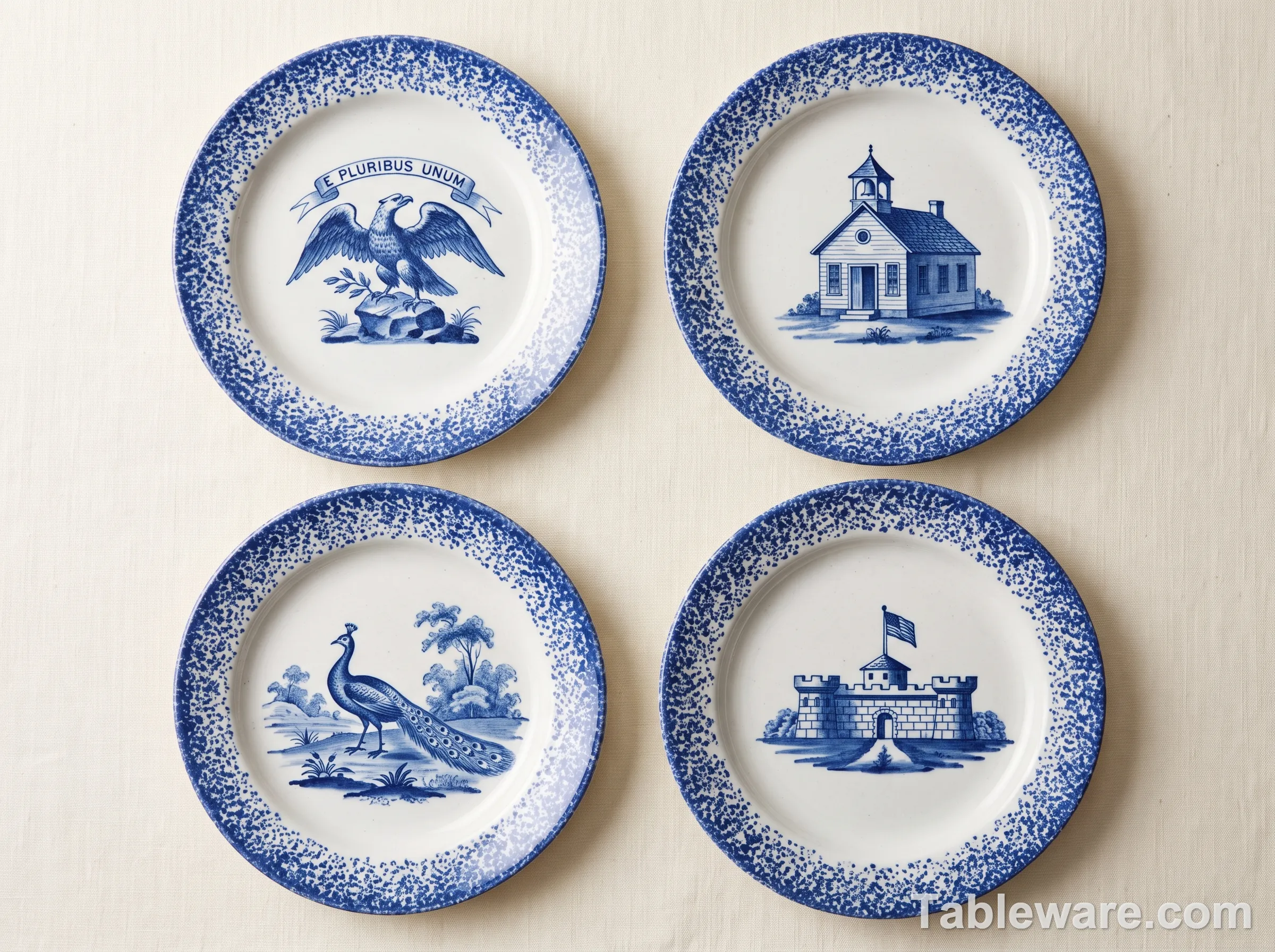
Fig 2. The four collector-grade spatterware motifs, in roughly increasing rarity: eagle (top-left), schoolhouse (top-right), peafowl (bottom-left), fort (bottom-right). A peafowl in good condition is the single most valuable configuration in American spatterware.
Rainbow spatterware and the rare-color premium (yellow, purple, brown = 50-100% uplift)
Most spatterware is blue on white. The "rainbow" spatterware pieces — where the rim is stippled in yellow, purple, brown, green, or some combination — sell for a 50% to 100% premium over the blue equivalent. The reason is partly that the non-blue pigments are harder to fire consistently (yellow and purple are notoriously unstable in the kiln) and partly that fewer pieces were made. A rainbow schoolhouse in good condition is a $1,500 to $6,000 piece. A rainbow peafowl has sold at auction for over $20,000.
The honest warning: rainbow spatterware is also the most frequently faked category. The fake rainbow pieces are usually modern blanks with a printed rainbow rim and a hand-painted motif. If the rainbow looks too saturated, too even, and too well-defined, the piece is probably modern. The 1820-1850 rainbow rims were softer, with the colors slightly bleeding into each other at the edges of the stipple.
Spongeware: The American Workhorse Pattern
Cut-sponge vs free-hand sponging: how the two spongeware techniques differ
Spongeware comes in two distinct sub-techniques, and the value difference between them is substantial. Cut-sponge spongeware uses a piece of natural sponge that has been cut into a regular shape — a small oval, a rosette, a half-moon — and then stamped onto the body of the piece in a repeating pattern. The result is geometric and visible. The stamps are uniform, the spacing is regular, and from 18 inches away you can count the stamps.
Free-hand sponging is messier. The decorator dabs a torn piece of sponge (or sometimes a piece of cloth, a corncob, or a small wad of rags) into the pigment and then applies it to the body in an irregular pattern. The result is mottled, organic, and impossible to reproduce exactly. Most American spongeware is free-hand. Most English spongeware is cut-sponge.
Cut-sponge pieces are usually 30% to 50% more valuable than free-hand pieces of the same era, body, and size. The reason is that cut-sponge is a more controlled technique, the stamps are easier to date (because the cut shapes changed decade to decade), and the pattern is easier to attribute to a specific factory.
The antique blue spongeware bowl: Red Wing vs Western Stoneware, 1880-1920
The single most common piece of antique American spongeware is the 12-inch to 14-inch blue-and-white stoneware mixing bowl. The dominant makers were Red Wing Stoneware (in Red Wing, Minnesota), Western Stoneware (in Monmouth, Illinois), and the various Ohio potteries operating under the McKinley tariff umbrella after 1891. The sweet spot for collector value is 1880 to 1920. Pieces from this period have a soft, slightly uneven blue sponge, a stoneware body with visible salt-glaze flecks on the exterior, and usually a maker's mark on the bottom in cobalt ink.
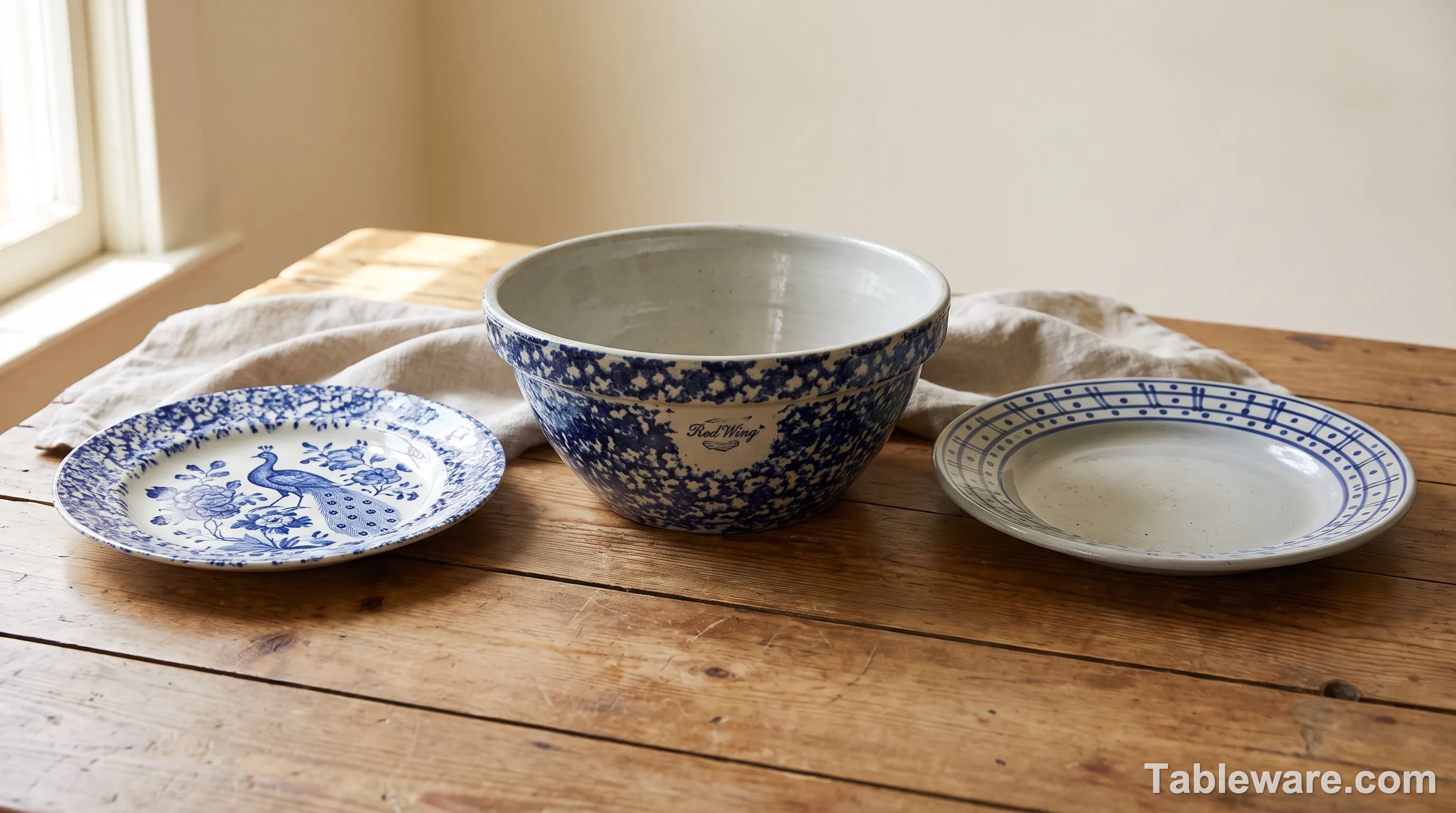
An antique blue spongeware bowl from Red Wing or Western Stoneware, 12 to 14 inches, with a free-hand cobalt sponge pattern and a clear bottom mark, is the default starting point for most American spongeware collections. A 12-inch Red Wing spongeware mixing bowl in good condition sells for $80 to $300 today. A 14-inch bowl in unusual colors (yellow, brown, green sponge) sells for $400 to $1,200. A rare Red Wing advertising spongeware bowl (a bowl with a hotel or saloon name painted in the sponge) has sold at auction for over $5,000.
Why spongeware sits at the entry-level price (and where the rare exceptions hide)
Most spongeware is genuinely cheap. The technique is forgiving, the body is durable, and the makers were producing in volume — Red Wing was turning out thousands of these bowls a year in the 1890s. The supply is large. The condition issues (chips on the rim, hairline cracks from thermal shock, fading of the blue) are common. So the baseline price is $40 to $150 for a typical 12-inch mixing bowl.
The rare exceptions hide in three places: advertising spongeware, spongeware in unusual colors (yellow, brown, green), and spongeware from short-lived potteries. The McKinley Tariff Act of 1891 forced American potters to mark their pieces with "Made in USA" or face higher import duties, and the post-1891 marked pieces are usually easier to attribute. A marked "Western Stoneware Co., Monmouth, IL" spongeware bowl from 1895 in the yellow sponge pattern is a $600 to $1,200 piece, and a good one will be fought over at auction.
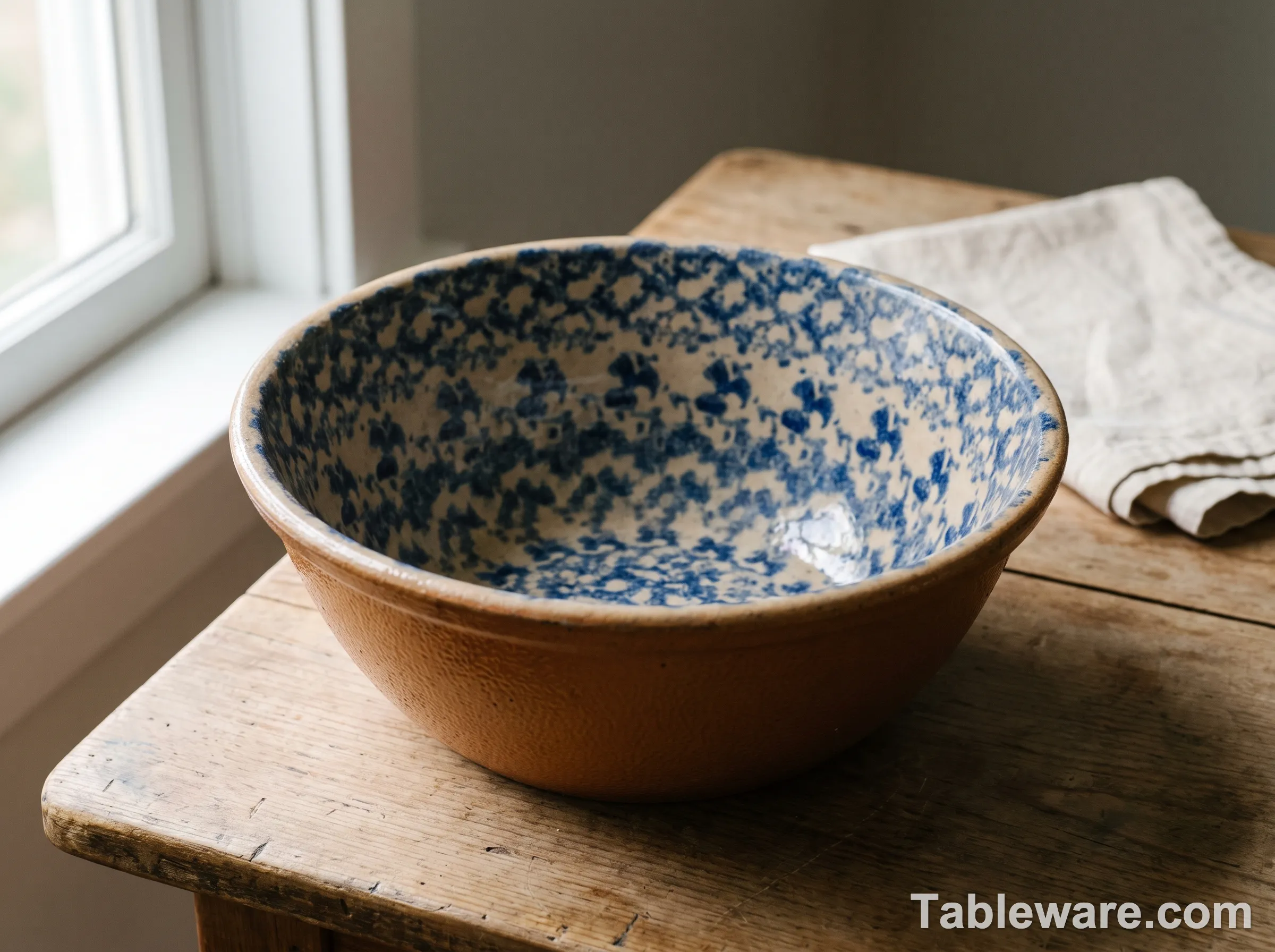
Fig 3. A 13-inch Red Wing blue-and-white spongeware mixing bowl, circa 1895. The free-hand sponge is visible on the interior wall, the stoneware body has the characteristic salt-glaze flecking on the exterior, and a "Red Wing" mark is stamped on the bottom in cobalt ink.
Stick Spatterware: The Cut-Sponge-on-a-Stick Specialty — A History
How the tool works (sponge on a stick = stamped pattern, not spatter)
A stickware tool is exactly what it sounds like: a small piece of sponge (or leather, or rolled cloth) lashed to the end of a stick, dipped in cobalt oxide, and then stamped onto the surface in a regular pattern. The visual result is somewhere between spatterware and cut-sponge spongeware — a row of small, regular marks around the rim of a plate, bowl, or pitcher.
The reason stickware gets confused with spatterware is the visual. From two feet away, a stickware rim looks stippled, the way spatterware looks stippled. Up close, the difference is obvious. A spatterware rim is irregular — the stipples are different sizes, different densities, different distributions. A stickware rim is regular — the marks are the same size, the same shape, and the same spacing. If the marks look identical, it's stickware. If the marks look like someone flicked a wet brush, it's spatterware.
The Pennsylvania Dutch attribution problem — Staffordshire, Holland, or American?
Most stickware was made in Pennsylvania between about 1840 and 1880, primarily by German-American potters working in the Moravian tradition. The most common attribution is to the Moravian potters in Bethlehem, Pennsylvania, and to a handful of German-American shops in Berks and Lehigh counties. But the technique also shows up in Staffordshire, in Holland (where the Societe Ceramique factory in Maastricht produced stickware in the 1870s and 1880s), and in Scotland (Methven, Britannia, and Bo'ness all made stickware in the 1880-1910 period).
The honest collector answer is that you can often tell the body — Pennsylvania stickware is almost always on a red earthenware body, English and Scottish stickware is on a white pearlware or whiteware body, and the Dutch stickware is on a white faience. You can almost never tell the hand. A 6-inch redware stickware plate from Pennsylvania in good condition is a $150 to $500 piece. The same pattern on a whiteware body from Staffordshire is a $400 to $1,200 piece.
For collectors tracing stick spatterware history, the practical timeline is: the tool originated in Staffordshire as a faster way to apply the spatter decoration (you could stamp a dozen ovals in the time it took to flick a dozen spatters), Pennsylvania Moravian potters adopted it on redware between 1840 and 1860, the Dutch Societe Ceramique picked it up in the 1870s, and the Scottish potteries ran with it in the 1880-1910 window. The Pennsylvania attribution is the most common for a redware-body piece on the American market; the English attribution requires a whiteware body and a clear back stamp.
Pricing stickware vs hand-sponged pieces (typically a 30-60% discount)
A reasonable rule of thumb: stickware sells for 30% to 60% less than the equivalent hand-sponged or spatterware piece. The reason is partly supply (more stickware was made than the equivalent spatterware) and partly perception (stickware is read as "industrial" or "machine-like" in a way that the more organic spatterware is not). The rare exceptions are Dutch and Scottish pieces, which sometimes sell for more than the equivalent English spatterware because of the unusual factory attribution.
Spatterware vs Spongeware vs Stickware: A 60-Second Side-by-Side
If you've ever spent 10 minutes in an antique-mall aisle trying to figure out the spatterware vs spongeware question on a single piece, you already know the value of a side-by-side comparison. The three patterns share a color (cobalt blue) and a body family (earthenware, pearlware, whiteware, or stoneware), but they are made with three different tools, and they show it. Here's the full breakdown.
The body tells the story (pearlware, whiteware, stoneware, salt-glaze)
The fastest way to tell the three patterns apart is to look at the body before you look at the decoration. The body of a piece — the clay, the glaze, the color underneath the pattern — is the most reliable identifier because the technique of decoration migrated but the body did not. English spatterware from 1810-1840 is almost always on a pearlware body (a soft, slightly bluish-white earthenware). American spatterware from 1840-1880 is almost always on a whiteware body (a harder, brighter white earthenware). Spongeware on stoneware (the 1880-1920 Red Wing and Western Stoneware pieces) is on a salt-glazed stoneware body with the characteristic orange-peel exterior surface.
If the body is pearlware and the rim is stippled: spatterware, probably English, 1810-1840. If the body is whiteware and the rim is stippled: spatterware, probably American, 1840-1880. If the body is stoneware and the interior is mottled: spongeware, American Midwest, 1880-1920. If the body is red earthenware and the rim has regular marks: stickware, probably Pennsylvania, 1840-1880.
That's the 60-second framework. The rest is detail.
A practical decision tree for the antique-mall aisle (5 questions, 1 answer)
Here is the workflow I use. It works at the mall, at an estate sale, and (with a flashlight) at an outdoor flea market. Five questions, in order.
- What color is the body? White (pearlware or whiteware) = spatterware candidate. Off-white stoneware with a pebbly exterior = spongeware candidate. Reddish-brown = stickware candidate.
- Are the rim marks regular or random? Regular = stickware. Random = spatterware.
- Is the blue inside the body or just on the surface? Just on the surface, with a sponge texture = spongeware. Inside the glaze, fused in = spatterware.
- Is there a motif in the center? Yes = probably spatterware (the motifs are a spatterware signature). No = could be either of the other two.
- Is there a maker's mark on the bottom? Yes, in cobalt ink = American spongeware, 1880-1920. Yes, in printed type = English or European, post-1890. No = probably pre-1860, undated. (For the full workflow of reading a back stamp — cobalt ink vs printed type vs impressed mark, plus the dating cues from each — see how to read pottery marks.)
If the answer to question 2 is "random" and the answer to question 4 is "yes, there's a peafowl": you are looking at a spatterware peafowl plate, the most valuable single configuration in American folk pottery, and the dealer who put it out for $60 either doesn't know what they have or does and is testing you. Negotiate accordingly.
Three quick value benchmarks by pattern (entry / mid / top-tier price bands)
For a piece in good condition (no chips, no hairline cracks, original decoration intact, no restoration):
| Pattern | Entry (typical mall) | Mid (auction) | Top-tier (record) |
|---|---|---|---|
| Spatterware (blue, plain) | $40-100 | $200-800 | $4,000 |
| Spatterware (motif: peafowl, schoolhouse, eagle, fort) | $250-800 | $1,000-5,000 | $15,000-20,000 |
| Spongeware (blue, free-hand, 12-14" bowl) | $40-150 | $200-500 | $1,200 |
| Spongeware (rare color, advertising, marked) | $200-500 | $600-1,500 | $5,000+ |
| Stickware (American, redware body) | $40-150 | $200-500 | $1,000 |
| Stickware (English or Dutch, whiteware body) | $150-400 | $500-1,500 | $4,000 |
The single most important number in this table is the $5,000 line for spongeware. The reason is that a 14-inch Red Wing or Western Stoneware advertising spongeware bowl — a piece with a hotel or saloon name painted into the sponge — is, dollar for dollar, the most underpriced configuration in American folk pottery. The mall dealer doesn't know what they have. The local auctioneer doesn't either. But the Americana auction houses (Crocker Farm, Pook & Pook, Brunk) do, and the prices at those houses have been climbing 8% to 12% a year since 2020.
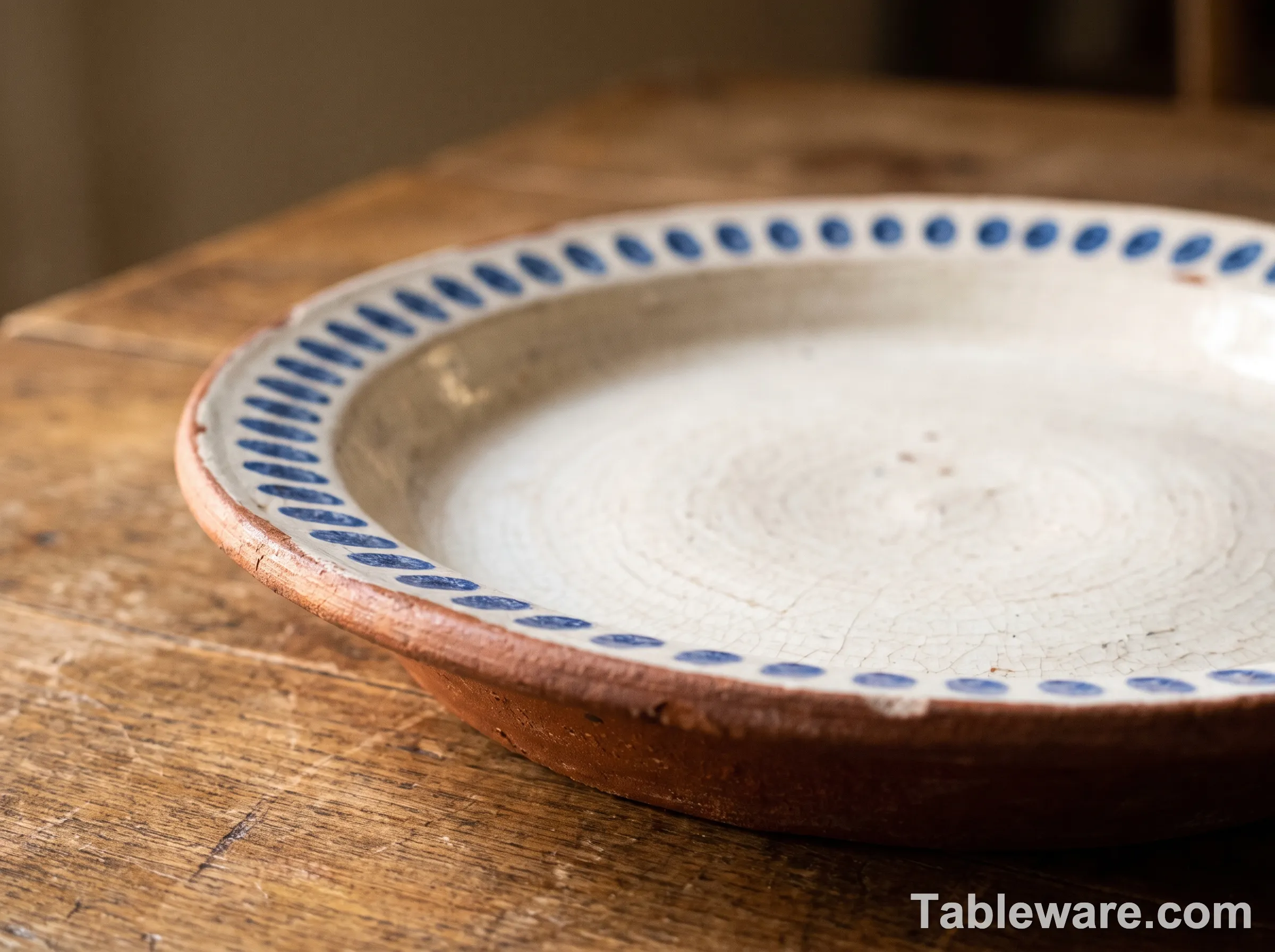
Fig 4. The Pennsylvania redware stickware plate, circa 1860. The reddish earthenware body and the perfectly regular row of cobalt blue oval stamps around the rim are the two diagnostic features. A spatterware rim never looks this regular. A spongeware interior never has this body. If you see this combination, you are looking at stickware, and a Pennsylvania attribution is the safest bet.
Closing the Loop
The 3-pattern framework — spatterware, spongeware, stickware — is the simplest reliable way to tell these three related techniques apart. Look at the body first (pearlware, whiteware, stoneware, redware). Then look at the rim marks (random = spatterware, regular = stickware, mottled = spongeware). Then look at the center (motif = spatterware, blank = could be either of the others). Then look at the bottom (cobalt ink mark = American spongeware, printed type = post-1890, blank = pre-1860). Five questions, 60 seconds, and you have a defensible identification and a defensible price.
If you want to go deeper into the body types these pieces are made on, the stoneware and earthenware wiki pages cover the material side. The wider American folk pottery family tree — and the role of the Staffordshire-to-Pennsylvania pipeline in spreading these techniques — is covered in the raku firing history and the reactive glaze chemistry pages. And if you end up buying a piece, the dinnerware care guide will keep it from chipping in the cabinet for the next 30 years.