Is Old Ironstone Safe to Eat From? Crazing, Lead, and Backstamps
Ask ten people what ironstone is and you'll get nine different answers, and at least two of them will be about cast iron pans.
Ironstone dinnerware is none of those things. It's a dense, opaque ceramic — a cousin of stoneware that learned to look like porcelain, got a lot cheaper, and ended up with the most confusing name in the ceramics business. It was invented in Staffordshire in 1802, at a moment when English potters spotted money in selling thin white tableware to families who would never have bought porcelain. Then it spent two centuries accumulating variations, backstamps, and bad advice.
So let's take the question that brought you here first, then get into the details.
Short answer: most old ironstone is fine to eat from. Crazing on its own is a cosmetic problem, not a safety problem. The pieces you should keep off the table are the ones with cracks running through the body, chips on eating surfaces, or unmarked pre-1971 glaze you can't verify.
Everything else — the weight, the ring, the crazing, the lead question — follows from understanding what the material actually is.
What Ironstone Dinnerware Actually Is
Ironstone's inventor was Charles James Mason, a Staffordshire potter working in Lane Delph, in the north Staffordshire coalfield. His 1802 patent covered a process for making a new ceramic from the iron-rich clay that sat above the coal seams: refined white clay fired together with calcined ochre, an iron oxide, at temperatures high enough to vitrify the body.
Two things about that recipe matter for everything that follows.
The first is that the body comes out dense and opaque. It doesn't let light through, not even at the thinnest edge. It doesn't ring like a bell. It feels like stone. That combination — porcelain's looks on stoneware's build — is the entire commercial reason the material existed.
The second is that the "iron" in ironstone is a bit of a lie, in the way people repeat it. No metal is added to the body. The name comes from the iron-rich clay and the high-temperature firing that turned it into something dense and metal-like in character. Modern ironstone dinnerware contains no metal at all. It's ceramic, all the way down.
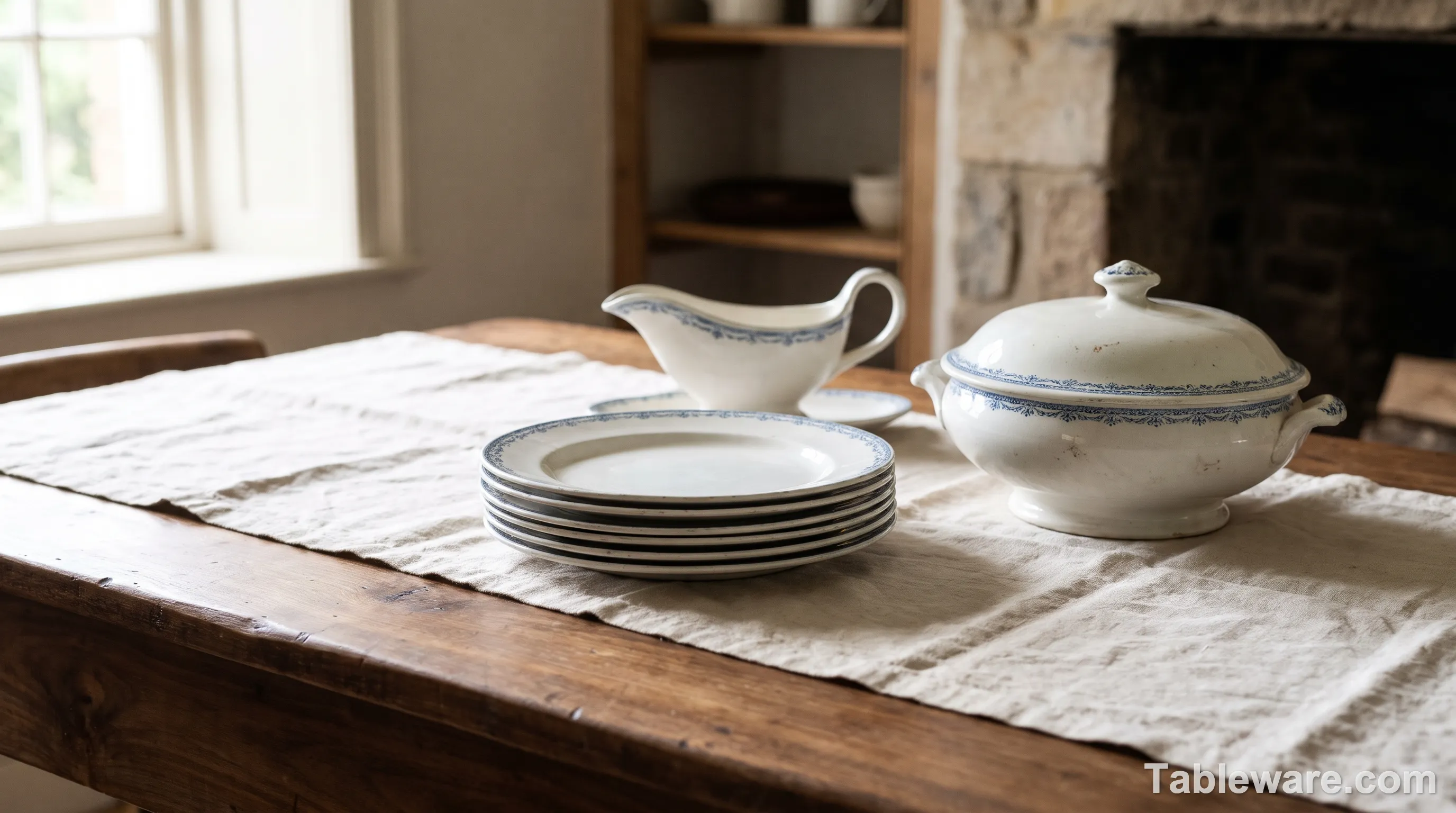
Fig 1. A Staffordshire-style ironstone service: white body, printed border, the look that made the material worth copying.
Three different things sold as "ironstone"
This is where most guides go wrong, and it's worth getting right before you spend money.
Mason's Patent Ironstone, roughly 1802 to 1850. The original. Dense, often a grey, buff, or dark brown body where it's unglazed on the foot ring. Fired hot and hard. Genuinely tough stuff. Backstamps read MASON'S PATENT IRONSTONE and usually carry a town mark. This is the version collectors actually chase, and it's a small fraction of what turns up in donation shops.
Ironstone China, roughly 1850 to 1870. Makers refined the recipe, whitened the body with more kaolin, and moved the firing temperature up. The name on the backstamp now often includes "CHINA" — which is why you'll see "ironstone china" as a phrase, and also why so much of it is visually indistinguishable from semi-porcelain. Johnson Brothers, Alfred Meakin, Grindley, Wedgwood's Queen's ware, Royal Doulton, Hancock & Corfield, T.G. Green — all of them were in this business. Alfred Meakin grew into the largest ironstone producer in the world by the end of the 19th century.
Semi-Porcelain, from the 1870s onward — and everything sold today. White, refined, fired lower than true porcelain, and marketed under the ironstone name because "ironstone" sold better than "semi-porcelain." Practically every piece of modern ironstone in a store right now is in this category, including most of the ironstone made in Japan and China since the 1970s.
So if someone tells you they own "ironstone," ask which of those three it is before you decide anything about it. The honest answer for almost all modern ironstone is: it's a durable whiteware body that looks like porcelain and costs a lot less.
Ironstone vs Porcelain: The Weight, Light, and Sound Tests
Here's the comparison in one place.
| Ironstone | Porcelain | Bone China | Stoneware | |
|---|---|---|---|---|
| Body | Opaque, dense | White, translucent at thin edges | Creamy, translucent | Opaque, coarse |
| Glaze firing | ~1,200–1,280°C | ~1,400°C | ~1,250–1,300°C | ~1,200–1,300°C |
| Chip resistance | Good | Poor | Good | Excellent |
| Crazing tendency | Moderate to high | Low | Moderate | Low |
| Microwave | Usually no | Yes | Yes | Usually yes |
| Feel | Heavy, dull | Light, rings | Light, rings | Heavy, dull |
Three tests separate ironstone from porcelain in about fifteen seconds, and none of them need equipment.
The light test. Hold the rim up to a window. Porcelain and bone china glow at the edge. Ironstone is completely opaque, like a piece of chalk. If you can see daylight through it, it isn't ironstone.
The tap test. Tap the rim with a fingernail or the handle of a spoon. Porcelain rings — a clear, sustained note. Bone china rings a little lower and warmer. Ironstone gives a short, dead thud, closer to stoneware. That dead ring is often described as "killing the ring," and it's the most reliable field test there is.
The weight test. Pick up a plate of each. The ironstone plate is noticeably heavier for the same diameter, partly because of the denser body and partly because makers made it thicker to borrow porcelain's strength. It feels substantial in a way that reads as quality to most people and as "why is this plate so heavy" to everyone else.
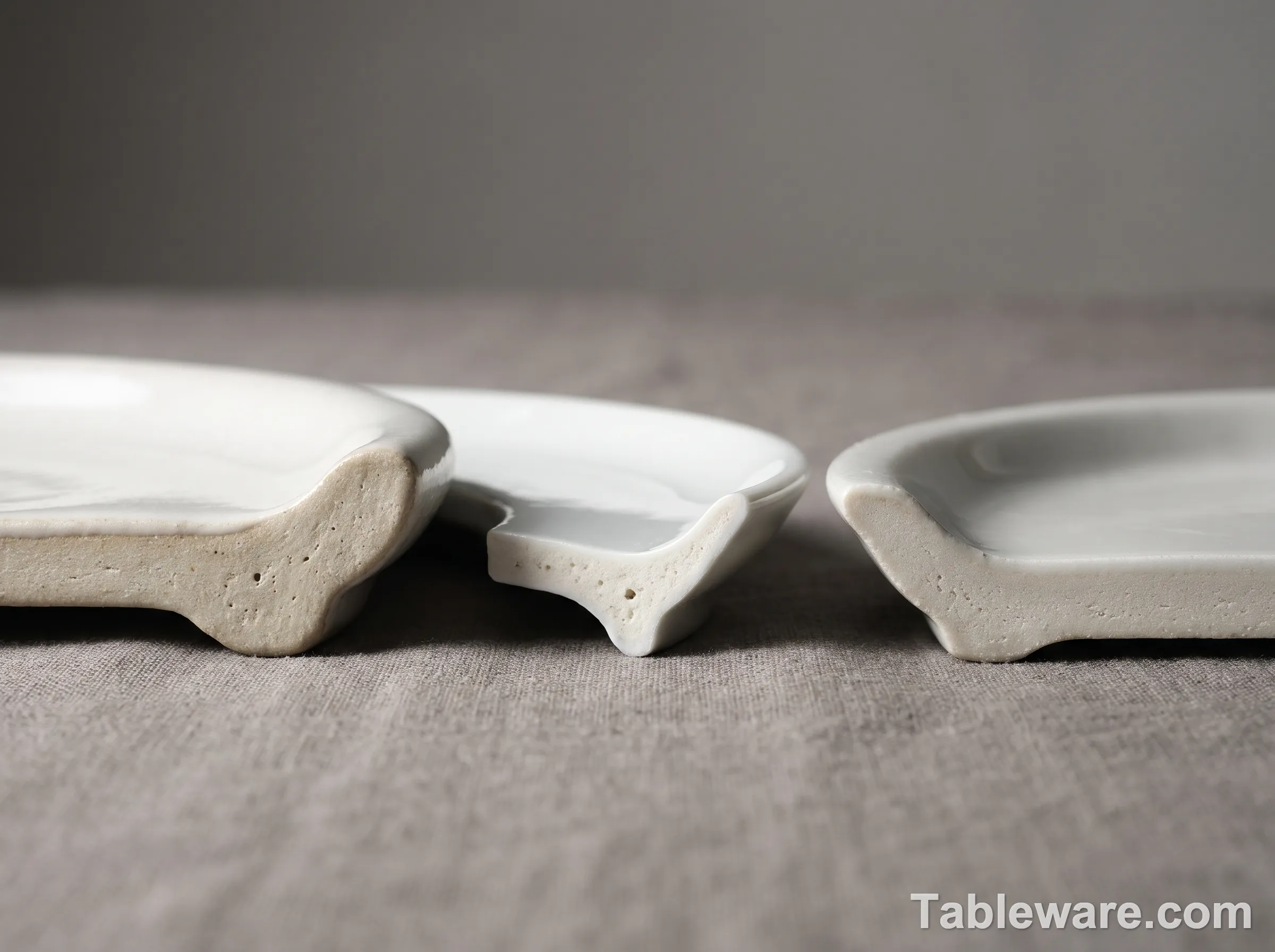
Fig 2. Body and glaze differences show up at the rim: the dense, fine-grained ironstone edge sits between thick stoneware and thin porcelain.
The trade-off in plain terms: porcelain is prettier and more fragile, ironstone is heavier and tougher, and the two are closer cousins than most people expect. Our bone china guide covers the third member of that family in detail.
Ironstone vs Stoneware: A Type, Not a Rival Material
This one trips people up constantly, and it's a category error.
Stoneware isn't a competitor to ironstone. It's a category ironstone belongs to. Stoneware describes any ceramic fired above roughly 1,200°C until the body vitrifies and stops soaking up water. Ironstone is one specific body developed inside that family, engineered to imitate porcelain while being tougher and cheaper to make.
A better question than "ironstone or stoneware?" is: how dense is the body, how well is it vitrified, and how does it feel in the hand?
That matters for durability. Stoneware is the most chip-resistant dinnerware there is — our stoneware reference covers why — and a good stoneware piece will outlast an ironstone plate. Ironstone's edge over stoneware is thinner rims and a finer, whiter body that gets closer to china. Its downside is that it crazes more readily and can't take the heat shock stoneware handles.
If you're choosing for a house with kids, a rental, or a cabin where things get dropped: stoneware, no contest. If you're choosing for a table that needs to look formal: ironstone, or better still bone china.
9 Tests to Identify Ironstone in Your Hand
These work on a piece in a thrift store with no box, no receipt, and no idea what you're looking at.
- The tap. Rim, fingernail, listen. Dead thud, not a ring. Non-negotiable.
- The window. Hold it to the light. Fully opaque? Ironstone or stoneware. Glowing at the edge? Porcelain or bone china.
- The heft. It should feel heavy for its size. Lightweight thin plates with a white glaze are porcelain or semi-porcelain, not ironstone.
- The foot ring. Turn it over. Early Mason's-type ironstone shows a grey, buff, or brown unglazed body on the foot ring. Refined ironstone china shows white. A glassy, vitrified white foot ring says porcelain.
- The rim. Run a finger along it. Ironstone edges are thin but blunt and substantial. Bone china edges are thinner and sharper, almost knife-like. Stoneware rims are noticeably thicker.
- The glaze. Ironstone glaze is thick and glossy, often slightly uneven, pooling a little in recessed areas. Underglaze transfer prints sit under the glaze and can't be scratched off. Overglaze enamel decoration sits slightly proud and feels different under a fingernail.
- The chip. If the piece already has a chip, look at the exposed body. Ironstone shows a dense, fine-grained, opaque body. Porcelain shows a glassy, slightly translucent edge. This is the most conclusive test when the damage is already there.
- The mark. Turn it over and read the backstamp. See the next section — this is where most of the information lives.
- The heat. Pour boiling water into a cold piece, then cold water into a hot one. Ironstone handles thermal shock noticeably better than porcelain and noticeably worse than stoneware. Don't do this to a piece you want to keep, obviously.
If tests one, two, and three all point the same way, you have ironstone. If one of them says "I think this might actually be bone china," believe it.
Reading Ironstone Backstamps: Mason, Meakin, and Johnson Brothers
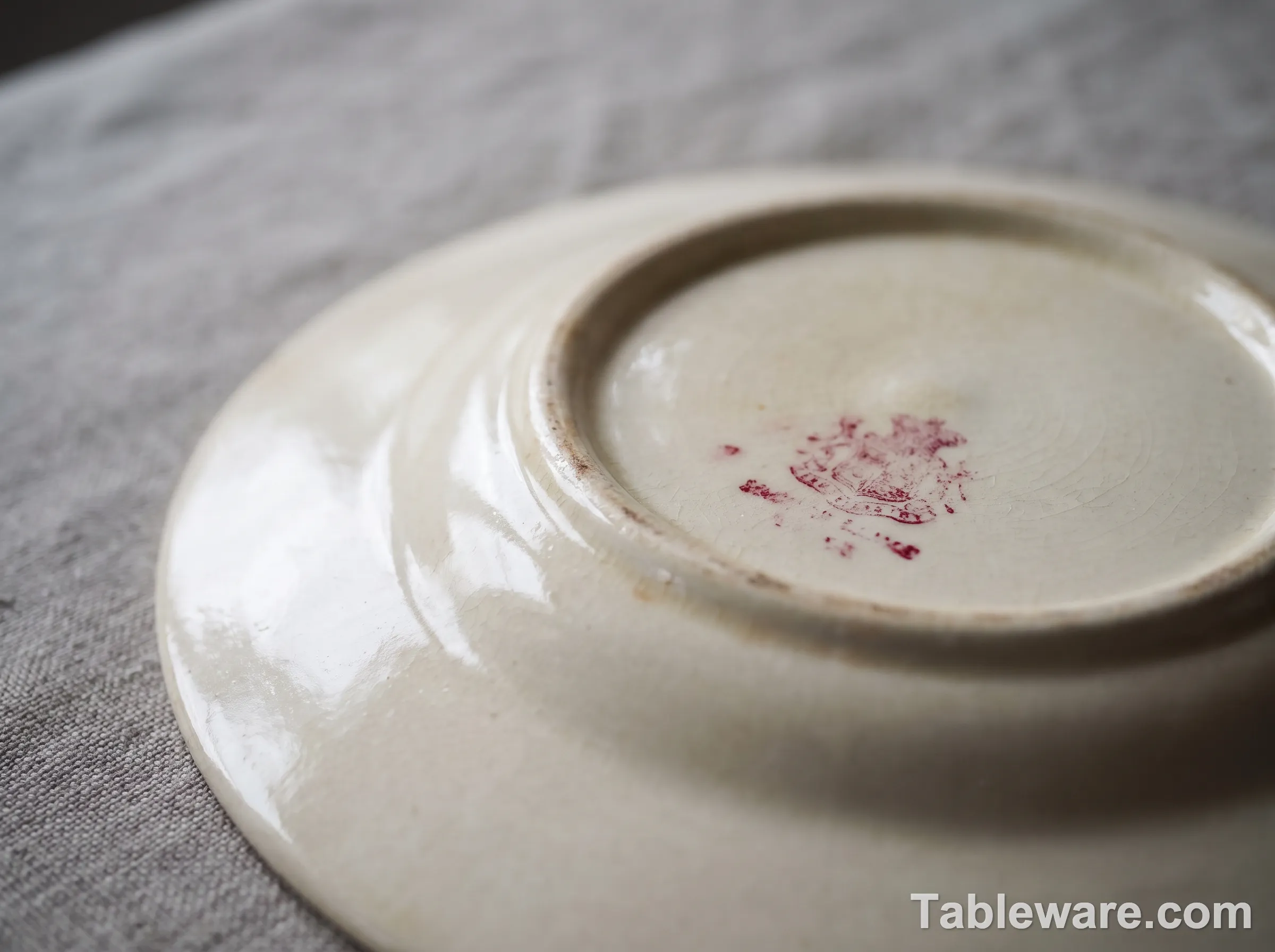
Fig 3. A faded red printed registration mark on the foot ring — worn, but the shape of the printed lettering is still readable.
Marks on ironstone are mostly printed, in red or black ink, rather than impressed into the clay the way they are on porcelain. That ink is the first thing to fade, which is why most old ironstone has a smudge where its backstamp used to be.
The words to look for:
MASON'S PATENT IRONSTONE— the original material, 1802 to about 1850, usually with a town mark like Lane Delph or Stoke.IRONSTONE CHINAorIRONSTONE— the refined white version, roughly 1850 onward.SEMI-PORCELAINorSEMI-PORCELAIN CHINA— the late-19th-century and modern version, and the honest description of most ironstone you're likely to find in a thrift store.PATENT IRONSTONEwith no maker's name — a copycat or later revival mark.
The makers to know:
- Mason's — the original.
- Alfred Meakin — the giant. Marks read "A. MEAKIN / ENGLAND" or "ALFRED MEAKIN & CO LTD / ENGLAND". Meakin also used a coded date system on the backstamp.
- Johnson Brothers — "JOHNSON BROS / ENGLAND", the "I.B." monogram, and the slogan "KING OF THE DINING ROOM".
- W.H. Grindley & Son, Wedgwood (its Queen's ware was ironstone), Royal Doulton, T.G. Green, Sargeant — all major ironstone producers.
The country marks give you the decade:
ENGLANDalone means 1891 to 1921. Before 1891, English potters weren't legally required to say where a piece was made, so a mark with no country is likely older than that.ENGLANDwith a crown above it dates it to 1901 through 1921.MADE IN ENGLANDorMADE INmeans 1921 or later — the US government required country-of-origin marking then.MADE IN JAPANorMADE IN CHINAmeans post-1921 too, and covers a huge share of the ironstone sold in the last fifty years, including plenty that looks vintage.
On the date codes: Staffordshire makers including Meakin and Grindley encoded the year as a letter — A for 1901 on most makers' charts, B for 1902, and so on — and used the position of that letter within the backstamp to signal the month. Numbers replaced letters from 1921. The exact convention shifted between makers and periods, so cross-check any specific piece against a date code chart rather than trusting a one-line rule. Our guide to reading pottery marks has the method, and it's worth reading before you pay for anything with a lone letter in the middle of it.
Why Ironstone Crazes More Than Porcelain
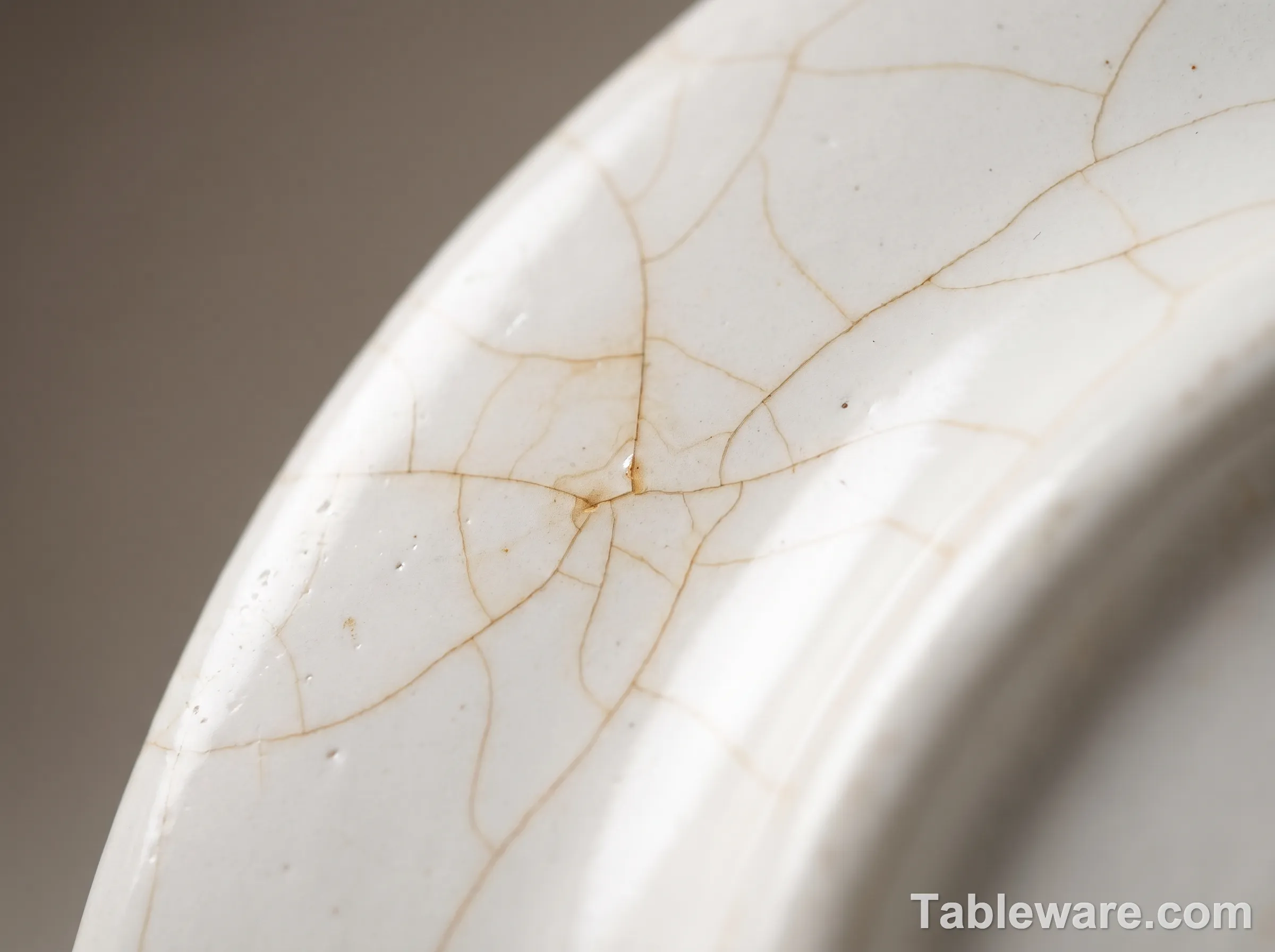
Fig 4. Crazing: a network of hairline cracks in the glaze only, with tea-stain amber caught along the lines.
Every ceramic crazes eventually. The reason is that glaze and body shrink at different rates as they cool, and the mismatch leaves the glaze under permanent tension. Porcelain survives this well because its body and glaze are formulated to expand at nearly the same rate. Ironstone is formulated for a different job — dense body, moderate firing temperature, thin profile — and the fit is looser. Result: ironstone develops visible crazing sooner and more heavily than porcelain of the same age.
Two things about crazing that get badly mangled on the internet:
It happens after the fact. Crazing is a slow process that shows up over years, not a defect baked in at the factory. A piece can look perfect in the shop and craze within a decade.
Crazing is in the glaze, not the body. The network of cracks is a surface phenomenon. On a vitrified body — which ironstone is, unlike low-fired earthenware — there's no porous surface underneath for food to lodge in, and bacteria don't colonize a hairline crack in a sealed glaze. Our crazing guide goes through the porous-versus-vitrified distinction in detail, and it's the thing that decides whether a crazed plate is fine or not.
What crazing actually costs you is looks and value. The lines trap tea, coffee, tomato, and turmeric, which is why vintage ironstone often carries a warm amber tint in the crackle. It also means a crazed piece is worth noticeably less to a collector. That's the real downside.
Is Ironstone Safe to Eat From? Lead, Crazing, and the Vintage Rule
Here's the rule, and it's short enough to remember.
Crazing alone: keep using it. Clean it properly and carry on.
A crack or chip that runs through the glaze into the body: retire it. That's structural failure, not cosmetic.
Unmarked pre-1971 glaze: don't eat off it until you've tested it. More on that below.
The two risks worth actually worrying about
Lead in old glaze. The FDA first set lead limits for ceramic tableware in 1971 and tightened them in 1992, so anything made before 1971 is the category that needs thought. There's a sneakier second route: English potters in the 19th century routinely re-lined plates and bowls that had crazed badly, dipping them in a bath of lead glaze to seal the craze lines and make the piece saleable again. A re-lined piece has fresh lead glaze sitting on top of an old crazed surface, and it looks completely normal. Our guide to lead and cadmium in ceramic glazes has the current FDA, Prop 65, and ISO limits plus the five red flags for vintage pottery.
An unsealed body. Ironstone is vitrified, so this is less of a problem than it is with earthenware. But a piece with a chalky, unglazed, or underfired foot ring may not be fully sealed, and crazing on a porous body can open a path for residue to lodge where the dishwasher doesn't reach.
How to actually test it
Home test kits from the hardware store — the ones that swab the glaze — are unreliable. They flag perfectly good pieces, miss bad ones, and have to hit the exact spot where the lead sits.
If you want to actually know, mail a piece to a ceramics testing lab. A leach test on a single item runs roughly $20 to $40 and gives you a real number instead of a colour change. For one sentimental plate, that's worth it. For a whole inherited service, it's usually worth it too — and the lab will report lead and cadmium at the same time.
If the piece is unmarked and pre-1971 and you're not going to test it: put it on the shelf. It's a nice object. It's just not foodware whose history you don't know.
Ironstone Dinnerware in the Kitchen: Microwave, Dishwasher, and Oven Limits
Microwave: usually no. Ironstone bodies contain iron oxide, and those fine metallic flecks can arc and spark. Most manufacturers mark ironstone "not microwave safe" or simply never claim it. If a piece says microwave-safe, it isn't traditional ironstone — it's a modern whiteware body. This is the single most common reason people retire a perfectly good set, and it's worth confirming before you throw yours out.
Dishwasher: mostly yes, with caveats. Modern ironstone survives a dishwasher without breaking. What it doesn't survive gracefully is the shine — high heat and detergent will dull a glossy glaze over time. Any gold, silver, or overglaze enamel decoration will strip. Hand wash decorated pieces and let machine-safe plain white ones take the hit.
Oven: no, unless the maker says so. Don't put ironstone in the oven, toaster oven, or broiler. Some modern products are sold as oven-safe to 400°F because they're really stoneware-bodied, not ironstone.
Thermal shock: respect it. No ceramic should go from the fridge into a hot oven, or the reverse. Ironstone tolerates temperature swings better than porcelain and worse than stoneware, but "better than porcelain" is not "fine."
General care: a non-abrasive cleaner, no scouring pads on the glaze, and dry rather than stack damp. Our dinnerware care guide covers the rest.
What Ironstone Is Worth Today
For most vintage ironstone: not much, and that's fine. It's a working material, not a rarity.
Typical numbers for single pieces:
- Common late-19th and early-20th century ironstone, no maker's mark or a common Staffordshire mark: $4 to $15 at a flea market or estate sale.
- A complete 12-piece service in a matched pattern: $40 to $150 in person, often $100 to $250 online.
- Ironstone with visible crazing, chips, or a worn backstamp: a fraction of the above — sometimes $2 to $5, and sometimes not worth the box.
What pushes the price up:
- Early Mason's Patent Ironstone from before about 1830, especially with original gilding. This is where real money is, and prices run from the hundreds into the low thousands.
- A complete, matched service in a named pattern. A full 42-piece or 100-piece set in one pattern is worth multiples of the same pieces sold singly.
- Clean, unfaded color and a legible backstamp.
- Unusual decoration: hand-painted pieces, transfer-printed patterns with a name you can read, gilt edges.
What kills the price:
- Crazing. Not always fatal, but it cuts value noticeably.
- Chips, especially on rims.
- A missing piece in an otherwise complete service.
- No backstamp at all, on anything pre-1900.
One special case: Fiesta Ironstone, made by Fiesta from 1969 to 1973, is a separate collectible with its own market, because it's the only ironstone line most people recognize by name. Our Fiesta color history covers that run in detail.
And if you're starting from zero: the seller sets the price, not the collector. Check sold listings on eBay, not active ones. Active listings are asking prices, and asking prices are fiction.
If You're Buying New: Where Ironstone Dinnerware Still Makes Sense
New ironstone is still being made, and it's still a reasonable buy — for narrower reasons than people assume.
Buy new ironstone when:
- You want the heft and durability of a dense ceramic body at a price well below bone china.
- You want the classic white-with-a-border look that suits both casual and slightly formal tables.
- The table is going to take abuse — kids, a rental, a cabin, a restaurant short on staff. A dropped ironstone plate that survives is worth more than a porcelain one that doesn't.
- You want to stack a lot of pieces without worrying. Ironstone's edges are thicker than bone china's.
Skip it when:
- You're setting a formal table where the thinness and translucency of bone china is the point. Ironstone will always read a touch heavier and more solid, which is right for Sunday dinner and wrong for a wedding.
- You want to use the microwave. That's effectively the whole set, out.
- You want a made-in status. Most modern ironstone is made in China, and the honest description of it is "semi-porcelain whiteware." That's not a criticism — it's a durable, good-looking body — but it isn't Staffordshire pedigree.
Who makes it now: Gibson Home has ironstone lines that are the most widely available in the US, Mikasa and Lenox have sold ironstone for decades, Deny Designs and Sango make contemporary versions, and Corelle's stoneware line is a related body. Check the backstamp, not the box — the box tells you the pattern, the backstamp tells you the material.
A word on restaurant ware. If you've eaten at a restaurant serving heavy white plates, you may have been served what the trade calls hotel china or performance porcelain. That's vitrified porcelain, often alumina-fortified — a different material from Staffordshire ironstone, even though both end up white and strong. Our guide to professional porcelain covers that one properly.
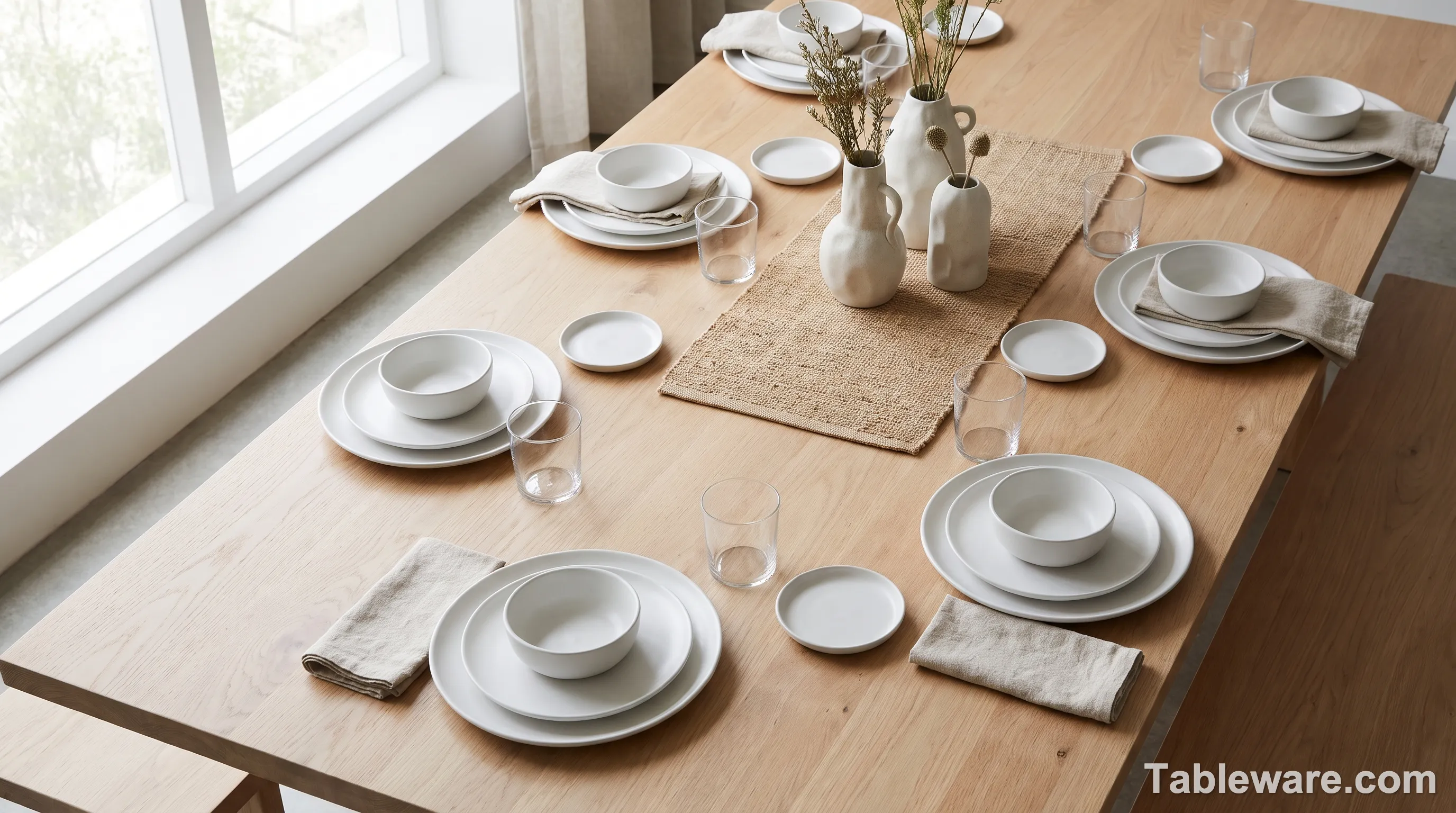
Fig 5. Modern ironstone: a dense white body, clean lines, and the weight that makes it feel substantial in the hand.
The Short Version
- Ironstone is a dense, opaque, vitrified ceramic with no metal in it. It was invented in Staffordshire in 1802 to imitate porcelain at a lower price.
- The word covers three different bodies: original Mason's Patent Ironstone (1802–1850), refined Ironstone China (1850–1870), and semi-porcelain (1870s to today). Most ironstone you've seen is the third one.
- Identify it by feel: heavy, dead tap, fully opaque at the rim, and a printed backstamp that mentions ironstone or semi-porcelain.
- Crazing on ironstone is a glaze-surface issue, not a body issue. On a vitrified piece it isn't a food safety problem. It does stain and it does hurt value.
- The real safety questions are lead in pre-1971 glaze — including 19th-century re-lined pieces — and cracks or chips that run through the body. Everything else is fine.
- Vintage ironstone is worth $4 to $15 a piece unless it's early Mason's or a complete matched service.
- Modern ironstone is a good buy for durability and weight, and the wrong buy for microwave use or formal bone china elegance.