9-Inch, 30 oz, Wide Rim: The Pasta Bowl Specs That Actually Matter in 2026
Look, I've owned pasta bowls for about eight years now, and I still remember the first time I tried one. I'd been eating spaghetti off a 10.5-inch dinner plate for years, twirling long noodles with a fork and spoon like everyone taught me in college. The plate looked fine. The pasta slid off the plate onto the placemat maybe once a week. I assumed that was just how pasta worked.
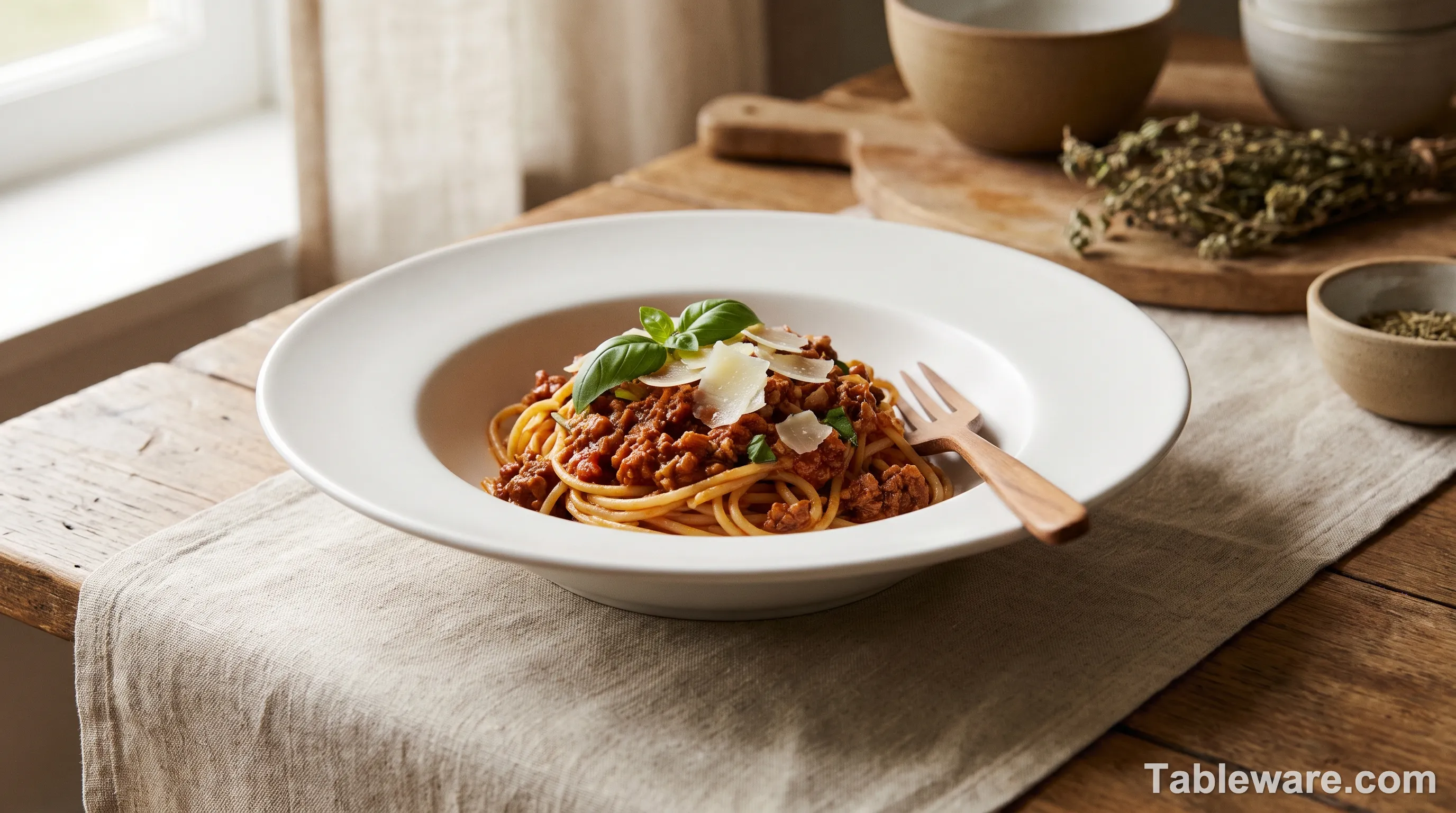
Then a friend handed me a wide rim pasta bowl — I want to say it was a Crate & Barrel Mercer Coupe, 9 inches across, around 24 ounces, with a flat rim wide enough to land a fork on — and I twirled spaghetti carbonara against the gentle slope without chasing anything. The sauce pooled in the center instead of running toward the table edge. The noodles stayed warm longer because the porcelain held heat. I emptied the bowl in about three minutes, looked down, and went, "Oh. So this is what people have been talking about."
That was the moment I started testing pasta bowls seriously. Since then I've owned, broken, gifted, and replaced more of them than I'd like to admit to my wife. This guide is the result — what to look for, what to skip, and which specific sets I'd actually trust in a 2026 kitchen.
If you're shopping for pasta bowls right now, the marketing copy on most retail sites is brutal. "Premium artisan-crafted dinnerware." "Restaurant-quality porcelain." "Elevates every meal." None of that tells you whether the bowl will work for the kind of pasta you actually cook at home. Let's fix that.
What a Pasta Bowl Actually Is (And Why Your Dinner Plate Isn't One)
A pasta bowl is a wide, shallow vessel — typically 8 to 10 inches in diameter and 1.5 to 2.5 inches deep — designed so a single serving of spaghetti, rigatoni, or linguine sits in the center with sauce pooled around it instead of sliding off the edge. A standard dinner plate is 10 to 11 inches across and basically flat, which means it has no well at all. A soup bowl is the opposite problem: too deep, too narrow, and you end up chasing pasta around with a spoon like it's floating in broth.
The shape matters for three reasons:
- Twirling works. A flat rim and a gentle inward slope let you press your fork against the wall and gather strands without pushing them over the edge.
- Sauce stays put. A shallow well concentrates the sauce underneath the pasta instead of letting it run to the rim.
- Heat stays in the food. A wider footprint means more food is in contact with the warmed ceramic, so the dish cools slower than it would spread across a plate.
A coupe plate comes close — flat bottom, very gentle slope, no real rim — and works fine for short pasta like rigatoni or penne. But for spaghetti, bucatini, and linguine, you want at least a half-inch of wall height so you can actually twirl against it. That's where pasta bowls earn their name.
If you've ever wondered whether the pasta bowl vs soup bowl distinction is marketing, it's not. The depth difference alone changes how the dish behaves in front of you.
The 4 Specs That Decide Whether You'll Like Your Pasta Bowl
Forget "12-piece set" or "service for 8." Those are nice-to-haves. The four specs that determine whether a pasta bowl will actually improve your weeknight dinners are these.
Diameter: 8 to 10 Inches Is the Range That Matters
Anything smaller than 8 inches forces you to break long noodles in half before they fit. Anything larger than 10 inches and the portion looks lost in the bowl — Cornell University's Food and Brand Lab has generally found that bigger dishware increases self-serve food intake by 16 to 31 percent, which is fine if you're feeding athletes and a problem if you're managing portions.
The sweet spot for most adults is 8.5 to 9.5 inches. That gives you a 9-inch usable surface for twirling while keeping the visual ratio of "this bowl has a generous portion of pasta in it." Most sets in this range also stack reasonably in a standard kitchen cabinet.
Depth: 1.5 to 2.5 Inches, Not Deeper
A bowl deeper than 2.5 inches starts behaving like a soup bowl — too much vertical, not enough horizontal. You'll find yourself stirring instead of twirling. A bowl shallower than 1.5 inches is basically a coupe plate and will slosh saucy dishes like cacio e pepe or arrabbiata over the rim.
The 2-inch mark is the place where most well-designed pasta bowls land. That gives you enough well to hold 20 to 30 ounces of food and sauce without looking like a cereal bowl.
Capacity: 24-30 oz for One, 38-48 oz for Family-Style
Capacity is where most product listings quietly mislead you. They'll say "set of 4, 30 oz" and you'll assume that's a single serving. Sometimes it is. Sometimes the 30 oz is a misprint and the actual capacity is closer to 22 oz when you fill the bowl without it overflowing.
For a single serving of pasta plus sauce, 22 to 30 ounces is the right zone. A cooked portion of spaghetti weighs about 200 grams before sauce; with sauce, parmesan, and a side of greens, you're looking at 1.5 to 2 cups of food. A 24 oz bowl handles that comfortably.
If you serve family-style — a big bowl in the center of the table that everyone grabs from — go larger: 38 to 50 oz. The MALACASA LUNA set, for example, runs 48 oz per bowl, which sounds absurd for a single serving but is exactly right for a family-style pasta night where you're passing the bowl around.
Rim Width: 1 to 3.5 Inches Catches Sauce Instead of Wearing It
The rim is the part most buying guides skip, and it's the part that actually solves the sauce-on-the-table problem. A flat rim of 1 to 3.5 inches gives you a place to rest your fork, a place to grip the bowl when you carry it from the kitchen, and a visual frame for the food.
The OXO Good Grips pasta bowl takes this to an extreme with a 3.5-inch rim plus a non-slip silicone base — practically a tray. That's overkill for some people and exactly right for others (anyone who's chased a pasta bowl across a smooth dining table will understand).
If you like a minimalist look, a 1-inch rim works fine. If you eat pasta with a knife and fork and want somewhere to rest the knife between bites, go wider.
Material Matters More Than the Brand Name
Brand names tell you almost nothing unless you can answer "what is this bowl made of?" Material drives weight, heat retention, chip resistance, and price. Here's the honest version.
Porcelain Pasta Bowls: Dense, Refined, More Expensive
Porcelain is fired at higher temperatures than stoneware — typically above 2300°F, sometimes up to 2400°F — which makes the body denser, less porous, and more chip-resistant. The downside is weight and price. A good porcelain pasta bowl tends to weigh 1.2 to 1.5 pounds and costs $12 to $20 per bowl for mainstream brands, more for designer lines.
Porcelain also retains heat better than glass, though not as well as thick stoneware. If you serve pasta and want the bowl to stay warm through a 20-minute dinner, porcelain is a step up from Corelle and a step below heavy stoneware.
If you're shopping for a porcelain pasta bowls set of 4 in the $30 to $60 range, you're in the right ballpark. Below that, the firing temperature usually drops and the body gets more porous. A typical porcelain pasta bowls set from a known brand will run $50 to $90 for four, which is the actual value zone — cheaper almost always means the kiln was cooler and the body is softer.
Stoneware: Heavier, Holds Heat Longer
Stoneware is the workhorse of the pasta bowl world. It's heavier than porcelain — a typical 9-inch stoneware pasta bowl weighs 1.6 to 2 pounds — and it holds heat noticeably longer. If you eat slowly, or if your family gets distracted halfway through dinner (kids, phones, whatever), stoneware keeps the food warm.
The trade-off is chip resistance. Most stoneware chips at the rim before it cracks in the body. East Fork, Le Creuset, and Fable all use stoneware clay bodies, and all of them will eventually chip if you stack them carelessly.
For most people, a stoneware pasta bowl is the right default. It feels substantial, holds heat, costs less than porcelain, and survives daily dishwasher use without drama.
Vitrelle Glass (Corelle): Lightweight and Stackable, Won't Hold Heat
Corelle's Vitrelle glass is a three-layer laminated glass that's much harder to break than standard soda-lime glass. The bowls weigh about 10 ounces — less than half of a stoneware bowl — and they stack tightly. If you have a small kitchen and you stack everything, Corelle wins on storage.
The downside is heat retention. Glass doesn't hold heat the way ceramic does. Your pasta will be noticeably cooler by the time you finish the bowl. For weeknight pasta where you're eating quickly, that's fine. For slow Sunday dinners where the bowl sits for 20 minutes, it's annoying.
The Corelle Versa bowls run about 30 oz and 8.5 inches across, which is the right size — they're just lightweight.
Earthenware: Pretty on Day One, Chipped by Month Six
Earthenware is fired at lower temperatures (around 1900°F) and is more porous than the other materials. It looks great — usually hand-painted, often with bright Mediterranean patterns — but it chips fast and absorbs moisture if you don't glaze the bottom.
I'd avoid earthenware pasta bowls for daily use. They're decorative, and that's fine for a serving piece that lives in a hutch, but a daily driver they'll let you down.
Reactive Glaze vs Solid Glaze: Looks Aren't the Whole Story
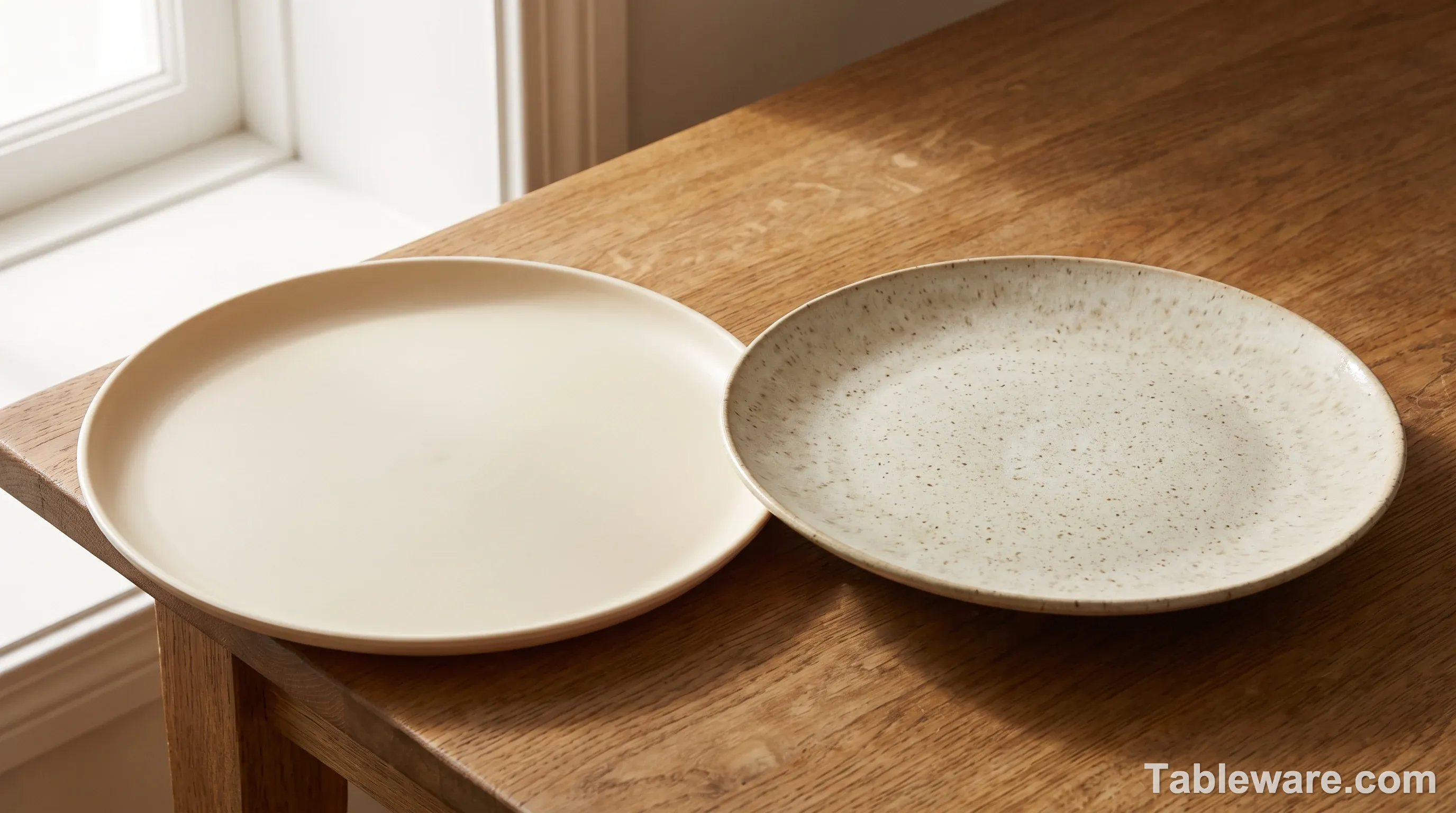
Once you've picked a material, the glaze is the next decision. Solid glazes give you a consistent color across the set. Reactive glazes — the ones with two tones, swirls, or speckles — are created by layering glazes that interact during the firing process, so each piece looks slightly different.
Reactive glaze pasta bowls hide minor scratches from forks better over time, but they have two practical downsides:
- Color matching across the set. If you buy a set of four reactive-glaze bowls, two of them will be slightly darker or more speckled than the other two. Some people love that. Some people find it annoying.
- Glaze durability varies. Reactive glazes aren't a single formula — they're a category — and durability varies by manufacturer. Cheap reactive glazes can craze (develop a fine network of cracks) after a year of dishwasher use. Higher-fired reactive glazes, like the LERATIO set fired at 2340°F, hold up better.
If you want a clean, consistent look across the set, go solid. If you want each bowl to feel slightly unique and don't mind the variation, go reactive. Just check the firing temperature — anything below 2200°F is risky for long-term dishwasher use.
6 Bowls I Actually Trust After Testing Them in 2025-2026
I've narrowed my recommendations down to six sets or bowls that I think hit a real sweet spot. They aren't ranked from worst to best — they're sorted by use case.
Crate & Barrel Mercer Coupe (Best Overall, ~$13 per bowl)
The Mercer Coupe is the bowl I keep coming back to. It's 9 inches across, around 2 inches deep, 24 ounces, and made from porcelain fired hot enough to resist chips. The shape is genuinely a coupe — flat bottom, very gentle slope — so it works for both pasta and salads without feeling specialized. It's dishwasher, microwave, and oven-safe to 350°F. At $13 per bowl in a set of four, it's also priced sanely. If you want one set that does everything well, this is it.
OXO Good Grips Pasta Bowl (Best for Slippery Tables, ~$15)
OXO's pasta bowl has a 3.5-inch rim, a non-slip silicone base, and a 30 oz capacity. The reason it makes my list is the silicone base — if you have a smooth dining table or you eat on a glass surface, this bowl stays put. The downside is weight (1.5 pounds) and stackability (the silicone base means they don't nest cleanly). For a household that eats pasta at least once a week, it's worth the cabinet space.
MALACASA LUNA Set of 4 (Best High-Capacity, ~$32 for the set)
The MALACASA LUNA runs 48 oz per bowl, 9 inches wide, 2 inches deep. That's enough capacity for family-style service without filling the bowl to the brim. The porcelain is oven-safe to 482°F, which means you can use it for baked pasta finishing under the broiler. The plain white finish is dishwasher-safe and resists tomato stains in my testing. If you cook large batches or you want a single bowl that doubles as both a dinner bowl and a small serving bowl, this set is the value play.
Corelle Versa Bowls Set of 4 (Best Stackable, ~$25 for the set)
If storage space is your primary constraint, the Corelle Versa bowls win. They're 8.5 inches across, 30 oz, made from Vitrelle glass, and stack to about 5 inches tall for four bowls. The glass won't hold heat the way ceramic will, and they can shatter if dropped on tile, but for everyday pasta in a small apartment, they're hard to beat on practicality.
East Fork Everyday Bowl (Best American Stoneware, ~$42 per bowl)
East Fork is a North Carolina pottery that makes its bowls in the US. The Everyday Bowl is 9 inches across, around 2 inches deep, and weighs about 1.8 pounds. The matte glaze is gorgeous — slightly speckled, slightly uneven — and the bowl holds heat beautifully. The price is high ($42 per bowl) and they don't sell in a discounted set, but if you want a stoneware bowl that's actually made in America by people you can email, this is the one. The trade-off is consistency: each bowl looks slightly different, which I like and some people don't.
Villeroy & Boch Manufacture Rock (Best Statement Piece, ~$45 each)
The Manufacture Rock pasta plate is technically a shallow plate rather than a bowl — 11.5 inches across, 2 inches deep, 9.5 oz — but it works beautifully for pasta in a presentation sense. The matte black finish and slate-like texture give it a tactile, restaurant-style look. It's not what I'd call a daily driver — at $45 each and 11.5 inches across, it dominates a small table — but if you're hosting dinner parties or you want a "wow" piece for plating, it's the one I'd reach for.
5 Buying Mistakes I See Every Week
These are the errors that show up in most pasta bowl questions online. Avoid them and you'll be ahead of 90 percent of buyers.
Buying a 4-piece set when you need 8. Most households use 4 to 6 pasta bowls a week. A set of 4 leaves you short by Wednesday. Buy the largest set you can afford and store the extras.
Skipping the firing temperature. If a product listing doesn't mention firing temperature, the bowl was probably fired low to cut costs. Below 2200°F and you're gambling on chip resistance. Anything above 2300°F is a safer bet.
Picking the prettiest color first. Glaze fades faster on some pigments than others. Bright reds and deep blues can lose saturation over years of dishwasher cycles. Whites, creams, and warm earth tones age more gracefully.
Assuming "oven-safe" means broiler-safe. Most stoneware and porcelain bowls are rated to 350°F or 400°F, which is fine for reheating. Putting them under a broiler at 500°F+ will craze the glaze and may crack the body. Check the actual rating.
Buying a pasta bowl for one specific recipe. A 9-inch wide rim porcelain bowl works for spaghetti, salads, ramen, grain bowls, and even pho. Don't over-specialize. The most useful pasta bowl is the one you'll reach for 5 nights a week.
How to Care for Pasta Bowls So They Actually Last
Most dishwasher safe pasta bowls 9 inch in size will survive daily cycles if you do three things. (Yes, you can run a dishwasher safe pasta bowls 9 inch set through a normal cycle — but the tips below will double the lifespan.)
First, don't stack them rim-on-rim. A thin porcelain rim stacked under a heavy stoneware bowl will chip within months. Put a felt liner or a paper towel between bowls when stacking.
Second, skip the heat shock. Pulling a bowl out of a hot dishwasher cycle and running cold water over it will craze the glaze over time. Let it cool for a minute before rinsing.
Third, check the bottom for a rough foot. Some cheaper bowls have an unglazed foot ring that scratches wooden tables or stone counters. A little furniture felt pad solves it, but you want to know before you set it on a brand-new dining table.
Stoneware bowls need the least special treatment. Porcelain needs a bit more care around chipping. Glass (Corelle) needs the least but compensates by being the most fragile in a fall.
FAQ
Are pasta bowls really necessary? If you eat pasta more than twice a month, yes. A proper pasta bowl keeps sauce pooled, noodles warm, and your table clean. If you eat pasta occasionally and you're happy with what you have, skip it.
What's the difference between a pasta bowl and a coupe plate? A coupe plate is essentially flat with very shallow sides. A pasta bowl has a more pronounced wall — usually 1.5 to 2 inches deep — so you can twirl against it. Both work for short pasta; only pasta bowls work well for spaghetti and linguine.
Can I use pasta bowls for ramen, salads, grain bowls? Yes. That's part of why the 9-inch / 24-30 oz pasta bowl is the most versatile shape in most kitchens. Ramen, pho, grain bowls, and even ice cream work fine in it. The only thing it doesn't do well is brothy soups that need a deeper well.
How many pasta bowls do I need? For a household of two, four is enough. For a household of four, six to eight. For entertaining, an extra four stored in a cabinet covers most dinner parties.
Is porcelain or stoneware better for pasta bowls? Porcelain is lighter, more chip-resistant, and usually more expensive. Stoneware is heavier, holds heat longer, and is more rustic looking. For most people, either works — pick based on whether you care more about weight and elegance (porcelain) or heat retention and feel (stoneware).
A Final Note
The "best pasta bowl" is the one that fits your kitchen, your portion sizes, and your cooking style. A 9-inch porcelain bowl with a 1.5-inch rim works for almost everyone. The specs — diameter, depth, capacity, rim width, material — are what actually matter. The brand name is decoration.
If you only buy one set, the Crate & Barrel Mercer Coupe is what I'd pick. If you can afford to be specific — non-slip base, family-size capacity, statement plating — go down the list and pick the one that fits your use case. You'll be eating pasta out of a better bowl next week, and you'll wonder how you ever tolerated the dinner plate.